I've joked from time to time, when people who cannot wish to get bogged down in the answer have asked me, "What's your book about?" - and said, "It's about the guy who invented France." Or, I've said, "If you go back far enough, the French are Germans."
That latter joke was once a theory one had to be careful with. Nicolas Fréret, an eighteenth century scholar, who presumed to point out that the origin myth of France was false, was placed in the Bastille for his troubles. Honesty has never been politically popular, after all. Immortalized in the Liber Historiae Francorum, the tale goes that Trojan princes Priam and Antetor fled their homeland and built the foundations of France, in a city called Sicambria.
Sicambrian, indeed, was for centuries a term for the Franks, and made it even into Gregory of Tours' hagiography of Clovis and Clotilde, featuring in the scene of Clovis' baptism, where Bishop Remigius says to the king, "Bow thy head, o Sicambrian," exhorting him to love his new God.
Linguistically, unfortunately, the age and etymological derivation of "Sicambrian" is not a persuasive clue to Trojan origins. And, as most of us are aware today, the Franks were clearly a society and tradition born of Germanic strains, the Greek memories being fables adopted to lay claim to classical prestige.
Claims of Trojan origin were common enough during the period, Britain having much the same sort of story to tell. We sometimes place a kind of fetishistic worship of the classical period later in European history, but Late Antiquity bred these myths with noticeable regularity, and the early desire of a Gallo-Roman and Frankish society to present a noble lineage as they formed a cohesive identity may have been a healthy sign of formative unity - of a Church's growing influence - of the need of the educated noble elite to provide yet more nobility, dating beyond memory of pagan Germanic conquests and the cultural assimilations of a people in transition.
Nicolas Fréret spoke his piece about the history of France at a time when the Ancien Régime was in power, and - though the name came along later - ancien was clearly what they expected to be perceived as being; and far more ancient indeed than a pack of German barbarians.
Goes to show you how longstanding can be the prejudices of the winners in history - an ancient Greco-Roman slur making fun of the sound of northern languages influenced the inheritors of barbarian estates for so many centuries, here a millennium and a half beyond the "Fall of Rome" we're still sneering about the term and, obviously for at least twelve hundred years, outright denying the heritage of those northern peoples. Nice work, Rome.
It is difficult for many modern westerners to conceive of being thrown in jail for scholarship. Yet no intellectual discipline has ever been clinically scientific in method, and respected in its own right, not completely. Many "know" the story of Galileo (itself subject to subversions and simplifications), but few think of history or language as subject to the same censorship and pressure.
Fortunately, those who have endured censure have made room for an atmosphere, today, where being thrown in the Bastille for saying, "You know - if you go back far enough, the French are Germans." I'm grateful for this much.
Even if my jokes are still really lame.
Monday, October 20, 2014

Collection
Janet Reid's love affair with Gossamer has extended just a little bit further, and Penelope has now popped up at her blog. If Gossamer is The Editor Cat, shall we say that Penelope is the Publisher Pup? Suggestions welcome (alliteration not required).
(And NOW to find an agent who'll love me for my *manuscript* ...)
In a promising move toward more of a professional platform, the next week or so here should see a couple of blog turns where I get to show off the other historical fiction authors I've gotten to know. Tom Williams has tapped me for the One Lovely Blog tour, and his blurb about me is blush-worthy (if only I were capable of blushing). And Faith L. Justice invited me to join a writing process blog tour.
These last two items have inspired me to follow up with Elizabeth Chadwick on the interview questions I sent some months back. Also, though I didn't get a new interview at the Conference this year, I may revisit Victoria Skurnick, who was one of the many charming and delicious people we get at JRW, and who was most open to the idea. So stay tuned, kids!
In closing, a link both more and less typical of these collection posts. Because there's archaeology ... and then there's digging up DeMille ...
(And NOW to find an agent who'll love me for my *manuscript* ...)
In a promising move toward more of a professional platform, the next week or so here should see a couple of blog turns where I get to show off the other historical fiction authors I've gotten to know. Tom Williams has tapped me for the One Lovely Blog tour, and his blurb about me is blush-worthy (if only I were capable of blushing). And Faith L. Justice invited me to join a writing process blog tour.
These last two items have inspired me to follow up with Elizabeth Chadwick on the interview questions I sent some months back. Also, though I didn't get a new interview at the Conference this year, I may revisit Victoria Skurnick, who was one of the many charming and delicious people we get at JRW, and who was most open to the idea. So stay tuned, kids!
In closing, a link both more and less typical of these collection posts. Because there's archaeology ... and then there's digging up DeMille ...
Monday "Off-ish"
This weekend was the James River Writers conference, my favorite writing event of the year, and I do have intentions to blog about it, but yesterday before it quite concluded, I recused myself from the fun and came home upon several warning flares from my back. It did wait to go into full muscle spasm pain until after I got home, but yesterday was painful and very little productive, and today may not improve much - because, though I have good intentions of sending out the full request, getting into that trick my WIP just *most-intriguingly* played on me, and digging yet again into query research: I do have to get groceries, do some tidying up around here, devise a method to huck laundry up and down two flights of stairs without killing my back, and call my bank about an unidentifiable $300 charge. Also, my mom called, and wants me to come over and help her sort seasonal clothes for getting-rid-of. The invitation is not one to turn down lightly - not least because this is the sort of thing I *like* doing with my mom - but a lot of me wants to, unfortunately.
Also, that back problem. Combined with a nestle-happy kitten, it goes a long way indeed to making me want to stay right here with the laptop producing the illusion of productivity in a couple of the aforementioned activities.
Yet it is a beautiful day, and mom's been sick and I know how that makes you crave company, and I'd LIKE to help with this activity.
And it's 1:00 almost already, and the day is burning away as I dither on my blog.
Also, that back problem. Combined with a nestle-happy kitten, it goes a long way indeed to making me want to stay right here with the laptop producing the illusion of productivity in a couple of the aforementioned activities.
Yet it is a beautiful day, and mom's been sick and I know how that makes you crave company, and I'd LIKE to help with this activity.
And it's 1:00 almost already, and the day is burning away as I dither on my blog.
Wednesday, October 15, 2014
We Do Get Fooled Again
Lately, shared delusions of different types have been crossing my mind, both on the paths of my own tangential thoughts, and in things I’ve come across to read here and there. Humans share ineffable bonds, and some of them we’d quite like to eff after all, probably. We cling together in fear, in arrogance, and – above all – in ignorance.
We also forget and forget and forget, and therefore come to believe the silliest horsefeathers. Such as, people were dumb and dirty in the past, as I’ve often gone on about. Such as, we have evolved or changed or become anything new at all under the sun. We’re very attached to this idea, that what today holds is ever better than yesterday … even as we yearn for yesterday with the sort of jealousy that can pervert itself nastily and become cancerous and violent.
I once sat in a church and listened to a long and angry sermon against evolution, actually, which … ended with a discussion of how we get flu shots because viruses grow and change and we have to conquer them with ever better drugs. I’m not joking – evolution is wrong, but evolution totally happens.
We do this sort of thing a lot, and it is in sermons and on pulpits, in reaching out to each other and in quoting, being quoted, in rabidly nodding our heads together, that we gain some sense of self – this is someone I agree with, and therefore what I think, what I feel, must be RIGHT in some important way.
“It’s not just me.”
We seek that in almost every level in our lives. Those studies that show negative posts on social media “infect” related users and breed more of the same, complaint spawning complaint, because it is empirically true that misery loves company to death. The way almost the whole world finds ways to make major events – especially catastrophes – “about ourselves”, finding ways not just to relate to the imponderable or epochal, but to own it. 9/11 was so powerful in this effect it gave us the story of Tania Head (not even her real name), one of the most famous survivors of the World Trade Center attacks, who happened to live in Spain at the time and was graduating a professional program at the time that brutality happened. Before that, locally to my world, the Washington sniper drew half the east coast into a noose of fear that occasionally almost smelled like anticipation; living anywhere near those events conferred a sense of almost belonging to that threat, and of its belonging to us. Anthrax scares in the mail had people psychosomatically ill all over the country, and gave the opportunity for morons or the mentally ill to frighten the wits out of crowds in strange places.
Yet, in this oh-so-enlightened world in which we are susceptible to shared delusions physical, emotional, and in many ways political: we deeply enjoy looking backward at phenomena like the tarantism or the dancing mania of the middle ages, perhaps born out of plague and upheaval, and play a bit of down-the-nose-peering, to assure ourselves we are superior. We, who deny – well, evolution, for one; or climate change; or the moon landing; or the HIV virus’ influence and connection to AIDS – love nothing so much as to look upon those who denied Galileo’s toppling of the heliocentric universe as the basest, risible ignorance.
It is intensely reassuring, for a species perpetually under the THREAT of the great unknowns of our lives, to hope, at least, we’ve risen out of some sort of darkness, surpassed ignorance, become *better* than we used to be. There is a deep cultural, and *perhaps* pan-human need to believe in progress that leads us to look back, not in anger, but in the kind of bigotry that leads us to name entire swaths of time “The Dark Ages” and to peer morbidly at lost ideas of beauty or obsolete heirarchies of worthwhile attainments (or, very sadly, to look across the globe even in the present, presuming other cultures are stuck in the past) to prove to ourselves we are not “barbarians.”
The barbarians, of course, merely made the mistake of toppling a few things of their own, which for some reason we enjoy enshrining (from time to time) as pinnacles of human achievement. Also, they didn’t write a very great deal, so we don’t have Viking Shakespeares to enshrine instead. The barbarians get their vogue from time to time as well, but by and large “visigoth” didn’t become an insult in a perfectly balanced vaccuum, just for instance. Or the word barbarian itself, which is an onomotopoeic word making fun of the way a foreign language sounded to a great lot of dead Greeks and Romans who had a few funky habits of their own we occasionally stumble upon in order to make fun of.
We really are not better than ever before.
The consolation to that is: we actually are not WORSE than ever before, either. Our power to actually destroy ourselves probably skews the old bargain, to be sure. But human nature is as a whole is full of the same greedy lot who don’t care about others … and the same breathtakingly beautiful, and the same generally decent, and the same petty individuals we’ve always had amongst ourselves. The greedy ones regularly wreck the lives of others, the good ones give us hope, and the ones we know best sustain and madden and surround each other.
Stripped of all politics and consequence, human nature is a remarkably unchanging thing, for a dynamic so resilient and innovative and endlessly mercurial. We fear together, and that makes us either dance together or believe we are sick together. We are arrogant together, and that is born of fear too. We are immensely capable and ingenious – remember how we all ooh-ed and ahh-ed at the HUMAN miracle and spectacle of the Chinese olympic opening ceremonies? Both impressed at the show, and half-afraid of a nation so huge with such control over its people … and so many people to control … ?
WE only constant is change, in a way. It defines and horrifies us, especially when the changes we have wrought and witnessed don’t go the way we expected, or would like. It makes such a difference, and it makes none.
Only when we get to the deepest level – the individual – does the inevitability of change seem less a frightening unknown than a limitless potential.
I am still the meat and bones and voice my parents made … and I am nothing I was even just ten years ago, or five, or yesterday. It’s a hell of a responsibility, and it’s both a swelling and a dangerous pride. I need reassurance. But not by dancing through a plague. Just in the ones I know best. In sustaining and maddening and being close to them. And in finding they do the same in return.
What is it like along your evolutionary development? Did you go from crouching to standing tall, a deep breath filling your chest … ? With whom do you dance … ?
We also forget and forget and forget, and therefore come to believe the silliest horsefeathers. Such as, people were dumb and dirty in the past, as I’ve often gone on about. Such as, we have evolved or changed or become anything new at all under the sun. We’re very attached to this idea, that what today holds is ever better than yesterday … even as we yearn for yesterday with the sort of jealousy that can pervert itself nastily and become cancerous and violent.
I once sat in a church and listened to a long and angry sermon against evolution, actually, which … ended with a discussion of how we get flu shots because viruses grow and change and we have to conquer them with ever better drugs. I’m not joking – evolution is wrong, but evolution totally happens.
We do this sort of thing a lot, and it is in sermons and on pulpits, in reaching out to each other and in quoting, being quoted, in rabidly nodding our heads together, that we gain some sense of self – this is someone I agree with, and therefore what I think, what I feel, must be RIGHT in some important way.
“It’s not just me.”
We seek that in almost every level in our lives. Those studies that show negative posts on social media “infect” related users and breed more of the same, complaint spawning complaint, because it is empirically true that misery loves company to death. The way almost the whole world finds ways to make major events – especially catastrophes – “about ourselves”, finding ways not just to relate to the imponderable or epochal, but to own it. 9/11 was so powerful in this effect it gave us the story of Tania Head (not even her real name), one of the most famous survivors of the World Trade Center attacks, who happened to live in Spain at the time and was graduating a professional program at the time that brutality happened. Before that, locally to my world, the Washington sniper drew half the east coast into a noose of fear that occasionally almost smelled like anticipation; living anywhere near those events conferred a sense of almost belonging to that threat, and of its belonging to us. Anthrax scares in the mail had people psychosomatically ill all over the country, and gave the opportunity for morons or the mentally ill to frighten the wits out of crowds in strange places.
Yet, in this oh-so-enlightened world in which we are susceptible to shared delusions physical, emotional, and in many ways political: we deeply enjoy looking backward at phenomena like the tarantism or the dancing mania of the middle ages, perhaps born out of plague and upheaval, and play a bit of down-the-nose-peering, to assure ourselves we are superior. We, who deny – well, evolution, for one; or climate change; or the moon landing; or the HIV virus’ influence and connection to AIDS – love nothing so much as to look upon those who denied Galileo’s toppling of the heliocentric universe as the basest, risible ignorance.
It is intensely reassuring, for a species perpetually under the THREAT of the great unknowns of our lives, to hope, at least, we’ve risen out of some sort of darkness, surpassed ignorance, become *better* than we used to be. There is a deep cultural, and *perhaps* pan-human need to believe in progress that leads us to look back, not in anger, but in the kind of bigotry that leads us to name entire swaths of time “The Dark Ages” and to peer morbidly at lost ideas of beauty or obsolete heirarchies of worthwhile attainments (or, very sadly, to look across the globe even in the present, presuming other cultures are stuck in the past) to prove to ourselves we are not “barbarians.”
The barbarians, of course, merely made the mistake of toppling a few things of their own, which for some reason we enjoy enshrining (from time to time) as pinnacles of human achievement. Also, they didn’t write a very great deal, so we don’t have Viking Shakespeares to enshrine instead. The barbarians get their vogue from time to time as well, but by and large “visigoth” didn’t become an insult in a perfectly balanced vaccuum, just for instance. Or the word barbarian itself, which is an onomotopoeic word making fun of the way a foreign language sounded to a great lot of dead Greeks and Romans who had a few funky habits of their own we occasionally stumble upon in order to make fun of.
We really are not better than ever before.
The consolation to that is: we actually are not WORSE than ever before, either. Our power to actually destroy ourselves probably skews the old bargain, to be sure. But human nature is as a whole is full of the same greedy lot who don’t care about others … and the same breathtakingly beautiful, and the same generally decent, and the same petty individuals we’ve always had amongst ourselves. The greedy ones regularly wreck the lives of others, the good ones give us hope, and the ones we know best sustain and madden and surround each other.
Stripped of all politics and consequence, human nature is a remarkably unchanging thing, for a dynamic so resilient and innovative and endlessly mercurial. We fear together, and that makes us either dance together or believe we are sick together. We are arrogant together, and that is born of fear too. We are immensely capable and ingenious – remember how we all ooh-ed and ahh-ed at the HUMAN miracle and spectacle of the Chinese olympic opening ceremonies? Both impressed at the show, and half-afraid of a nation so huge with such control over its people … and so many people to control … ?
WE only constant is change, in a way. It defines and horrifies us, especially when the changes we have wrought and witnessed don’t go the way we expected, or would like. It makes such a difference, and it makes none.
Only when we get to the deepest level – the individual – does the inevitability of change seem less a frightening unknown than a limitless potential.
I am still the meat and bones and voice my parents made … and I am nothing I was even just ten years ago, or five, or yesterday. It’s a hell of a responsibility, and it’s both a swelling and a dangerous pride. I need reassurance. But not by dancing through a plague. Just in the ones I know best. In sustaining and maddening and being close to them. And in finding they do the same in return.
What is it like along your evolutionary development? Did you go from crouching to standing tall, a deep breath filling your chest … ? With whom do you dance … ?
It's Like Wearing the Corset ...
“Fake it till you make it!”
The little piece of wisdom above has become a facile mantra for a society increaingly occupied by the hectic schedule of life as we’ve constructed it, and particularly by professional frustration and ambition in an economy not well laid out for most of us to find the types and levels of comfort we’ve also set as a general expectation.
The fake-it mantra goes along with the “dress for the job you want, not the job you have” maxim (and there is a whole blog post in that one, considering how resolutely “casual” so many workplaces have become …), and various other positive-professional mottoes we try to post in our brains and daily behavior in order to attain – basically – whatever it is that passes for financial success, as compared to where we stand right now.
“Fake it till you make it”, though, has applications and effects apart from the financial, and the older I get the more surprised I am – and pleased – at how very well it works.
There are days at both the office job that provides me regular paychecks, and at the unpaid job I maintain as an unpublished (but persistently aspiring) author, when really it’s all just a game. And that’s not a bad thing. It can make The Game easier, actually, to make it *play*. Life’s no fun if you never play – and, sometimes, play helps you do life a bit better.
If I’m not feeling satisfied or motivated or even competent at the paying gig, I’ll make a point of popping in the boss’s office with a drive-by handful of “I’ve done this and this and this for you” comments – or questions “do you need hard copies/lunch reservations/documentation for X-meeting” – and the effect is usually strongest on myself. It’s like I won the role of Moneypenny in some play – and saying the lines and getting the responses makes me feel like I’m playing it well.
So I get to *feel*, “Okay, I am not a fraud.”
And I also basically remind myself, “Hey. *I am not a fraud.*”
I’ve been doing administrative/secretarial work for close to thirty years now, pretty much to the exclusion of any other professional work. It’s something I enjoy, and/but changing jobs as often as I have, it’s never something I feel I know completely – which is a good thing.
One of the important parts of changing jobs is overtly playing the part of a competent professional.
Being able to do a job and demonstrating that I can do it, I have found, are vastly different things: and the latter is the wiser course.
It’s a bit like feedback from a boss; if you hear “thank you” or “can we widget this, thus” now and then, fairly consistently, it makes all the difference in knowing where you stand. Performance reviews don’t do that, never have, and never will – but the smallest acknowledgement of daily to-do’s coming along regularly provides good bearings. And that works both ways (the corporate-speak phrase “managing up” comes to mind, though without the passive-aggressive intent). Feedback of the “A, B, and C are done/need something to get X done/changed the way Y is done” variety keeps ‘em aware you’re there and functioning.
I know an author who spent something like a week wearing a corset and cooking medieval recipes out of turnips, in order to get a feel for her period. We can hardly replicate “what it was really like” – but method writing like that makes sense. It’s the same at a job. When I wear the rold of Moneypenny, I realize that not only can I walk in those shoes, but I can project that to others, and that’s a useful reminder/demonstration/feedback on all sides.
It also encourages others to TREAT me like Moneypenny – or like an author.
I approach an awful lot of my life with some form of calibrated appearance in mind. This isn’t affectation nor artificiality (it may be manipulation, though …). It’s just an actor’s heightened way of going into any scene. I dress for my job, or for time spent with my mom and stepfather, or for some specific group of friends (… or for the Conference, yes) – I behave in one venue in a way I would not in others.
Many of us do this without really thinking about it all that much. Many can’t release themselves from a single self-image (when I see women on TV who wear $600, 7-inch high heels for every conceivable occasion, heavy makeup at all times, and false eyelashes even in the middle of the day, I pity them the stultifying consistency of such “glamour”, since it cannot be special, maintained at all times; likewise men who cannot get beyond khakis and polo shirts no matter where they go bewilder me with self-imposed homogeneity).
So we all play roles. I need multiple roles, in order for any one of them to seem worthwhile or fun – being a slovenly hausfrau all day on a Saturday makes the odd Saturday night out with friends so much more fun, as does the pampering self-transformation from slovenly comfort to arch impracticality. I need time with family and time as an employee and time as a friend, and time ALONE, just laughing at my dog and cat. I need the demanding and yet transformative rituals of my day – getting up and getting dressed, as much as coming home, and getting dressed *down*.
It took me a long time to really believe I was a “real” author – not a laughable fraud. This is true of a terribly large percentage of writers, and the way the industry is configured, unfortunately, encourages this, at least in traditional publishing. Yet this isn’t on purpose – the more agents and editors I’ve met, the more delightful I’m aware that they are. These are people who get to make a living not only doing something they love – reading – but they also get to act as conduits to bring new things they love to a whole audience.
I almost can’t imagine what that’s like.
But it’s certainly true that many of the editors and agents and designers and all the newer facilitators in a publishing world no longer strictly fashioned as a paradigm of “gatekeepers” (agents) and “keymasters” (publishing houses) SAY that this is what they love about what they do. There is an undercurrent of glee – “I found something wonderful! I must have it! I must share it!” – and a very emotional kind of satisfaction in most interviews I read when I research agents, but also when I find articles and blogs and so on by cover designers and book doctors and editors who work outside publishing houses, helping authors to craft not only good work, but marketable work. There is a mutual drive for satisfaction I’ve never seen in other areas of my own admittedly limited life, but it’s pretty wonderful. The blogs I follow avidly all share this with a depth and clarity that is infectious: they keep ME going, by telling me and ten thousand others, “you should KEEP GOING.”
This really isn’t faking it till you make it, of course.
But we all still have to fake so much. We have to put on our Editorial Boots and kick the hell out of our manuscripts and plays and poems. We have to put on the Authorial Jacket (with or without the little suede elbow patches; as your preference or genre or predilections dictate) and brave the autumnal blasts of rejection and revision and education until we’re tempered. We have to wear a Marketing Hat, too – and live a bit online, and reach out, and plan, and consider, and be ready to Be Told, when it comes to supporting our work.
THIS is undoubtedly faking it, for most of us.
• Faking like we have time in the week,
• Faking like we are not scared out of our minds,
• Faking like we really feel like we know what we’re doing,
• Faking like it’s not annoying to have to do all this stuff without pay,
• Faking like the friends and family around us who
(a) overestimate the likelihood we’re going to Become the Next Bestseller, or
(b) bitterly, ignorantly UNDERestimate it
… are not discouraging beyond toleration,
• Faking like there is anything at all about writing, other than the doing of it – all alone, at a wonderful desk or curled up with a beloved furbaby – that we can stand at all.
Faking it and knowing the fakery isn’t so much a lie as a *reminder* either works better and better as I get a bit older, or I am just finally getting, at my advanced age, just how well it always would have worked.
What’s your costume, what is the swashbuckling role you play … ?
The little piece of wisdom above has become a facile mantra for a society increaingly occupied by the hectic schedule of life as we’ve constructed it, and particularly by professional frustration and ambition in an economy not well laid out for most of us to find the types and levels of comfort we’ve also set as a general expectation.
The fake-it mantra goes along with the “dress for the job you want, not the job you have” maxim (and there is a whole blog post in that one, considering how resolutely “casual” so many workplaces have become …), and various other positive-professional mottoes we try to post in our brains and daily behavior in order to attain – basically – whatever it is that passes for financial success, as compared to where we stand right now.
“Fake it till you make it”, though, has applications and effects apart from the financial, and the older I get the more surprised I am – and pleased – at how very well it works.
There are days at both the office job that provides me regular paychecks, and at the unpaid job I maintain as an unpublished (but persistently aspiring) author, when really it’s all just a game. And that’s not a bad thing. It can make The Game easier, actually, to make it *play*. Life’s no fun if you never play – and, sometimes, play helps you do life a bit better.
If I’m not feeling satisfied or motivated or even competent at the paying gig, I’ll make a point of popping in the boss’s office with a drive-by handful of “I’ve done this and this and this for you” comments – or questions “do you need hard copies/lunch reservations/documentation for X-meeting” – and the effect is usually strongest on myself. It’s like I won the role of Moneypenny in some play – and saying the lines and getting the responses makes me feel like I’m playing it well.
So I get to *feel*, “Okay, I am not a fraud.”
And I also basically remind myself, “Hey. *I am not a fraud.*”
I’ve been doing administrative/secretarial work for close to thirty years now, pretty much to the exclusion of any other professional work. It’s something I enjoy, and/but changing jobs as often as I have, it’s never something I feel I know completely – which is a good thing.
One of the important parts of changing jobs is overtly playing the part of a competent professional.
Being able to do a job and demonstrating that I can do it, I have found, are vastly different things: and the latter is the wiser course.
It’s a bit like feedback from a boss; if you hear “thank you” or “can we widget this, thus” now and then, fairly consistently, it makes all the difference in knowing where you stand. Performance reviews don’t do that, never have, and never will – but the smallest acknowledgement of daily to-do’s coming along regularly provides good bearings. And that works both ways (the corporate-speak phrase “managing up” comes to mind, though without the passive-aggressive intent). Feedback of the “A, B, and C are done/need something to get X done/changed the way Y is done” variety keeps ‘em aware you’re there and functioning.
I know an author who spent something like a week wearing a corset and cooking medieval recipes out of turnips, in order to get a feel for her period. We can hardly replicate “what it was really like” – but method writing like that makes sense. It’s the same at a job. When I wear the rold of Moneypenny, I realize that not only can I walk in those shoes, but I can project that to others, and that’s a useful reminder/demonstration/feedback on all sides.
It also encourages others to TREAT me like Moneypenny – or like an author.
I approach an awful lot of my life with some form of calibrated appearance in mind. This isn’t affectation nor artificiality (it may be manipulation, though …). It’s just an actor’s heightened way of going into any scene. I dress for my job, or for time spent with my mom and stepfather, or for some specific group of friends (… or for the Conference, yes) – I behave in one venue in a way I would not in others.
“I contain multitudes” …
Many of us do this without really thinking about it all that much. Many can’t release themselves from a single self-image (when I see women on TV who wear $600, 7-inch high heels for every conceivable occasion, heavy makeup at all times, and false eyelashes even in the middle of the day, I pity them the stultifying consistency of such “glamour”, since it cannot be special, maintained at all times; likewise men who cannot get beyond khakis and polo shirts no matter where they go bewilder me with self-imposed homogeneity).
So we all play roles. I need multiple roles, in order for any one of them to seem worthwhile or fun – being a slovenly hausfrau all day on a Saturday makes the odd Saturday night out with friends so much more fun, as does the pampering self-transformation from slovenly comfort to arch impracticality. I need time with family and time as an employee and time as a friend, and time ALONE, just laughing at my dog and cat. I need the demanding and yet transformative rituals of my day – getting up and getting dressed, as much as coming home, and getting dressed *down*.
It took me a long time to really believe I was a “real” author – not a laughable fraud. This is true of a terribly large percentage of writers, and the way the industry is configured, unfortunately, encourages this, at least in traditional publishing. Yet this isn’t on purpose – the more agents and editors I’ve met, the more delightful I’m aware that they are. These are people who get to make a living not only doing something they love – reading – but they also get to act as conduits to bring new things they love to a whole audience.
I almost can’t imagine what that’s like.
But it’s certainly true that many of the editors and agents and designers and all the newer facilitators in a publishing world no longer strictly fashioned as a paradigm of “gatekeepers” (agents) and “keymasters” (publishing houses) SAY that this is what they love about what they do. There is an undercurrent of glee – “I found something wonderful! I must have it! I must share it!” – and a very emotional kind of satisfaction in most interviews I read when I research agents, but also when I find articles and blogs and so on by cover designers and book doctors and editors who work outside publishing houses, helping authors to craft not only good work, but marketable work. There is a mutual drive for satisfaction I’ve never seen in other areas of my own admittedly limited life, but it’s pretty wonderful. The blogs I follow avidly all share this with a depth and clarity that is infectious: they keep ME going, by telling me and ten thousand others, “you should KEEP GOING.”
This really isn’t faking it till you make it, of course.
But we all still have to fake so much. We have to put on our Editorial Boots and kick the hell out of our manuscripts and plays and poems. We have to put on the Authorial Jacket (with or without the little suede elbow patches; as your preference or genre or predilections dictate) and brave the autumnal blasts of rejection and revision and education until we’re tempered. We have to wear a Marketing Hat, too – and live a bit online, and reach out, and plan, and consider, and be ready to Be Told, when it comes to supporting our work.
THIS is undoubtedly faking it, for most of us.
• Faking like we have time in the week,
• Faking like we are not scared out of our minds,
• Faking like we really feel like we know what we’re doing,
• Faking like it’s not annoying to have to do all this stuff without pay,
• Faking like the friends and family around us who
(a) overestimate the likelihood we’re going to Become the Next Bestseller, or
(b) bitterly, ignorantly UNDERestimate it
… are not discouraging beyond toleration,
• Faking like there is anything at all about writing, other than the doing of it – all alone, at a wonderful desk or curled up with a beloved furbaby – that we can stand at all.
Faking it and knowing the fakery isn’t so much a lie as a *reminder* either works better and better as I get a bit older, or I am just finally getting, at my advanced age, just how well it always would have worked.
What’s your costume, what is the swashbuckling role you play … ?
Friday, October 10, 2014
Dresses Undressed
Nabbed this when I saw it at Two NerdyHistory Girls. Though the music is a hair sad, and the veins in the ghostly hands which appear here and there are ... weirdly animated and eerie ... the CLOTHES are beautiful, gorgeously constructed, and this look at all the layers of dress in this period is instructive and interesting. The micro close up lace shot is as gorgeous as it looks like it would be from this preview still, by the way.
Enjoy!
Enjoy!
Thursday, October 9, 2014
Collection
I happen to follow some of the most amazing blogs and at least two Tumblrs, and of the latter you should go get your eyeballs nurtured, because Mojourner's Photos rock the extra bomb-diggety, y'all.

Speaking of sites that have wonderful vitamals and nutriments for the yumming of your eyes, do you follow the Caustic Cover Critic? Because - seldom updated, but always worth a look. Enjoy the Hallowe'en special: hilarious, intriguingly conceived, and scary on multiple levels. Boo!
Speaking of sites that have wonderful vitamals and nutriments for the yumming of your eyes, do you follow the Caustic Cover Critic? Because - seldom updated, but always worth a look. Enjoy the Hallowe'en special: hilarious, intriguingly conceived, and scary on multiple levels. Boo!
Tuesday, October 7, 2014
Collection
Mojourner Truth lays out some (previously) Unwritten Rules of Archaeology. (Pay close attention to the final rule.) How much of this applies to your job? Rather a lot does to mine - both my mortgage-paying gig, and writing too.
Law love the History Blog. On cockerels and Christ. Oh myyy! (But seriously: the oldest image of Christ in Spain, on a glass plate, with background as to why the glass medium is important - and the cockerel comes from the grave goods of a child in Cirenchester.)
The Arrant Pedant visits Visual Thesaurus with a look at "less" versus "fewer". The AP is awesome of the sauce-ular variety, as are the linguistic forensics.
And, in the continuing exchange program between every page Janet Reid maintains online and Gossamer the Editor cat, take a look at The Query Shark's advice on social media promotion. "The only email that is appropriate to send to everyone in your address book is news of your death." Priceless.
Law love the History Blog. On cockerels and Christ. Oh myyy! (But seriously: the oldest image of Christ in Spain, on a glass plate, with background as to why the glass medium is important - and the cockerel comes from the grave goods of a child in Cirenchester.)
The Arrant Pedant visits Visual Thesaurus with a look at "less" versus "fewer". The AP is awesome of the sauce-ular variety, as are the linguistic forensics.
And, in the continuing exchange program between every page Janet Reid maintains online and Gossamer the Editor cat, take a look at The Query Shark's advice on social media promotion. "The only email that is appropriate to send to everyone in your address book is news of your death." Priceless.
 |
| Soft kitty |
Monday, October 6, 2014
In a Week ... Happy Anniversary!
Twelve years ago, I took my little niece with me on a beautiful Saturday morning to go looking for a new dog. I honestly can’t recall whether she and I went to more than one place, but I can tell you the moment I saw this giant-eared, black-masked beastie looking out across the parking lot at the pet store, and I thought, “What a weird looking dog.” She was one of a kind, yes, even down to her looks – and I remember looking at other animals, but could not tell you what we saw. My niece and I both seemed to zero in on Sid – or maybe she zeroed in on us (certainly, I have been adopted by pets in my time, seemingly almost without will of my own).
Her peculiar, masked face was topped with one black ear (her only other black feature; and it did not go grey, as her mask did, and disappear) and one white one with little dalmation spots. She had a big square head like a Volvo: it was boxy, but it was good. And a deep furrow straight down the middle, from the top of her nose right back between those prodigious ears.
Siddy was four, and if “when they thought” her birthday was was right, we shared one. And she was within about a week of being the same age as that niece of mine.
I remember the adoption process seeming so daunting, and even fearing I would not get to have her – I developed a fast crush on her, and the inimitable Zuba told me, when I was telling her about the other dog I was thinking about, “Diane, you are already calling her Siddy. That is your dog.”
Zuba is no damned fool, and neither was Sweet La. She got Zuba so well tied around her little claw even a sneeze straight in her face never dented her auntie’s love for that pup.
So Sid came home, still wearing a traffic cone from a kerfuffle with some other damned fool dog in foster care. The guy I was seeing at the time evinced a bit of intimidation by her, so he had to go (I’d been looking for the right moment …). And so she and I had nine years, nine months of I-was-the-luckiest- doggy-momma-evarrr, until that sad July 5. And sigh.
That was just over two years ago, and it took me from July to October to be ready again … and that was when my MOM went with me to go find a pupadoodle. Small niece was no longer available, though I kept her posted vicariously, and she ended up approving Penelope.
Penelope, whose little noodly yellow butt seemed so small to me, and whose round, light-bulb head was all full of wrinkledy loose skin and a set of ears the like of which even Siddy had never seen. She hardly seemed built to hold them up. Penelope, who seemed entirely unaware of the little things when I took her into the kitten section of that pet store. Penelope, of the head full of white puppy teeth and insouciant underbite. Penelope, wearing her little blue bandana around her neck, saying “ADOPT ME” – and I did. (I had no choice: I adopt ears. And hers were prodigious.)
She grew into them – though they’re still quite the arresting feature.
Little did I know that 35-pound scrap of wiggles would turn into a 60-pound slab of … well, wiggles. And tugs. And would turn out to be the smartest dog I’ve ever known. And *everything* about what it can be like to adopt a puppy instead of a more mature dog …
This month, it’s been two years since I recommitted my life to ever being good enough for my dog (and, now, Gossamer kitty as well), and the golden days are reminiscent of both pups’ early days. Of course, Pen is significantly changed – not just physically – since she came home. Twice the muscular body, to be sure, Penelope is also exponentially higher-energy, but almost heartbreakingly eager to please, and I am utterly her alpha.
It’s a different relationship than “doggy mommy” which was what I called my role with Siddy pretty much from the beginning. Sid was a mellower animal, of course – and older – so our relationship was as much her choice as mine. Penelope, being only about six months old when she came home with me, and of a history either unknown or undisclosed, was bursting with health and the sweetness of a baby girl, and cuter than I could even begin to contemplate resisting. I had no idea what “almost there” meant with house training (and thank goodness, or I’d never have taken her home; she wee’d in the car on the way, before falling asleep in the back seat) … nor, honestly, what it’s like to live with a highly energetic dog of her size.
Ohhh, but my beautiful yellow baby girl. She and Goss have never yet become cuddling partners, but they do play, and they have a good understanding. The pair of them make me laugh so genuinely, so heartily. Last night, Goss had been playing in the tub, as he is wont to do (how sad a day will it be, when I finally get a plumber to fix the leak …), and came out with a wet head bone. Penelope was licking his head clean … or taking a drink off the cat, to be more accurate.
As adorable affection goes, I know folks go more for the gentle show of “AWW”-inducing love and friendship, but in our house, the dog slaking her thirst on the cat’s skull qualifies.
And, as much of a spazz-matazz as Penelope can be, the fact is, she’s really very like her predecessor, most of the time. When she’s in the yard, she can blow off all the springbok-bouncing-across-the-savannah energy she can, and watching her physicality is incredible to me and always will be. She is a Tigger, just a mass of power that hardly has to touch the ground when she’s really moving – and, like a proper Tigger, she’s fun-fun-fun-fun-fun. But between bursts, she’s mellow and enjoys a good cat-nap just as much as any dog. Heh.
She doesn’t tend to sit quite right at my feet, as Sid did, when I am on the couch, but does snuggle up by it if I am having a Sunday afternoon nap. On those special mornings at home, too, when she is allowed on the bed, she is very good at staying in “her spot” until I indicate I’m ready to scratch her belly a little while, and much better than Sid, now that I think of it, at being still and not indulging extended scratching or washing time and jouncing the whole bed to bits. She and Gossamer can pen me in (har) quite neatly, between them, and they’re both pretty good together when they’re allowed on the bed at once. Though yesterday there *was* a near-cat-crushing experience, and Pen would not be told not to flop right against my tum, where the little guy already was. Erm.
Like any dog, she has such power to melt me to a puddle. She and Sidney MORE than have that in common, though I’m sure she depends on me in a much deeper way. I love to just hold her whole head, wrapping my arms around her neck and patting her chest or around her legs. Letting her have a treat – or a privilege in the house (getting on the bed, being allowed on the couch) is wonderful. The way she physically *looks* to me for guidance is almost heart-wrenching. Her ears are beautiful, warm, and the thickest velvet in the world.
And her head is still shaped a lot like a beet. My dear little Beet Head Ned.
Sunday, October 5, 2014
Imagine a World ...
... in which “My, how you’ve changed!” simply did not occur. People did not change hairstyles with seasons or fashion, their wardrobes were not greatly variable – and, indeed, for poorer classes and perhaps those without the skill, time, or materials to sew, even alterations of what garments they did own might not be possible (leading us to those hilarious images of giant fat medieval men with tiny little coats). A world in which most people saw the same smallish population throughout their lives, the only gaps in seeing someone perhaps arising with itinerant travelers or priests, whose physical appearance was largely irrelevant. Imagine a world ... in which physical appearance was largely irrelevant in almost every context ...
... in which the measurement of time: is not done. Other than the sun and moon, timekeeping devices were extremely few and far between – ancient water clocks or sun dials being scarce and not always readily reliable in any case, there could be no expectation of meeting someone at two. With travel being on foot (human or otherwise), traffic jams might be less an issue, however, the vagaries of stubborn beasts, broken axles, poor roads, or injury might turn a day’s journey to many, and even a “simple errand” into a more time-consuming affair. Vagaries in a kitchen may also alter the timeline of any meal, and royal audiences were most likely to be cattle-call affairs, with little itinerary to events. It would be typical for certain days to be reserved for certain business – at the civic level, criminal trials and hearings; the general annual schedule of an itinerant prieste, who could record for his communities the births and deaths for each year; market days and religious rites.
It was not a matter of time being measured at a different pace, but that pace itself was a concept without relevance, at least in the sense we contemplate time today. It might well be important to get a thing done sooner than later, but “deadlines” were more along the lines of the best times to sow and reap, the most auspicious alignment of the stars for entering into a contract, the availability of priest or governor or hands to effect some change not just anyone might be able to take on.
Time was more spiritual, too, far more subjective, in a time where people did not have “nine-to-five’s.” This may be the most difficult part of the different perspective of The Past for us to grasp. We can stop and sit still, but not all of us have an easy grasp on – not only the spiritual, but on a spirituality, a subjective life and way of thinking, guided from the *outside*.
Free will has always existed, of course, and humand will employ it, scurrying little monsters that we are. But the structure of a life lived not in a modern democracy, free will or no, maintains a different flavor in its very formation and expression. We can’t be squelched, human beings. But we can be formed – and we can be disciplined (for good or ill) ...
... in which the measurement of time: is not done. Other than the sun and moon, timekeeping devices were extremely few and far between – ancient water clocks or sun dials being scarce and not always readily reliable in any case, there could be no expectation of meeting someone at two. With travel being on foot (human or otherwise), traffic jams might be less an issue, however, the vagaries of stubborn beasts, broken axles, poor roads, or injury might turn a day’s journey to many, and even a “simple errand” into a more time-consuming affair. Vagaries in a kitchen may also alter the timeline of any meal, and royal audiences were most likely to be cattle-call affairs, with little itinerary to events. It would be typical for certain days to be reserved for certain business – at the civic level, criminal trials and hearings; the general annual schedule of an itinerant prieste, who could record for his communities the births and deaths for each year; market days and religious rites.
It was not a matter of time being measured at a different pace, but that pace itself was a concept without relevance, at least in the sense we contemplate time today. It might well be important to get a thing done sooner than later, but “deadlines” were more along the lines of the best times to sow and reap, the most auspicious alignment of the stars for entering into a contract, the availability of priest or governor or hands to effect some change not just anyone might be able to take on.
Time was more spiritual, too, far more subjective, in a time where people did not have “nine-to-five’s.” This may be the most difficult part of the different perspective of The Past for us to grasp. We can stop and sit still, but not all of us have an easy grasp on – not only the spiritual, but on a spirituality, a subjective life and way of thinking, guided from the *outside*.
Free will has always existed, of course, and humand will employ it, scurrying little monsters that we are. But the structure of a life lived not in a modern democracy, free will or no, maintains a different flavor in its very formation and expression. We can’t be squelched, human beings. But we can be formed – and we can be disciplined (for good or ill) ...
Tuesday, September 30, 2014
Happy Blasphemy Day
Being, as some readers are aware, a church-goer, it may seem less than obvious for me to post about Blasphemy Day as a good thing - yet I have this compulsion, as a Christian, to dismantle RELIGION as opposed to FAITH - and the spiritual.
Religion is nothing more than a system, a tool - the regulated means by which we humans grapple with the ineffable to see if we might not eff it after all.
Of course, there is effing, and there is effing. I can't say I believe we honestly have the right to eff the ineffable, no matter how much we want to. I look at myself, for instance, and think - what makes me think I deserve answers?
And so, necessarily, the dogma and tenets and expectations (and, yes, even the congregation) of religion are, for me, not merely secondary but outright beside the point. As a bishop-blessed Episcopalian, I have a three-legged stool (scripture, tradition, reason) - and, while I belong to a faith with more "trappings" than all matter to me most deeply, I have also applied some of those physical and verbal fixtures of religion to my belief in ways that are relevant. What's interesting to me is that, as many more rules and particulars as my chosen religion has in practice, it has far less concern for *dogma* than I was familiar with. Its concern is not to have knowledge, but to honor the desire to learn - even if spiritual knowledge may, in the end, be impossible to attain.
Here lies my blasphemy: I belong to a strongly trinitarian community of faith, and I have never, not once in my life, understood the point of, believed in, nor seen any need for the trinity at all. This "holy spirit" thing is meaningless to me, in the most profound way - if it is possible to put it thus. For me, the important - the *wondrous* - core of the divine is that G-d came and LIVED amongst us.
This is, for me, spiritually, the bit I'd run into the house for in a fire.
Crossing myself, the Nicene Creed, formulated prayer, the calendar - it's all good learning material, but it's all like the workbooks they gave to us in grade school - it's not what we need to know, but the exercise that helps us find that. What we need to know is that G-d so loved the world that He extruded Himself (and, please understand, my liberal readers, that "he" is for me non gender specific in this context - I think that assigning biological plumbing to the divine is reductive beyond countenancing) into our life, our population, our *flesh*. And then sacrificed that flesh.
Christ. As demonstrative goes, that's the G-d for me. Who takes us on to the point of taking on our skin and bones and pains. The ultimate expression of divinity - in our own *stuff* ...
For most Christians, I have to think that that incredible identification with the divine is very deeply the point of accepting this faith. A certain vanity - G-d in OUR image, as we in His. A certain reassurance - that we are not alone, that whatever it is we don't understand is closer than we thought. A relationship with G-d.
I adhere to religion not because I have faith, but because I need somewhere to PUT that faith, some container, some structure - some community in which to express it, to share it, to learn from, and to give to. Discipline ... disciple.
I had all kinds of faith (rather literally) for years and years before I placed it into the hands of an established church. And the church I chose, I didn't come to because some magic fish led the way or the wizard's beans grew up to heaven and led me there. I chose it because of Betty, who sat next to me my first time. I chose it because the building is beautiful, all wood and brick, and it felt unquantifiably AND quantifiably comfortable to me. The beauty of the place mattered, and I was blessed to come to know a few wonderful people, and then we got our priest, who now has just left, after too short a time - but, apparently, the right amount of time. I have faith in that not because religion is infallible and miraculous, but because I am open and we all must be, and it's not like the Devil's going to trot in where a fine, fine priest has vacated. Life doesn't work that way; we have a good interim, the same man who presided when I first came to this church. And I trust the church to give our opportunity to someone fine, once again.
The expression of my faith is entirely anathema to most religious people throughout the world and our histories. My approach to religion disrespects it, even discounts it. I'm infidel in as many traditions as concern themselves with blasphemers. As with religion itself, I bypass this and attach my motivation to the interest of G-d, above any worship. My chief prayer, "May I bring YOU satisfaction and joy."
But my second, importuning, wish: "May we all bring one another satisfaction and joy."
That's what most of us want, really.
Happy Blasphemy Day. How will you celebrate ... ?
Religion is nothing more than a system, a tool - the regulated means by which we humans grapple with the ineffable to see if we might not eff it after all.
Of course, there is effing, and there is effing. I can't say I believe we honestly have the right to eff the ineffable, no matter how much we want to. I look at myself, for instance, and think - what makes me think I deserve answers?
And so, necessarily, the dogma and tenets and expectations (and, yes, even the congregation) of religion are, for me, not merely secondary but outright beside the point. As a bishop-blessed Episcopalian, I have a three-legged stool (scripture, tradition, reason) - and, while I belong to a faith with more "trappings" than all matter to me most deeply, I have also applied some of those physical and verbal fixtures of religion to my belief in ways that are relevant. What's interesting to me is that, as many more rules and particulars as my chosen religion has in practice, it has far less concern for *dogma* than I was familiar with. Its concern is not to have knowledge, but to honor the desire to learn - even if spiritual knowledge may, in the end, be impossible to attain.
Here lies my blasphemy: I belong to a strongly trinitarian community of faith, and I have never, not once in my life, understood the point of, believed in, nor seen any need for the trinity at all. This "holy spirit" thing is meaningless to me, in the most profound way - if it is possible to put it thus. For me, the important - the *wondrous* - core of the divine is that G-d came and LIVED amongst us.
This is, for me, spiritually, the bit I'd run into the house for in a fire.
Crossing myself, the Nicene Creed, formulated prayer, the calendar - it's all good learning material, but it's all like the workbooks they gave to us in grade school - it's not what we need to know, but the exercise that helps us find that. What we need to know is that G-d so loved the world that He extruded Himself (and, please understand, my liberal readers, that "he" is for me non gender specific in this context - I think that assigning biological plumbing to the divine is reductive beyond countenancing) into our life, our population, our *flesh*. And then sacrificed that flesh.
Christ. As demonstrative goes, that's the G-d for me. Who takes us on to the point of taking on our skin and bones and pains. The ultimate expression of divinity - in our own *stuff* ...
For most Christians, I have to think that that incredible identification with the divine is very deeply the point of accepting this faith. A certain vanity - G-d in OUR image, as we in His. A certain reassurance - that we are not alone, that whatever it is we don't understand is closer than we thought. A relationship with G-d.
I adhere to religion not because I have faith, but because I need somewhere to PUT that faith, some container, some structure - some community in which to express it, to share it, to learn from, and to give to. Discipline ... disciple.
I had all kinds of faith (rather literally) for years and years before I placed it into the hands of an established church. And the church I chose, I didn't come to because some magic fish led the way or the wizard's beans grew up to heaven and led me there. I chose it because of Betty, who sat next to me my first time. I chose it because the building is beautiful, all wood and brick, and it felt unquantifiably AND quantifiably comfortable to me. The beauty of the place mattered, and I was blessed to come to know a few wonderful people, and then we got our priest, who now has just left, after too short a time - but, apparently, the right amount of time. I have faith in that not because religion is infallible and miraculous, but because I am open and we all must be, and it's not like the Devil's going to trot in where a fine, fine priest has vacated. Life doesn't work that way; we have a good interim, the same man who presided when I first came to this church. And I trust the church to give our opportunity to someone fine, once again.
The expression of my faith is entirely anathema to most religious people throughout the world and our histories. My approach to religion disrespects it, even discounts it. I'm infidel in as many traditions as concern themselves with blasphemers. As with religion itself, I bypass this and attach my motivation to the interest of G-d, above any worship. My chief prayer, "May I bring YOU satisfaction and joy."
But my second, importuning, wish: "May we all bring one another satisfaction and joy."
That's what most of us want, really.
Happy Blasphemy Day. How will you celebrate ... ?
Monday, September 29, 2014
Confluence
It is a truism that no matter what is going on in our lives, “life goes on” – and that this can sometimes mean more than one thing is going on on our lives at once. When losses meet, it can be overwhelming. One may affect the other, and situations we might otherwise bear with dignity amplify other emotions, causing us to lose our footing.
In the past two weeks, someone I like enormously has announced plans to leave this state. My priest has been called to work away from my church. Two loved ones have had health setbacks, and one had surgery today; the other will have her own some time soon. In the early hours this morning, a widely beloved person at my work died most unexpectedly.
And so, yesterday, I participated in the farewell of a woman of G-d I love very deeply indeed, which was sad enough, but it ended in the physical laying on of hands of all the congregation who were with us, in silence and in prayers offered by several, a physical matrix of human hands and love – something I have never experienced before (it was not the sort of expression the church I grew up in would have come up with). The name of one of those I am concerned about arose in a hymn, and I lost all control. And today I attended the impromptu memorial of a man who meant so much to so many that the CEO broke up and could not even speak at first – and, when he did, he ended our gathering by saying, “If you are having trouble today, go home.”
He happened to say this in the moment that I knew my loved one was literally in a doctor’s hands. This person is hub of a kind of matrix, too – the hands that link together at this moment of crisis for them are hands I have held many times.
The past month or two have been a fertile time for events of great moment. Writing, home, family, and friends – another of whom was dealt a professional blow which has ramifications across a web of relationships of it sown – great things have been afoot … and not all these great things have been good things. My own health, my own security and peace, have remained inviolate – I am blessed beyond thanksgiving – and what I have to offer, as those around me endure and endure and endure, seems so little.
Surrounding this personal experience are the stories of secret taping of meetings at the Federal Reserve, the stabbings and beheading at a food distributor by a terminated employee, days of massive disruption of air travel because of a fire set by a suicidal employee in Chicago … war … bad economy …
I look at the strain even on those who DO have work right now, and am ever more grateful for my own. That I work at a place which observes our humanity so overtly, so much as a community. It’s not the first time I’ve been struck at how strongly the executives here respond to the distress of our people, and this makes me so grateful and so proud.
In the past two weeks, someone I like enormously has announced plans to leave this state. My priest has been called to work away from my church. Two loved ones have had health setbacks, and one had surgery today; the other will have her own some time soon. In the early hours this morning, a widely beloved person at my work died most unexpectedly.
And so, yesterday, I participated in the farewell of a woman of G-d I love very deeply indeed, which was sad enough, but it ended in the physical laying on of hands of all the congregation who were with us, in silence and in prayers offered by several, a physical matrix of human hands and love – something I have never experienced before (it was not the sort of expression the church I grew up in would have come up with). The name of one of those I am concerned about arose in a hymn, and I lost all control. And today I attended the impromptu memorial of a man who meant so much to so many that the CEO broke up and could not even speak at first – and, when he did, he ended our gathering by saying, “If you are having trouble today, go home.”
He happened to say this in the moment that I knew my loved one was literally in a doctor’s hands. This person is hub of a kind of matrix, too – the hands that link together at this moment of crisis for them are hands I have held many times.
The past month or two have been a fertile time for events of great moment. Writing, home, family, and friends – another of whom was dealt a professional blow which has ramifications across a web of relationships of it sown – great things have been afoot … and not all these great things have been good things. My own health, my own security and peace, have remained inviolate – I am blessed beyond thanksgiving – and what I have to offer, as those around me endure and endure and endure, seems so little.
Surrounding this personal experience are the stories of secret taping of meetings at the Federal Reserve, the stabbings and beheading at a food distributor by a terminated employee, days of massive disruption of air travel because of a fire set by a suicidal employee in Chicago … war … bad economy …
I look at the strain even on those who DO have work right now, and am ever more grateful for my own. That I work at a place which observes our humanity so overtly, so much as a community. It’s not the first time I’ve been struck at how strongly the executives here respond to the distress of our people, and this makes me so grateful and so proud.
Saturday, September 27, 2014
Collection
The talented and charming Meg Medina, whom I dearly hope to see soon at this year's JRW Convention, got a nice plug on her blog recently. Love the title for her most recent post, Banned on the Run. though now I have that running through my head!
Twitter as a resource - Day al-Mohamed posted about the ancient French boomerang, dating 2000 years back ... Well, that's just neato-spedito!
English Historical Fiction Authors has a typically in-depth post about wool in the British isles, its particulars and history. Material chronologies like this are so often a great way to look at the wider (and deeper) aspects of history - it's an interesting story.
As Halowe'en comes upon us - for those of you seeking a costume, American Duchess is certainly inspiring (though ... I could never accomplish her results!!). Behold the steampunk goodness of her latest corset ensemble - I adore this skirt and the hat/veil combo.
Twitter as a resource - Day al-Mohamed posted about the ancient French boomerang, dating 2000 years back ... Well, that's just neato-spedito!
English Historical Fiction Authors has a typically in-depth post about wool in the British isles, its particulars and history. Material chronologies like this are so often a great way to look at the wider (and deeper) aspects of history - it's an interesting story.
As Halowe'en comes upon us - for those of you seeking a costume, American Duchess is certainly inspiring (though ... I could never accomplish her results!!). Behold the steampunk goodness of her latest corset ensemble - I adore this skirt and the hat/veil combo.
Friday, September 26, 2014
Blood for Gender
It’s a funny thing in its way – and what’s odd is that it’s not ghoulish to me … the only scenes with much meat on them I have written for the WIP so far seem much preoccupied with blood. Apart from the view of Clovis through Amalasuntha’s eyes, the only writing with any meat on its bones consists of the scene of Amalasuntha’s birth (the opening setpiece, the first piece of “writing” I ever did on this WIP), and a consideration by Ama of the advent of womanhood – and how rather frustrating and repellant she finds the process. Another sketch is that of the execution of a slave, which she is forced to witness.
The two scenes involving women’s blood, it occurs to me, are directly biological entre’s into female characters. I have written for so long from Clovis’ POV, perhaps this has been a necessary subconscious impulse – to approach Amalasuntha and Audofleda, her mother, by way of the most obvious expressions/functions of their bodies, their genders: in menstruation and childbirth. The torture of the slave, too, is in its way related – Ama is forced to watch as the man she has lowered herself to mate with is punished for his presumption in taking her. Sex. So, his blood in that one, but still someone bleeds.
I’ve taken a look at Amalasuntha’s son, and have contemplated, too, her daughter (Matasuentha), but at this point the novel largely fixates on Ama. The flexibility and freedom of omnipotent POV means I don’t have to hew so tightly to her as I did to the single character (… protagonist … ? the readers will decide …) in Ax. So this novel may evolve into a more balanced three-generations-of-women story, but I never have seen Audofleda as central at all. *She* bleeds, in the WIP, only so that other women may take the stage in their turn …
As to the shadowed figure of Matasuentha—the daughter, perhaps the trickling-down of story, the disappointment or denoument (?)—the glance I’ve cast in her direction is bloodless, but concerns her marriage.
I’ll leave you with one thought about Audofleda, the sister of Clovis, the tie that did not bind him to Theodoric the great, the queen, and the mother (a line surely to be cut … but starting something, and that is still good) …
The two scenes involving women’s blood, it occurs to me, are directly biological entre’s into female characters. I have written for so long from Clovis’ POV, perhaps this has been a necessary subconscious impulse – to approach Amalasuntha and Audofleda, her mother, by way of the most obvious expressions/functions of their bodies, their genders: in menstruation and childbirth. The torture of the slave, too, is in its way related – Ama is forced to watch as the man she has lowered herself to mate with is punished for his presumption in taking her. Sex. So, his blood in that one, but still someone bleeds.
I’ve taken a look at Amalasuntha’s son, and have contemplated, too, her daughter (Matasuentha), but at this point the novel largely fixates on Ama. The flexibility and freedom of omnipotent POV means I don’t have to hew so tightly to her as I did to the single character (… protagonist … ? the readers will decide …) in Ax. So this novel may evolve into a more balanced three-generations-of-women story, but I never have seen Audofleda as central at all. *She* bleeds, in the WIP, only so that other women may take the stage in their turn …
As to the shadowed figure of Matasuentha—the daughter, perhaps the trickling-down of story, the disappointment or denoument (?)—the glance I’ve cast in her direction is bloodless, but concerns her marriage.
I’ll leave you with one thought about Audofleda, the sister of Clovis, the tie that did not bind him to Theodoric the great, the queen, and the mother (a line surely to be cut … but starting something, and that is still good) …
The queen took pride in her own forbears, but she had committed to leave them behind—brides always left their own behind, even as their blood was the currency of alliances and peoples—and she never spoke of herself as a Frank. She would speak of her brother with a transfigured glow, but not of herself as if she were them.
Thursday, September 25, 2014
Today Was the Day ...
… when Word shook its head, threw up its hands, and said “There are too many misspellings for me to keep cleaning up after your profligate ignorance, I quit” (… or something of that nature). It’s the “How in the name of G-d you live in this filthy pigsty you call a room” moment of my writing – and for those who caught that wonderful reference, congratulations but I am afraid we have no bananas today for prizes. Bask in your pop-cultural knowledge.
Anyway …
If I went to the trouble of adding all the ancient names for my characters to its database, Word wouldn’t have to go through all this trouble with me. **Oh, and the guilt, she is so great**. Hee.
But at this point in the game, the manuscript consists mostly of (public-domain) images I want for reference and inspiration, timelines, notes, transcriptions and broken scaffoldings imported from Gaul, and scraps of writing here and there which may or may not ever become “actual writing” as the embryonic mess evolves its sloppy way out of the protoplasm.
It is perhaps a perverse part of my glee that the very mess is its own mess now, coming into being, even if flailingly so and yet so unformed. As a mark of “progress” – this Word warning is decidedly indicative of how EARLY in the going the WIP still is.
But it’s GOING. And that is the point. Punctiliousness can wait. (And if you could start a band or write a song or release a big-budget flop with that for a title, I’d be mighty grateful. Thankee.)
The point is, to set this pile up with the dignity of its own terms – well, I am either too lazy, or I suppose I haven’t enough respect just yet for my own creation.
It seems like a long time ago that this happened with The Ax and the Vase; and now here we are, the WIP finally reaching this milestone, having lain dormant almost since I conceived the first novel.
I feel a bit like Mr. X did when his son got a McDonald’s toy for some movie tie-in and said, “But dad, it’s not to scale” and X prompltly dissolved in a puddle of choked-up, model-making nerd dad pride, all “That’s my Special Little Guy.” My second baby’s hit a milestone: Word *already* can’t even deal with it anymore.
I couldn’t be more proud.
Anyway …
If I went to the trouble of adding all the ancient names for my characters to its database, Word wouldn’t have to go through all this trouble with me. **Oh, and the guilt, she is so great**. Hee.
But at this point in the game, the manuscript consists mostly of (public-domain) images I want for reference and inspiration, timelines, notes, transcriptions and broken scaffoldings imported from Gaul, and scraps of writing here and there which may or may not ever become “actual writing” as the embryonic mess evolves its sloppy way out of the protoplasm.
It is perhaps a perverse part of my glee that the very mess is its own mess now, coming into being, even if flailingly so and yet so unformed. As a mark of “progress” – this Word warning is decidedly indicative of how EARLY in the going the WIP still is.
But it’s GOING. And that is the point. Punctiliousness can wait. (And if you could start a band or write a song or release a big-budget flop with that for a title, I’d be mighty grateful. Thankee.)
The point is, to set this pile up with the dignity of its own terms – well, I am either too lazy, or I suppose I haven’t enough respect just yet for my own creation.
It seems like a long time ago that this happened with The Ax and the Vase; and now here we are, the WIP finally reaching this milestone, having lain dormant almost since I conceived the first novel.
I feel a bit like Mr. X did when his son got a McDonald’s toy for some movie tie-in and said, “But dad, it’s not to scale” and X prompltly dissolved in a puddle of choked-up, model-making nerd dad pride, all “That’s my Special Little Guy.” My second baby’s hit a milestone: Word *already* can’t even deal with it anymore.
I couldn’t be more proud.
Home (and Other) Improvements
Regular readers will understand that a number of the things I’ve been doing around this house were initially spurred on by a plan to throw my mom a birthday party. I remember so clearly when dad and I worked on a party for her together, and at the same time he was making sure she had a new microwave in her kitchen, and so on. Guests get us going, I suppose, and when there’s a good “reason” I know I enjoy a bit of nesting.
One of the major excitements around here, of course, has been the new writing desk. It’s been in the house just under two weeks, and I have been enjoying it to bits. The thing is six feet by three, and I joked before it came along “It would eat up all the space in that room and burp happily” – but as imposing a piece of furntiture as it is, it’s not out of place nor proportion.
Ohhhhhh, and having a huge desk. I come home to it every day, and it’s so much easier getting a bit DONE on this desk. It amuses the cat, of course, to get in my way – but overall this investment has been a good choice.
So far, it’s seen perhaps as much bill-paying and administrivia as it has writing, BUT … it’s been a pleasure to get a little bit into the WIP, and to have a place where my research and writing are capaciously accommodated. A positive luxury, actually.
The hugeness of the desk allows both the resource of space to work, but also physical comforts as a writer I have never had. Contemplating the need for a foot rest, I’m not sure my grandmother’s old footstool wouldn’t fit just fine down there, and that gives me a little grin. It has a rightness about it, writing while surrounded by family artifacts, writing on a desk I fell bewilderingly in love with. All of my family are teachers – whether by formal profession or not – and the books and chairs and *things* of them and their minds mean a little something to me, as I crack a new book of my own, to do the reading and research I must, or as I noodle about with actual-writing which isn’t actual at all, but only exercise, to learn about my characters, my scenes, my setting, as I go.
Many historical fiction authors have a set process by which the research for x-amount of time, outline, collate, and writing is a separate thing, done after all the rest. I never was a fan of steps, and to hold back from writing now, at the point where I feel it’s been so long since I “finished” Ax (… which time … ?), would just be punitive.
And pointless.
The thing is, the writing I am doing now is not work I expect to make the final cut, it’s not even something I’d consider draft work. The writing I do when research is still new is writing both to flex my creative muscles and to find my inroads into the next novel. Given the connections between Ax and the WIP, much of it is swing lines – taking a point from the one, and finding its connection to the other; traveling, Tarzan-style, from the branch of one tree to some hold on the next.
The WIP has never, in my mind, been a sequel – but perhaps I need to reconsider that, or perhaps I’ll learn better. It has little to do with Ax in some very fundamental ways: not told first-person, setting more cosmopolitan, multiple generations and character focal points, the story of women rather than one man … Each one will stand alone.
But, too – it’s an obvious starting point, to approach this WIP, by taking a look at the moments and effects where these two stories touch. And so, I grasp the line in the first novel, which leads to the next – where Clovis’s sister marries south – where his niece grows up daughter to an inimical ally – where she actually visits her mother’s homeland, as a girl, and *meets* this branch of her family.
That last point, too … I had a little fun, taking a look at Clovis through this new character’s eyes. For one, there was a perverse pleasure in minutely describing him physically – which is NEVER done, in Ax. My feeling is, readers often invent their own faces (I always have) and anything laid out may be ignored. More to the point, Clovis’ novel was told first-person through his own eyes, and this was not a character much given to gazing upon his reflection, even apart from the fact that he lived in a world siginificantly lower on mirrors than our own. I also got to learn a little about Amalasuntha at thirteen-ish; how she felt about the smells, the chills, the sights – and the people – of this strange world from which her blood had flowed, but which was so foreign to her.
That scene, though perhaps in a much-altered/entirely gutted form, I expect will survive, in some way, into the WIP proper.
But, for now, there is a freedom in writing, knowing it is commitment-free if I need it to be … and in working, at my new desk.
One of the major excitements around here, of course, has been the new writing desk. It’s been in the house just under two weeks, and I have been enjoying it to bits. The thing is six feet by three, and I joked before it came along “It would eat up all the space in that room and burp happily” – but as imposing a piece of furntiture as it is, it’s not out of place nor proportion.
Ohhhhhh, and having a huge desk. I come home to it every day, and it’s so much easier getting a bit DONE on this desk. It amuses the cat, of course, to get in my way – but overall this investment has been a good choice.
So far, it’s seen perhaps as much bill-paying and administrivia as it has writing, BUT … it’s been a pleasure to get a little bit into the WIP, and to have a place where my research and writing are capaciously accommodated. A positive luxury, actually.
The hugeness of the desk allows both the resource of space to work, but also physical comforts as a writer I have never had. Contemplating the need for a foot rest, I’m not sure my grandmother’s old footstool wouldn’t fit just fine down there, and that gives me a little grin. It has a rightness about it, writing while surrounded by family artifacts, writing on a desk I fell bewilderingly in love with. All of my family are teachers – whether by formal profession or not – and the books and chairs and *things* of them and their minds mean a little something to me, as I crack a new book of my own, to do the reading and research I must, or as I noodle about with actual-writing which isn’t actual at all, but only exercise, to learn about my characters, my scenes, my setting, as I go.
Many historical fiction authors have a set process by which the research for x-amount of time, outline, collate, and writing is a separate thing, done after all the rest. I never was a fan of steps, and to hold back from writing now, at the point where I feel it’s been so long since I “finished” Ax (… which time … ?), would just be punitive.
And pointless.
The thing is, the writing I am doing now is not work I expect to make the final cut, it’s not even something I’d consider draft work. The writing I do when research is still new is writing both to flex my creative muscles and to find my inroads into the next novel. Given the connections between Ax and the WIP, much of it is swing lines – taking a point from the one, and finding its connection to the other; traveling, Tarzan-style, from the branch of one tree to some hold on the next.
The WIP has never, in my mind, been a sequel – but perhaps I need to reconsider that, or perhaps I’ll learn better. It has little to do with Ax in some very fundamental ways: not told first-person, setting more cosmopolitan, multiple generations and character focal points, the story of women rather than one man … Each one will stand alone.
But, too – it’s an obvious starting point, to approach this WIP, by taking a look at the moments and effects where these two stories touch. And so, I grasp the line in the first novel, which leads to the next – where Clovis’s sister marries south – where his niece grows up daughter to an inimical ally – where she actually visits her mother’s homeland, as a girl, and *meets* this branch of her family.
That last point, too … I had a little fun, taking a look at Clovis through this new character’s eyes. For one, there was a perverse pleasure in minutely describing him physically – which is NEVER done, in Ax. My feeling is, readers often invent their own faces (I always have) and anything laid out may be ignored. More to the point, Clovis’ novel was told first-person through his own eyes, and this was not a character much given to gazing upon his reflection, even apart from the fact that he lived in a world siginificantly lower on mirrors than our own. I also got to learn a little about Amalasuntha at thirteen-ish; how she felt about the smells, the chills, the sights – and the people – of this strange world from which her blood had flowed, but which was so foreign to her.
That scene, though perhaps in a much-altered/entirely gutted form, I expect will survive, in some way, into the WIP proper.
But, for now, there is a freedom in writing, knowing it is commitment-free if I need it to be … and in working, at my new desk.
Sunday, September 21, 2014
Voices
Writers of nearly every sort have a fondness for what we call “voice” – the tone and unique patois of a character, the way one speaks as opposed to the next – the very feel of a novel, a screenplay, a poem, a story. Setting can have, and contribute, to voice. Age and education, native intelligence, expectations, fears, and desires.
Many authors, too, read our work out loud. It’d be impossible not to write, to some degree, in our own voices, and as important as reading a work out loud is to making sure its weight and rhythm and the feel are all right, even this imposes us upon the work. Public readings, if we’re fortunate enough to publish, reinforce the imposition of our own voice on a work, and audio books can bring new voices, in performance, to a piece.
And through all this, we have to maintain the integrity of the characters themselves. Characters mustn’t break under the weight of interpretations and expectations – and, the more I read, the more I know how very difficult it is for a character to remain itself. Right now, I’m reading a novel told in omniscient 3rd person, but incorporating literally hundreds of years of voices – rendered in spoken word, chronicle, correspondence, and secondhand reportage. It’s a piece with remarkable scope, and quite well put together – yet there are times I can see the author too clearly. A habit of beginning sentences with the word “and” … certain unique phrases appearing generations apart, recalling some other character’s voice … the reiterations of descriptions of setting, from points of view which should be more distinct. It’s an author’s job to notice detail. It is not their job to put the same detail in the perspective of EVERY character, unfortunately. Lush as certain points of interest may be, not all voices should desribe them the same – indeed, not all characters should even care. Once seven different scenes from markedly different periods and focusing on wildly different players – scenes concerned with very different action and motivation – have pointed at the same beautiful plant in the same way, I not only lose patience with vicariously gazing at the plant, but I lose my place in the world itself.
Ahm – so plants don’t need to have voices in a novel.
Back to my point.
The problem with an author’s voice overcoming their characters’ is that, of course, the book stops being about what it is about, and begins to be about the author’s preoccupations.
Now,of course, none of us would ever write, if we didn’t have preoccupations. It’s in some way entirely the point.
This is why we have editing.
I have a problem with “just” and “actually” – fortunately, writing historical fiction set in Late Antiquity, I am somewhat freed from this foible: the likelihood of an ancient Frankish throwing around quantities of qualifiers is blessedly remote, and so I hope Clovis suffers little from this predilection.
My other problems, which anyone here knows all too well already, are loquacity and a confidence in my own intelligence, which are most likely the issue I have to watch the hardest. I’ve edited and polished and worked, but have little doubt that the characters in The Ax and the Vase are perhaps more culturally and educationally homogenous than they should be. Personalities set them apart, but I could not bear to make any of them less than truly clever (see also: my overarching defensiveness about “Barbarians” and The Stupid, Stupid Past …). We have one boyish colt, and one oafish drunk, but as a whole, the population of The Ax and the Vase are a canny lot. One hopes this does not constitute too much of a problem.
I like to hope that the key is *listening*. Listening to the characters, and the story itself. Each scene tells me what its participants need out of it, and that helps. Each man and woman has a past, and a future.
I can discern the actual VOICE of Clovis – the breath, the timbre, the power and the volume – in everything he has said through the novel. I know his youthful tone and the creaking changes of his voice with age. I know the speed at which words came from his mouth, with every line he speaks, and can tell you where he breathes, where he doesn’t. When he pauses. When he silences others with his own silence.
I know the sound of his kinsman, Pharamond – and the rumble and grind of his other supporting player, the profligate, the comes, the older idol, Ragnachar.
It’s not enough to see their faces – to know the very quality of their skin, their hair, the color or the brightness and clarity of their eyes. It’s not enough to know that one character has a club foot, and another is leathery and scarred, almost blue he is so tanned and aged and hard. I have to know that that latter man has a voice reedy and thin with age, incongruously small in his warrior’s frame. I have to hear not only the lilt and laughter of the crippled woman, but to hear how the slide of her walk syncopates with her words as she walks. I have to know that she has hands and feet and a belly and clothes, how she moves, how her breath moves with her, how the words will be affected by that.
I have to remember Clovis is fifteen in this scene when I edit it, and almost forty-five the next day, when I’m looking at the other end of the novel.
***
The most beautiful speaking voice I have ever heard, live and in person, was that of Mikhail Gorbachev. It was over twenty years ago, when he was still one of the most famous men on Earth, and realized – I had never heard him before: only interpreters. His voice was magnificent, not at all blustering nor loud, mellow, mellifluous, simple, and beautiful. I found myself ignoring the translator, and lost only in the sound of this unassuming, astoundingly powerful figure, quite overjoyed to forget his speech and simply revel in the sound of beautifully spoken Russian.
I have never been a fan of French, and as much love as I have for the German language – for sheer loveliness of sound, for its curve and sharpness and audible precision, the most gorgeous language in the world, for me, has always been Russian. I find the curved shapes of its verbal Ls entrancing, the glottal bounce of its coupled vowels delightful. Spoken with an honestly attractive voice, Russian is an incredible pleasure for the ear. Its edges, sharp and pure, never cut to bleed, and its lightness and speed are exciting. Women who swoon for the congested sound of French have never quite made sense to me. But give me a few phrases thrown away in rapid-fire, carelessly crystal-clear Russian, and the wonder of language lights up my brain.
The deliberate and convicted sound of a man who literally changed the world, speaking with a mellow voice no less powerful for its lack of volume, was an experience I frankly treasure in a sacred way apart from politics or seeing-a-famous-person or romance or anything else. Beauty IS, sometimes, its own reward, and Gorbachev’s speech is one of those unexpected moments in memory, which illustrated something about beauty well beyond the perfectly arched brow or a total babe everyone wants to get to know. That I understood not a word without the translator only enhanced this.
Clovis spoke a language I would never recognize, even if I spoke all the living tongues in the world today.
But I know his voice.
Rougher and sharper than a Russian statesman.
Never quite so guttural as a brute of a “Barbarian”.
Not quite a low voice, not for a long time – he came to the throne in the barest flush of his youth.
But balanced. Measured. Strong, if not beautiful.
And … I hope … compelling enough to echo through fifteen centuries …
Many authors, too, read our work out loud. It’d be impossible not to write, to some degree, in our own voices, and as important as reading a work out loud is to making sure its weight and rhythm and the feel are all right, even this imposes us upon the work. Public readings, if we’re fortunate enough to publish, reinforce the imposition of our own voice on a work, and audio books can bring new voices, in performance, to a piece.
And through all this, we have to maintain the integrity of the characters themselves. Characters mustn’t break under the weight of interpretations and expectations – and, the more I read, the more I know how very difficult it is for a character to remain itself. Right now, I’m reading a novel told in omniscient 3rd person, but incorporating literally hundreds of years of voices – rendered in spoken word, chronicle, correspondence, and secondhand reportage. It’s a piece with remarkable scope, and quite well put together – yet there are times I can see the author too clearly. A habit of beginning sentences with the word “and” … certain unique phrases appearing generations apart, recalling some other character’s voice … the reiterations of descriptions of setting, from points of view which should be more distinct. It’s an author’s job to notice detail. It is not their job to put the same detail in the perspective of EVERY character, unfortunately. Lush as certain points of interest may be, not all voices should desribe them the same – indeed, not all characters should even care. Once seven different scenes from markedly different periods and focusing on wildly different players – scenes concerned with very different action and motivation – have pointed at the same beautiful plant in the same way, I not only lose patience with vicariously gazing at the plant, but I lose my place in the world itself.
Ahm – so plants don’t need to have voices in a novel.
Back to my point.
The problem with an author’s voice overcoming their characters’ is that, of course, the book stops being about what it is about, and begins to be about the author’s preoccupations.
Now,of course, none of us would ever write, if we didn’t have preoccupations. It’s in some way entirely the point.
This is why we have editing.
I have a problem with “just” and “actually” – fortunately, writing historical fiction set in Late Antiquity, I am somewhat freed from this foible: the likelihood of an ancient Frankish throwing around quantities of qualifiers is blessedly remote, and so I hope Clovis suffers little from this predilection.
My other problems, which anyone here knows all too well already, are loquacity and a confidence in my own intelligence, which are most likely the issue I have to watch the hardest. I’ve edited and polished and worked, but have little doubt that the characters in The Ax and the Vase are perhaps more culturally and educationally homogenous than they should be. Personalities set them apart, but I could not bear to make any of them less than truly clever (see also: my overarching defensiveness about “Barbarians” and The Stupid, Stupid Past …). We have one boyish colt, and one oafish drunk, but as a whole, the population of The Ax and the Vase are a canny lot. One hopes this does not constitute too much of a problem.
I like to hope that the key is *listening*. Listening to the characters, and the story itself. Each scene tells me what its participants need out of it, and that helps. Each man and woman has a past, and a future.
I can discern the actual VOICE of Clovis – the breath, the timbre, the power and the volume – in everything he has said through the novel. I know his youthful tone and the creaking changes of his voice with age. I know the speed at which words came from his mouth, with every line he speaks, and can tell you where he breathes, where he doesn’t. When he pauses. When he silences others with his own silence.
I know the sound of his kinsman, Pharamond – and the rumble and grind of his other supporting player, the profligate, the comes, the older idol, Ragnachar.
It’s not enough to see their faces – to know the very quality of their skin, their hair, the color or the brightness and clarity of their eyes. It’s not enough to know that one character has a club foot, and another is leathery and scarred, almost blue he is so tanned and aged and hard. I have to know that that latter man has a voice reedy and thin with age, incongruously small in his warrior’s frame. I have to hear not only the lilt and laughter of the crippled woman, but to hear how the slide of her walk syncopates with her words as she walks. I have to know that she has hands and feet and a belly and clothes, how she moves, how her breath moves with her, how the words will be affected by that.
I have to remember Clovis is fifteen in this scene when I edit it, and almost forty-five the next day, when I’m looking at the other end of the novel.
***
The most beautiful speaking voice I have ever heard, live and in person, was that of Mikhail Gorbachev. It was over twenty years ago, when he was still one of the most famous men on Earth, and realized – I had never heard him before: only interpreters. His voice was magnificent, not at all blustering nor loud, mellow, mellifluous, simple, and beautiful. I found myself ignoring the translator, and lost only in the sound of this unassuming, astoundingly powerful figure, quite overjoyed to forget his speech and simply revel in the sound of beautifully spoken Russian.
I have never been a fan of French, and as much love as I have for the German language – for sheer loveliness of sound, for its curve and sharpness and audible precision, the most gorgeous language in the world, for me, has always been Russian. I find the curved shapes of its verbal Ls entrancing, the glottal bounce of its coupled vowels delightful. Spoken with an honestly attractive voice, Russian is an incredible pleasure for the ear. Its edges, sharp and pure, never cut to bleed, and its lightness and speed are exciting. Women who swoon for the congested sound of French have never quite made sense to me. But give me a few phrases thrown away in rapid-fire, carelessly crystal-clear Russian, and the wonder of language lights up my brain.
The deliberate and convicted sound of a man who literally changed the world, speaking with a mellow voice no less powerful for its lack of volume, was an experience I frankly treasure in a sacred way apart from politics or seeing-a-famous-person or romance or anything else. Beauty IS, sometimes, its own reward, and Gorbachev’s speech is one of those unexpected moments in memory, which illustrated something about beauty well beyond the perfectly arched brow or a total babe everyone wants to get to know. That I understood not a word without the translator only enhanced this.
Clovis spoke a language I would never recognize, even if I spoke all the living tongues in the world today.
But I know his voice.
Rougher and sharper than a Russian statesman.
Never quite so guttural as a brute of a “Barbarian”.
Not quite a low voice, not for a long time – he came to the throne in the barest flush of his youth.
But balanced. Measured. Strong, if not beautiful.
And … I hope … compelling enough to echo through fifteen centuries …
Saturday, September 20, 2014
Collection
Okay - a pair, more than a proper collection today: but here we go!
I have always wondered why the mealy, leather-skinned Red Delicious was so dominant on our produce aisles. Here we have the money-centric answers.
The Peabody Essex Museum in the UK has an exhibition of Indian textiles I wish I could see - and shows us why these patterns, colors, and pieces for export have been popular for centuries.
I have always wondered why the mealy, leather-skinned Red Delicious was so dominant on our produce aisles. Here we have the money-centric answers.
The Peabody Essex Museum in the UK has an exhibition of Indian textiles I wish I could see - and shows us why these patterns, colors, and pieces for export have been popular for centuries.
Wednesday, September 17, 2014
September 17
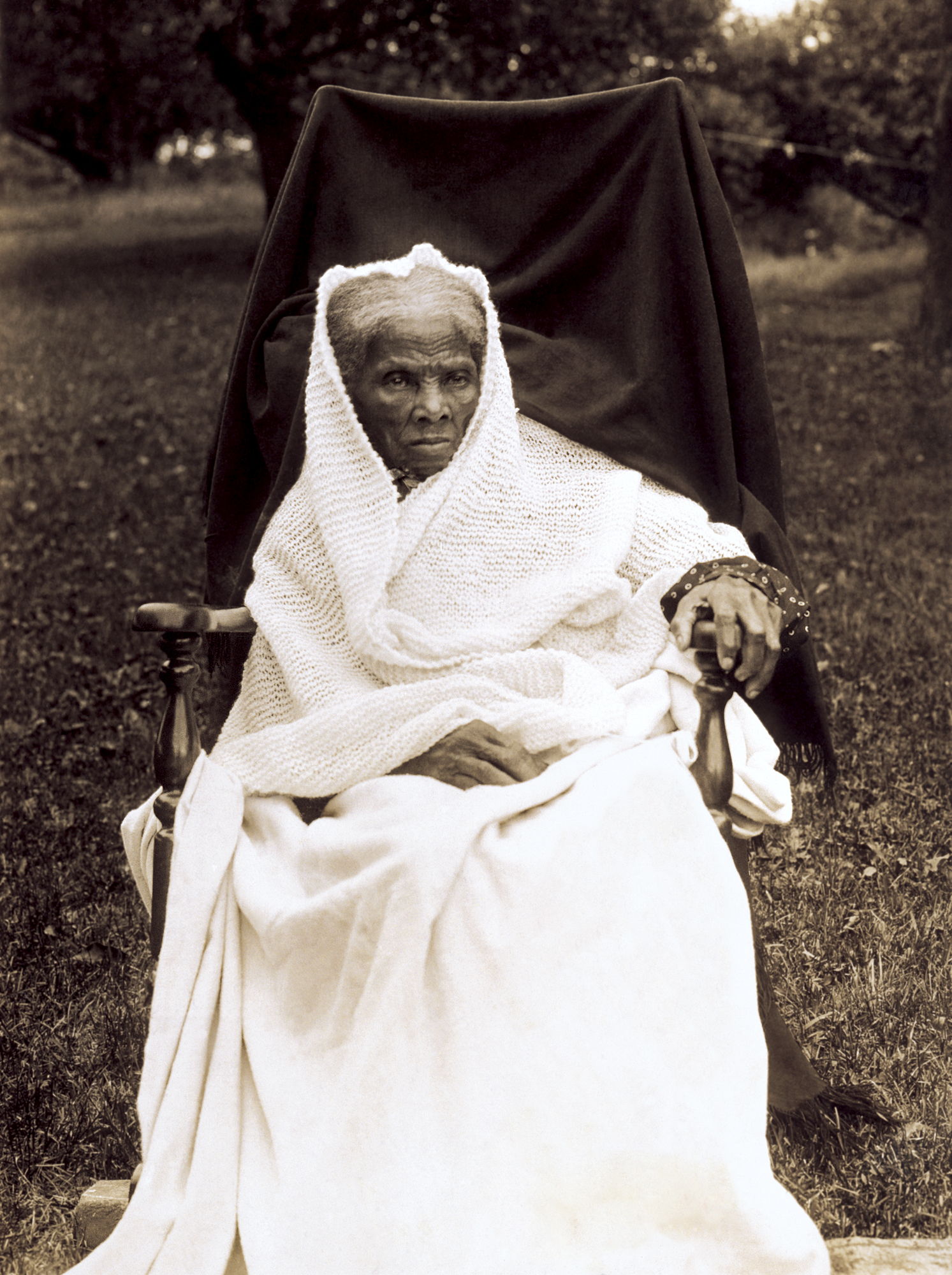 |
| Image: Wikipedia |
This date was the day, in 1849, when Harriet Tubman escaped slavery and began a journey which freed so many others from inhuman bondage. She was the builder and the conductor of the Underground Railroad, that route out of the American South that has become legend in our history. We often romanticize the idea – yet the origin terminus of the Railroad tends to be lost in the telling. We like the idea of escape from harrowing straits, but history, as it was taught to me anyway, tended to focus on freedom over slavery. Even when the conditions were considered, it seemed to be from the white point of view – “we were bad” – not really about those who were sinned against.
Yet all my life, even here in the white-flight south, contained threads of truth. Sojourner Truth, of course. Maggie Walker, one of the most important figures in the history of finance in the United States, whose name is not enough spoken. And Harriet Tubman.
Harriet was the figure of excitement, when we were kids. Sojourner’s spirit may have been beyond our grasp, and Maggie’s accomplishments those of a boring adult. But Tubman was a real *story* – the story of how my people did wrong, but somebody escaped. The story of how she helped others to freedom.
Not being an adventure-story seeker, perhaps the tales appealed to me by assuaging some formless seed of White Liberal Guilt, but hers was the figure, of all these Black women, who seemed to mean something to me when I was very young. Her powerful physical presence, her turban, her manifest *liberty*. Easier, perhaps, to contemplate her than to imagine than those thousands of others who did not escape, not even with her indomitable struggles.
Harriet Tubman’s mother is said to have stood up to the masters when hers agreed with another to sell her youngest son – and to have succeeded. Her father was manumitted in 1840, at the death of his master. She married, before she herself was liberated, a free Black man. Enchained she was, but freedom was no faraway concept in Maryland in those days.
But Harriet Tubman was enslave, even after she was a married woman, even after she adopted the name of her formidable mother. She suffered beatings and being loaned away from her family, from that remarkable mother she loved and longed to be with. From a young age, she was given the hardest work in the field, and endured illness and labor without respite. She had her skull cracked open for standing up to a white man, and later wrote that it was her hair – her tight and thick hair – which saved her, perhaps, from bleeding to death, from life slipping through the break.
And yet, today, the culture in which we live dares to shame black women for wearing natural hair, even stealing from them the right to make a living. It sounds, to lift a phrase from those who feel just as free to expend bigotry upon arbitrarily defined periods of time as some feel to wield it against other souls, “positively medieval” to punish, so brutally and in such extraordinary ignorance, someone for the way their hair grows. For the way they are made – designed, if you will, by the very G-d we have presumed to invoke in defense of the institution of slavery. Shameful as that was, we are hardly stainless today.
Imagine being wronged and physically injured – reaching to your head and feeling the wound – feeling, even, the bone, no longer whole. Imagine that you can feel your very HAIR staunching the blood; or knit, perhaps, thick and strong, over two pieces of yourself where once there was one piece. Imagine feeling that here, like Samson, was the thing that held you to life.
One hundred sixty-five years ago, on this day, one woman escaped for the first time (she was forced back and had to flee again) – and, by her will and her power and her conviction, eventually dozens of others found the liberation she had. Though not without allies along her way, she was utterly alone in flight, and became a stranger in a strange land.
By the time she had begun the Railroad, white slaveowners presumed some white abolitionist must be siphoning away their slaves – it was unthinkable a Black woman could have succeeded as a leader, taking so many to freedom. Yet she rescued her own family. She worked with John Brown and with Susan B. Anthony. She refused to allow her “passengers” to quail, to quit, to fail, she assisted the Union in the Civil War. She offered this lesson to President Lincoln:
(T)he negro can tell master Lincoln how to save the money and the young men. He can do it by setting the negro free. Suppose that was an awful big snake down there, on the floor. He bite you. Folks all scared, because you die. You send for a doctor to cut the bite; but the snake, he rolled up there, and while the doctor doing it, he bite you again. The doctor dug out that bite; but while the doctor doing it, the snake, he spring up and bite you again; so he keep doing it, till you kill him. That's what master Lincoln ought to know.
Asked to speak a word of Harriet Tubman for a biography of her, Frederick Douglass said:
The midnight sky and the silent stars have been the witnesses of your devotion to freedom and of your heroism. Excepting John Brown—of sacred memory—I know of no one who has willingly encountered more perils and hardships to serve our enslaved people than you have.
September 17 was the first time she escaped … and, in some way, she spent the rest of her life – escaping, again and again, and bringing with her so many others. One hundred sixty-five years. It isn’t all that long a time.
Sunday, September 14, 2014
More on the Not-So-Dirty/Stupid Past
Madame Isis has a marvelously detailed, and SOURCED, piece today on the hygiene of the past. Regular readers know I have a history here of expressing frustration with the contemporary bigotry against the past as a seething mass of filthy stupidity, miraculously evolving into Bright and Shining Us, we who are today so wise, so enlightened, and so clean. A-hem.
Isis covers a great deal more than I have, including feminine hygiene, though she is more period specific. That said, her sourcing provides a list of resources for anyone interested in researching further. Hers is a wonderful blog for anyone interested in or writing about the seventeenth and eighteenth centuries, especially for beauty and costume. She also includes a wealth of beautiful and instructive images, including some which may rather shock the viewer who thinks of most history as prudish as well!
Isis covers a great deal more than I have, including feminine hygiene, though she is more period specific. That said, her sourcing provides a list of resources for anyone interested in researching further. Hers is a wonderful blog for anyone interested in or writing about the seventeenth and eighteenth centuries, especially for beauty and costume. She also includes a wealth of beautiful and instructive images, including some which may rather shock the viewer who thinks of most history as prudish as well!
September Sunday Sunset
The rays stealing across the office are gone, but the kitchen window is filled with the dazzling, long light of late sunshine. The work of the past several weeks has been good for this home.
My office is wonderful, and my friends helped me to build it, getting the new desk in. I hung my two prints of Diana the Huntress in there, both of which my mother has given me over the years, and one of which is in a frame which dates back three generations in my dad's family, and my mom restored when I was a kid.
The library is clean and finished and comfortable - the very narrow old desk/vanity/dresser now the sideboard in there, between couch and a long, low bookshelf built by my dad. (Hidden in the drawers of the old desk, which is facing back-side out, drawers to the wall, are copies of research and early, early, EARLY writing on The Ax and the Vase. I didn't want to trash or recycle them, but I don't care to see them either!)
The house is clean, much laundry is done, and supper is on the beautiful new stove.
Yet this weekend has been another of those times where I witness myself useless to be of practical use to those I love. I rage against this impotence, I strategize and bargain and beg G-d *and* those I even theoretically could help - and find myself blessed and inert, comfortably fruitless.
And with a writing desk I may forever associate with the piece of scary family news I got the hour before it came in the house.

My office is wonderful, and my friends helped me to build it, getting the new desk in. I hung my two prints of Diana the Huntress in there, both of which my mother has given me over the years, and one of which is in a frame which dates back three generations in my dad's family, and my mom restored when I was a kid.
The library is clean and finished and comfortable - the very narrow old desk/vanity/dresser now the sideboard in there, between couch and a long, low bookshelf built by my dad. (Hidden in the drawers of the old desk, which is facing back-side out, drawers to the wall, are copies of research and early, early, EARLY writing on The Ax and the Vase. I didn't want to trash or recycle them, but I don't care to see them either!)
The house is clean, much laundry is done, and supper is on the beautiful new stove.
Yet this weekend has been another of those times where I witness myself useless to be of practical use to those I love. I rage against this impotence, I strategize and bargain and beg G-d *and* those I even theoretically could help - and find myself blessed and inert, comfortably fruitless.
And with a writing desk I may forever associate with the piece of scary family news I got the hour before it came in the house.
Wednesday, September 10, 2014
The Grammar Gods' Gift: Free Will
Though the Arrant Pedant is not a prolific poster, he's an essential follow in my book - an excellent author, and perhaps one of the greatest patrons of our language I've ever seen. He's made it fun for me from time to time to really enjoy letting go of youthful prescriptives. Today, he reminds my why I love the Oxford comma, as some of you know I do (and why I used to love The Onion, when I was a regular reader!).
I find the arguments in favor of including the serial comma stronger than the arguments in favoring of leaving it out, but I don’t pretend that my preference is an ironclad grammatical law or proof of my superiority. It’s just that—a preference. You are free to choose for yourself.
Broad Appeal
We of the Sarcastic Broads Club have not been busy lately in our online presence (gracious! over two years since the last post!?) - nor, sadly, in our actual meetings (though nowhere near that long). Perhaps it's because we're a busy lot; certainly, it is not because we don't love each other and get an enormous inspiration from our meetings. Plus, Leila bakes the BEST cookies and brownies!
Leila published Hot Flashes several months ago, and Kristi Tuck Austin is burgeoning into several areas of work, with media escorting and authorial assisting ... and Kristy Feltenberger Gillespie just put out her new anthology, Even in Death, which is getting great reviews. Kristi with an I details the release here, very nicely. I can't wait to read it! Leila and Kristy with a Y have made me so glad I got a Kindle (though I do have Leila's novel in pulp-and-printing form as well: for I am greedy). Now, I'll get to have KFG in deluxe, hard copy pulp-and-printing as well. Many happies ensue.
As for me - though I haven't taken much time to blog about it of late (I may have overdone it in the past as it is!) - querying and, oh so blissfully, dipping into the WIP. It feels like the WIP (still untitled, and still not a sequel to The Ax and the Vase, as such) has been with me nearly as long as Ax has, and yet its writing has been definitively backburnered until I could commit to it.
Joyously: at last, I can. And it is exciting. Research will take a bit of vacation time I think, and I look forward to taking that and doing that as we approach (YEEP) the holidays. I've done some bits of writing, but this early in the going that is more a matter of luxuriant indulgence and exercise than creating any sort of text destined to end up in the manuscript. In its way, that ephemerality makes the writing even more pleasurable, because I don't have to sweat it. And it's exercise in a very different, new main character and setting. It's exercise in just writing at all, which I've done not just on the WIP, but on a certain short story actually born at an SBC meeting, with the Broads. It's something I've toyed with tiny bit by tiny bit for a long time now, but now seems to be its time - its power is growing, and its hold on me is stronger.
Writing is exciting - and it feels like it's been ages since I "really" wrote, creatively, not to further the place of Ax in the world or for my blog or for my work or just to communicate with friends. Reeeeeaall writing. The kind that makes you feel something other than, "Got that said. Good."
Seems like, with the Broads, there's a bit of that going around. I'll enjoy sinking into a story of two of Kristy-with-a-Y's, and talking with Leila and Kristi-with-an-I about editing and giving birth to new works. All of us will get to see each other - and SO many others - at the JRW Conference so soon I can't believe it.
Until then ... great things are afoot.
Leila published Hot Flashes several months ago, and Kristi Tuck Austin is burgeoning into several areas of work, with media escorting and authorial assisting ... and Kristy Feltenberger Gillespie just put out her new anthology, Even in Death, which is getting great reviews. Kristi with an I details the release here, very nicely. I can't wait to read it! Leila and Kristy with a Y have made me so glad I got a Kindle (though I do have Leila's novel in pulp-and-printing form as well: for I am greedy). Now, I'll get to have KFG in deluxe, hard copy pulp-and-printing as well. Many happies ensue.
As for me - though I haven't taken much time to blog about it of late (I may have overdone it in the past as it is!) - querying and, oh so blissfully, dipping into the WIP. It feels like the WIP (still untitled, and still not a sequel to The Ax and the Vase, as such) has been with me nearly as long as Ax has, and yet its writing has been definitively backburnered until I could commit to it.
Joyously: at last, I can. And it is exciting. Research will take a bit of vacation time I think, and I look forward to taking that and doing that as we approach (YEEP) the holidays. I've done some bits of writing, but this early in the going that is more a matter of luxuriant indulgence and exercise than creating any sort of text destined to end up in the manuscript. In its way, that ephemerality makes the writing even more pleasurable, because I don't have to sweat it. And it's exercise in a very different, new main character and setting. It's exercise in just writing at all, which I've done not just on the WIP, but on a certain short story actually born at an SBC meeting, with the Broads. It's something I've toyed with tiny bit by tiny bit for a long time now, but now seems to be its time - its power is growing, and its hold on me is stronger.
Writing is exciting - and it feels like it's been ages since I "really" wrote, creatively, not to further the place of Ax in the world or for my blog or for my work or just to communicate with friends. Reeeeeaall writing. The kind that makes you feel something other than, "Got that said. Good."
Seems like, with the Broads, there's a bit of that going around. I'll enjoy sinking into a story of two of Kristy-with-a-Y's, and talking with Leila and Kristi-with-an-I about editing and giving birth to new works. All of us will get to see each other - and SO many others - at the JRW Conference so soon I can't believe it.
Until then ... great things are afoot.
Friday, September 5, 2014
"I Like to Really CURATE My Sharks"
Being a language nerd and a writer (… they CAN be different things!), the trends of language within popular culture capture my attention. Being, too, old enough to have actually said “like totally” unironically – and, indeed, to have known the term irony unburdened by 90s/2000s hipster baggage – I’ve seen some linguistic habits come and go. Val-speak, only a little overstated in the ancient Nicholas Cage outing, “Valley Girl”, was actually and honestly a “thing” – just a bit before “a thing” became a thing. Southern people once ate an evening meal we called supper. And the particular pronunciation my dad used for the word restaurant is long unheard except in memory.
Some trends within the English language do little more than irritate and engender speechifying and complaint. Corporate-speak is the shining example here, with people in the 80s “interfacing” (conversing) and developing their skill sets and so on, through into the odd tic I ran into at my previous employer, where every sentence began with the word, “So.” Question, statement – didn’t matter, there was a pervasive inability to commence any utterance without it.
Some, though, are not bad at all. Or, perhaps, they’re sad hipster jumpings-of-a-verbal-shark. You decide.
Over the past two years, I have noticed the increasing prominence of the verb, to curate. Because this is a highly useful term, and hasn’t come across my desk in any memos, I’ve been happy to see its widening utility. It doesn’t seem to be thrown around improperly, and its unspoken limitation to museum collections never had any basis in any case – and it has a nice feel to it, the word curate. I like its spelling, its sound, its pronunciation, its slight, soft lilt bouncing between strong consonants. It’s a perfectly cromulent word.
But recently it made it way into a commercial, in the form of a chubby, bearded, hipster bartender saying, “I like to really CURATE my herbs” as he makes a drink.
Now, we all know that the hipster beard had to be over once the wildly expensive realm of television commercials were using it widely, and we’re required to insert-meta-ironic-post-snark-viral superiority here, because a trend, once over, must be reviled, and publicly, or without the backlash who will know they are being punished for being out of step …
WAS THAT A SHARK WE JUST JUMPED?
Is the word curate now victim of the inevitable public flogging all the slobby youngsters who followed a trend just last year are on the tipping point of enduring, because it has now been associated with them? Has “curate” jumped the shark (a phrase, itself, both a tool of all backlash and simultaneously dismissed as having been overdone and missing important artistic points because it is reductive)?
Words absolutely go out of style. Some stay – some for centuries. Another fascinating study in the fashion of language is just how OLD some slang we think we invented really is (see also: every damn word Shakespeare ever wrote – the OED certainly does).
But many, many, many terms and manners of speaking are ephemeral. This is how Old English became Middle English became Tudor speech became American English, modern British English, pidgin, and a hundred thousand dialects. This is how sentimentalist contrarians like me choose to pronounse rest-runt like their dads did, despite never saying it that way for 40 years – or choose suddenly to bring “supper” back, because it’s a word with a certain feel, a connection to literature we love, or just to be different.
When Teh Intarwebs was new, it was a big deal just figuring out how we were going to spell email (shall we hyphenate? shall we spell out the whole words, electronic mail?) and in 1999 (… and still …) figuring out what to call the first decade – and second – of the new millennium was the subject of ad nauseum discussion. When the automobile came along, it was much the same, with options from motor car to horseless carriage coming and going perhaps in a way that seemed almost as fast as the newfangled machines themselves. And we ended up with multiple solutions, around our various earthly “ponds” …
The older I get, the more aware I am – and glad I am – how deeply irrelevant my outrages are, especially where the English language is concerned. My ex husband (who graduated magna cum laude in ENLGISH, as he spelt it when he told me about it via electronic mail back in the early aughts) and I get along better and better where grammar is concerned, as the years go by, and I find it almost bewilderingly pleasurable to find out how many rules I grew up on – or just decided on, in a stubborner state of youth – are dead-assed WRONG.
Or incorrect, if you simply must prefer. Heh.
The non-native prohibition on dangling prepositions imposed on us by Latin-writing monks. The which/that conundra so widespread most people don’t even compute they exist at all. Spelling itself.
I still hold to the fact that the word “hatred” exists, but have come to accept that the noun form of that word is going to be “hate” whether I like it or not … and, in fact, that the usage predates even the ancient century in which *I* was born. By a few more.
I won’t ever buy an INFINITI vehicle, because its name gives me hives (and I’m not a prestige-sucking-by-“exclusive”-brands kind of dilettante …).
I’ll hew, probably always, to standardized spellings – and even insist upon the apostrophe in Hallowe’en – but not because I believe there’s anything like a definitive “correct” way to render our language. Just because … I’m a heedless maniac in enough ways; linguistically, I gravitate to discipline, even if the discipline is arbitrary and even imaginary. As in religion, sometimes we just choose a set of rules. Humans like both to make them – and break them – and, oh sometimes, even to follow them. Sort of.
So … what do you think? Has “curate” jumped the shark, along with “jumped the shark” and ironic, slobby hipster boys with beards? Or will you use it proudly – for your herbs or museum collections or choices in dog food?
Some trends within the English language do little more than irritate and engender speechifying and complaint. Corporate-speak is the shining example here, with people in the 80s “interfacing” (conversing) and developing their skill sets and so on, through into the odd tic I ran into at my previous employer, where every sentence began with the word, “So.” Question, statement – didn’t matter, there was a pervasive inability to commence any utterance without it.
Some, though, are not bad at all. Or, perhaps, they’re sad hipster jumpings-of-a-verbal-shark. You decide.
Over the past two years, I have noticed the increasing prominence of the verb, to curate. Because this is a highly useful term, and hasn’t come across my desk in any memos, I’ve been happy to see its widening utility. It doesn’t seem to be thrown around improperly, and its unspoken limitation to museum collections never had any basis in any case – and it has a nice feel to it, the word curate. I like its spelling, its sound, its pronunciation, its slight, soft lilt bouncing between strong consonants. It’s a perfectly cromulent word.
But recently it made it way into a commercial, in the form of a chubby, bearded, hipster bartender saying, “I like to really CURATE my herbs” as he makes a drink.
Now, we all know that the hipster beard had to be over once the wildly expensive realm of television commercials were using it widely, and we’re required to insert-meta-ironic-post-snark-viral superiority here, because a trend, once over, must be reviled, and publicly, or without the backlash who will know they are being punished for being out of step …
WAS THAT A SHARK WE JUST JUMPED?
Is the word curate now victim of the inevitable public flogging all the slobby youngsters who followed a trend just last year are on the tipping point of enduring, because it has now been associated with them? Has “curate” jumped the shark (a phrase, itself, both a tool of all backlash and simultaneously dismissed as having been overdone and missing important artistic points because it is reductive)?
Words absolutely go out of style. Some stay – some for centuries. Another fascinating study in the fashion of language is just how OLD some slang we think we invented really is (see also: every damn word Shakespeare ever wrote – the OED certainly does).
But many, many, many terms and manners of speaking are ephemeral. This is how Old English became Middle English became Tudor speech became American English, modern British English, pidgin, and a hundred thousand dialects. This is how sentimentalist contrarians like me choose to pronounse rest-runt like their dads did, despite never saying it that way for 40 years – or choose suddenly to bring “supper” back, because it’s a word with a certain feel, a connection to literature we love, or just to be different.
When Teh Intarwebs was new, it was a big deal just figuring out how we were going to spell email (shall we hyphenate? shall we spell out the whole words, electronic mail?) and in 1999 (… and still …) figuring out what to call the first decade – and second – of the new millennium was the subject of ad nauseum discussion. When the automobile came along, it was much the same, with options from motor car to horseless carriage coming and going perhaps in a way that seemed almost as fast as the newfangled machines themselves. And we ended up with multiple solutions, around our various earthly “ponds” …
The older I get, the more aware I am – and glad I am – how deeply irrelevant my outrages are, especially where the English language is concerned. My ex husband (who graduated magna cum laude in ENLGISH, as he spelt it when he told me about it via electronic mail back in the early aughts) and I get along better and better where grammar is concerned, as the years go by, and I find it almost bewilderingly pleasurable to find out how many rules I grew up on – or just decided on, in a stubborner state of youth – are dead-assed WRONG.
Or incorrect, if you simply must prefer. Heh.
The non-native prohibition on dangling prepositions imposed on us by Latin-writing monks. The which/that conundra so widespread most people don’t even compute they exist at all. Spelling itself.
I still hold to the fact that the word “hatred” exists, but have come to accept that the noun form of that word is going to be “hate” whether I like it or not … and, in fact, that the usage predates even the ancient century in which *I* was born. By a few more.
I won’t ever buy an INFINITI vehicle, because its name gives me hives (and I’m not a prestige-sucking-by-“exclusive”-brands kind of dilettante …).
I’ll hew, probably always, to standardized spellings – and even insist upon the apostrophe in Hallowe’en – but not because I believe there’s anything like a definitive “correct” way to render our language. Just because … I’m a heedless maniac in enough ways; linguistically, I gravitate to discipline, even if the discipline is arbitrary and even imaginary. As in religion, sometimes we just choose a set of rules. Humans like both to make them – and break them – and, oh sometimes, even to follow them. Sort of.
So … what do you think? Has “curate” jumped the shark, along with “jumped the shark” and ironic, slobby hipster boys with beards? Or will you use it proudly – for your herbs or museum collections or choices in dog food?
Thursday, September 4, 2014
Collection
It's a funny thing someone happened to hit this post today and remind me of it by bumping it onto my stats. The white egret is a close cousin of the blue heron - and its symbolic connection with self-determination has come to mean a lot to me.
Gossie took a mini vacation this past weekend, and it reminded me that I have not linked Janet Reid for at least a minute and a half. So here we rectify this lapse, with her advice to authors about First3Chapters. *Eyebrow*
Dusting the vestments ... ? Fabric over a millennium and a half old is, as anyone might guess, vanishingly thin on the ground - and its conservation is a fascinating science, craft, and story spanning far, far longer than St. Ambrose's life.
For this link, do you prefer Door #1 (NatGeo), Door #2 (BBC), or Door #3 (Nature) to read about the tantalizing possibility of Neanderthal art nearly forty-thousand years old ... ? This is one of those stories where the debate in the field (har ...) is almost as interesting as the hopes and theories themselves. The questions are wonderfully unanswerable.
Gossie took a mini vacation this past weekend, and it reminded me that I have not linked Janet Reid for at least a minute and a half. So here we rectify this lapse, with her advice to authors about First3Chapters. *Eyebrow*
Dusting the vestments ... ? Fabric over a millennium and a half old is, as anyone might guess, vanishingly thin on the ground - and its conservation is a fascinating science, craft, and story spanning far, far longer than St. Ambrose's life.
For this link, do you prefer Door #1 (NatGeo), Door #2 (BBC), or Door #3 (Nature) to read about the tantalizing possibility of Neanderthal art nearly forty-thousand years old ... ? This is one of those stories where the debate in the field (har ...) is almost as interesting as the hopes and theories themselves. The questions are wonderfully unanswerable.
Tuesday, September 2, 2014
Withdrawing From the Moral Bank --- OR --- "I Want the Vaccuum"
The odd thing about this article, and a few others I looked at when I found it, was the repeated idea that transactional rectitude is unconscious. How many times a day do you witness someone saying, or do the office break room chat-and agree, that “if it’s for someone’s birthday, the cake has no calories” or fill-in-your-equivalency … ? Or the “I worked out, I can have more – or I’m GOING to work out (I swear!), I can have more”, or what have you. Not only is this conscious, the joke of it is culturally enshrined by now – that we acknowledge some foible with a laugh, but we foible away nonetheless, even seeking approval for some exchange or other.
It’s most often caloric, in American culture at least, but I’ve certainly seen people explicitly note their moral or social cred before whipping out some racist or privilege-blind remark or other. The old “but I have (such and such minority) friends” clause seems to go far, for a lot of us, in excusing saying things it would otherwise be unthinkable to voice publicly. I’ve heard someone describe Blacks as “monkeys”, who then went on to use that old saw. (Fortunately, not someone I’ve been associated with for decades now.)
As to the gas-guzzling vehicle owner boggling minds by purchasing locally or ecologically, I’m highly amused by the use of Whole Foods as some sort of example of the ultimate in moral retail. Whole Foods is a wildly cache’ brand, affordable frankly to few, and appealing more for its elitist snootery than for its marvelous righteousness. I am acquainted with exactly nobody who could ever afford to shop there exclusively for food, and those I know who shop there at all do so precisely to splurge in one way or another. Splurge. Not the baseline I would have used, in terms of examining the motivations and/or behavior of the population at large, who would go broke in a week trying to feed a family at their prices.
I drive a Prius, but it is not a motorized reservoir, for me, of opportunities to waste in other areas. Per the comments at the first link above, I drive it because it reduces my gas consumption – which, while nicely affecting my carbon footprint, is also cheaper in what I hope will be a long run. I also put out recycling every time they come to pick it up – but produce, as a single-person household, barely enough garbage to fill the extremely huge rollaway bin provided by the county in the space of a *month*. This isn’t, for me, a matter of morality except insofar as I consider profligacy in any form – drinking, eating, spending, or using the resources of my environment – generally to be avoided. I like my driver’s license, current wardrobe, credit rating/savings, and planet more than I do the rewards of most behaviors which could, in excess, endanger these things. It would be a pretty tough row to hoe, at that, destroying any one of these things – for myself OR for anybody else, depending on the scale of my effects in this world. I like the garden growing as it is, as it were.
Like a lot of women, I certainly enjoy some level of Martyr’s Complex – “ahh, I work so hard, and it’s just never done” – but I keep two things on hand at all times to prevent too much self indulgence. One is gratitude: that my life is cram-STUFFED with blessings (and, that thing noted above, with privilege I never did anything to earn nor deserve). Two, self awareness. If I let myself believe for one second I ever deserved any of the good I’ve got, I won’t deserve one iota of it. Ever.
It’s like this, in shorthand: I live my life striving to be good enough for those who love me.
I used to say “my dog” – but now I have dog and cat, and let it be said, I also understand the enormity of the love of those who’ve proven willing to tolerate me in their lives. I have a LOT to live up to, if the love in one’s life is any measure, and to deserve it all will take beyond all my life to even hope to attain.
If I dented whatever wee and paltry contributions my life provides in this world, because I believed my contributions were a sort of personal savings account – an annuity of “goodness” I could DRAW from as if there were some right to that – then there is no contribution at all. And if I make no contribution to the world, attaching the strings of self-indulgence to even the smallest of “good” acts (with, of course, myself as the judge of what may be good), I’m lost to ever being good “enough” for the abundance I have been given.
You never get to be good enough for your dog, being an emotional/moral/righteous accountant. You can never pay back anyone – if you consider life anything that can be balanced like a checkbook.
Yeah, I’ll eat far too many Chee-tos in one sitting, and I accidentally leave the AC on too cold for too long, when I set it to “hold” while I was sweating and working, and forgot to put it back on schedule. When it comes to my writing - my unpaid job - I am excuse-maker extraordinaire: "fallow time" or "my computer is on Safe Mode" or "I've been wiped out from work for three weeks - and I haven't had a vacation in three YEARS now" make it all to easy to do other things than quering or researching. That desk I was on about this week is in some ways, "I'll start the diet Monday" of my unpaid/unpublished authorial career. I just failed, for three weeks, to do my little calesthenics at my desk, and don’t think the size of my arms doesn’t reflect the lassitude.
But: don't think I don't know when I'm bargaining with myself (a.k.a. "the Devil") - and cheating myself, all in the same acts.
But #2): I also don't exchange eating crap for drinking a diet soda, and I don’t tell myself there’s no sin nor effect, when I push life’s balances out of whack. I even participate in the “well someone worked so hard to make these brownies, surely I have to have another one” games we all sometimes play. Frankly, playing games SOMETIMES is a part of the pleasure of life.
Just ask my dog.
Then watch, and see if she cheats on her taxes because she was nice to ME today …
It’s most often caloric, in American culture at least, but I’ve certainly seen people explicitly note their moral or social cred before whipping out some racist or privilege-blind remark or other. The old “but I have (such and such minority) friends” clause seems to go far, for a lot of us, in excusing saying things it would otherwise be unthinkable to voice publicly. I’ve heard someone describe Blacks as “monkeys”, who then went on to use that old saw. (Fortunately, not someone I’ve been associated with for decades now.)
As to the gas-guzzling vehicle owner boggling minds by purchasing locally or ecologically, I’m highly amused by the use of Whole Foods as some sort of example of the ultimate in moral retail. Whole Foods is a wildly cache’ brand, affordable frankly to few, and appealing more for its elitist snootery than for its marvelous righteousness. I am acquainted with exactly nobody who could ever afford to shop there exclusively for food, and those I know who shop there at all do so precisely to splurge in one way or another. Splurge. Not the baseline I would have used, in terms of examining the motivations and/or behavior of the population at large, who would go broke in a week trying to feed a family at their prices.
I drive a Prius, but it is not a motorized reservoir, for me, of opportunities to waste in other areas. Per the comments at the first link above, I drive it because it reduces my gas consumption – which, while nicely affecting my carbon footprint, is also cheaper in what I hope will be a long run. I also put out recycling every time they come to pick it up – but produce, as a single-person household, barely enough garbage to fill the extremely huge rollaway bin provided by the county in the space of a *month*. This isn’t, for me, a matter of morality except insofar as I consider profligacy in any form – drinking, eating, spending, or using the resources of my environment – generally to be avoided. I like my driver’s license, current wardrobe, credit rating/savings, and planet more than I do the rewards of most behaviors which could, in excess, endanger these things. It would be a pretty tough row to hoe, at that, destroying any one of these things – for myself OR for anybody else, depending on the scale of my effects in this world. I like the garden growing as it is, as it were.
Like a lot of women, I certainly enjoy some level of Martyr’s Complex – “ahh, I work so hard, and it’s just never done” – but I keep two things on hand at all times to prevent too much self indulgence. One is gratitude: that my life is cram-STUFFED with blessings (and, that thing noted above, with privilege I never did anything to earn nor deserve). Two, self awareness. If I let myself believe for one second I ever deserved any of the good I’ve got, I won’t deserve one iota of it. Ever.
It’s like this, in shorthand: I live my life striving to be good enough for those who love me.
I used to say “my dog” – but now I have dog and cat, and let it be said, I also understand the enormity of the love of those who’ve proven willing to tolerate me in their lives. I have a LOT to live up to, if the love in one’s life is any measure, and to deserve it all will take beyond all my life to even hope to attain.
If I dented whatever wee and paltry contributions my life provides in this world, because I believed my contributions were a sort of personal savings account – an annuity of “goodness” I could DRAW from as if there were some right to that – then there is no contribution at all. And if I make no contribution to the world, attaching the strings of self-indulgence to even the smallest of “good” acts (with, of course, myself as the judge of what may be good), I’m lost to ever being good “enough” for the abundance I have been given.
You never get to be good enough for your dog, being an emotional/moral/righteous accountant. You can never pay back anyone – if you consider life anything that can be balanced like a checkbook.
Yeah, I’ll eat far too many Chee-tos in one sitting, and I accidentally leave the AC on too cold for too long, when I set it to “hold” while I was sweating and working, and forgot to put it back on schedule. When it comes to my writing - my unpaid job - I am excuse-maker extraordinaire: "fallow time" or "my computer is on Safe Mode" or "I've been wiped out from work for three weeks - and I haven't had a vacation in three YEARS now" make it all to easy to do other things than quering or researching. That desk I was on about this week is in some ways, "I'll start the diet Monday" of my unpaid/unpublished authorial career. I just failed, for three weeks, to do my little calesthenics at my desk, and don’t think the size of my arms doesn’t reflect the lassitude.
But: don't think I don't know when I'm bargaining with myself (a.k.a. "the Devil") - and cheating myself, all in the same acts.
But #2): I also don't exchange eating crap for drinking a diet soda, and I don’t tell myself there’s no sin nor effect, when I push life’s balances out of whack. I even participate in the “well someone worked so hard to make these brownies, surely I have to have another one” games we all sometimes play. Frankly, playing games SOMETIMES is a part of the pleasure of life.
Just ask my dog.
Then watch, and see if she cheats on her taxes because she was nice to ME today …
"And, Reader, I Purchased It"
Surely, it is fated. THIS is the post that put me over 100,000 hits on this blog! And I called this morning - they still had the desk - and I paid for it.
As I understand it, the desk was much loved by its previous owner, a guy who had it for many years and ran a business - and was also at some point (I don't know whether it was when he had the desk) an assistant coach for the Dallas Cowboys. They're planning to tell him it's going to someone who'll love it, too - and he'll be so pleased.
I told 'em they could leave out the part about how I'm no football fan ...
Well, this poor desk is in for a change. But I think it'll find it interesting around here.
As I understand it, the desk was much loved by its previous owner, a guy who had it for many years and ran a business - and was also at some point (I don't know whether it was when he had the desk) an assistant coach for the Dallas Cowboys. They're planning to tell him it's going to someone who'll love it, too - and he'll be so pleased.
I told 'em they could leave out the part about how I'm no football fan ...
Well, this poor desk is in for a change. But I think it'll find it interesting around here.
Monday, September 1, 2014
"Life. Don't Talk to Me About Life."
I love Scientific American.
Life is a concept that we invented.
… an immense spectrum of complexity, from a single hydrogen atom to something as intricate as a brain. In trying to define life, we have drawn a line at an arbitrary level of complexity and declared that everything above that border is alive and everything below it is not.
(T)his division does not exist outside the mind.
There is no threshold at which a collection of atoms suddenly becomes alive, no categorical distinction between the living and inanimate, no Frankensteinian spark.
We have failed to define life because there was never anything to define in the first place.
Subscribe to:
Posts (Atom)