Showing posts with label oldest. Show all posts

Thursday, January 21, 2021

Pig art is some of the BEST art!

I’d be really interested to hear an art historian with a deep understanding of pigment and process look at this oldest known artistic depiction of the animal world and deconstruct why there are two slightly different shades of red.

Most of the figure is done in a dark burgundy, but then there is a warmer ochre tone which looks like it expanded on the original image perhaps (*) – and one (left!) hand print in the darker color, then a right hand print in the warmer color. And even the darker burgundy color – there are many more “brush strokes” along the back of the animal in that color, where the body is much less saturated. Was there more “coloring” as the artist got the shape and size just the way they wanted it?

* Was this image complete, and the second “hand” added to it, made the pig larger and more fearsome? Were two artists working together, and the second color representing something – an aura of the spirit of the animal, a ridge of hair raised as the pig encountered the other pigs (do pigs “ridge back” as other animals do? They are mammals after all, and even humans’ hair stands on end on our necks when we are on alert)? Is it possible one color was laid down, and long after, the second color was added by a prehistoric critic? Or are there two tones because one pot of mixed pigment simply ran out?

I am prompted to recall: many of these “hand print” paintings were studied several years ago, and a new conclusion was reached that researchers had never come to before: that they were women’s hands.

Wednesday, April 17, 2019

Archpeeology

I'd apologize for the headline on this post, but hey - y'all know I am already obsessed with the archaeology of poo, so this one should be no surprise. Just thank me for not linking the headline punning about this discovery almost "whizzing" by ...

Anyway, so at last, at last, poo has met its match, so to speak. Article. Article. Article. Abstract, for the truly dedicated. Wheeeee!

Yeah, no pun intended. ("... or was it ... ?")


Edited to add: but wait, there's more. Not merely the salts indicating where urine was once deposited, but the stuff itself. Yes, I mean the story about the horse.

Friday, November 4, 2016

Collection

Every week at the very *least*, I am struck with gratitude for a couple of things in my upbringing - one, I grew up at a time when popular entertainment was thinner on the ground, so we had 3 networks and PBS to choose from until I was like THIRTEEN and, gasp, a whole *fifth* channel showed up (what eventually became Fox). PBS being a great place to visit, its programming made up a hearty chunk indeed of my up-growin', and I still gravitate to its offerings, some of them as old as I am, but always intriguing - and, to boot, with parents like mine a great way to learn critical television watching.

Our Earth is a master chef. She really knows how to cook!

All this intro is apropos of the neato-spedito NOVA now playing. Shiny gems! How do opals come to be? What can we learn from so-called "flawed" diamonds (now I want one; I've never given two hoots about a dang diamond before, but - five billion year old geology, preserved in a beautiful uncut stone? GIMME inclusions!)? I am enchanted by how excited these scientists are, it's funderful to watch. The thing about learning the science of things we romanticize is this: sometimes, understanding the properties that lead us to emotional conclusions actually *deepens* the fascination and mystic feeling.

Glamour, I admit/protest, is not generally a source I think of when it comes to news. Yet somehow, in my wanderings around the intertubes, at some point this week I bumped into this piece about Uber's discrimination against minorities and women. (Yes, the info here points specifically to discriminating against Black people; do you think they're better with other POC? I don't.) It's sad, and it is a good article.

This post from Ann Bennett made me happy if only for using the term "messes" in my favorite way, but it's also a neat agricultural/cultural/foodie piece. On the health benefits and history of 8 messes of poke salad. (Bonus content: in the comments, she uses "victuals.")

Okay, SUPERMOON! Who doesn't love a supermoon? I don't not! Pick your link here.

A 49,000 year old human settlement in Australia? Linkyness from the Sidney Morning Herald, because I kind of love that their domain is SMH.com. Most news'll do the SMH to you. (The posture in this picture? That doesn't remind me of anyone I know, at ALL. Except totally.)

You can adapt through mutations, but if you interbreed with the local population who are already there, you can get some of these adaptations for free.

Click for the story behind the quote: the genetics behind Neanderthallergies. Hmm!

For centuries, nobody batted an eye at singular they...

I'll pause with this quote and say this: honestly, in my nearly 50 years on the planet, I had never even heard of anyone objecting to "they" (or ... thinking it is new!???) until a year, maaaaayyyybe two, ago. What rocks do the people live under, who protest against this as politically correct tyranny? What language do they speak? As The Arrant Pedant says: this complaint is not about grammar.

Friday, March 18, 2016

Collection

My regular reading seemed to want to concentrate on covers today ...

First, a new post from the Caustic Cover Critic - yay! On returning classics, or "stock photo cover design" - an interesting look at the different ways designers use images to create unique looks.

Then Janet Reid had a word on when to worry about your cover. "While it's not an asshat indicator, it's troubling." Hee!

Interpolating from a post put up after this Collection, but fitting in too well not to put here - Jessica Faust also has some thoughts on covers, and a fascinating angle. How being unable to "picture it" so to speak led to a rejection. Oh dear!

The History Blog takes a look at Dina and Uyan, a pair of preserved cave lion cubs which are likely more than ten thousand years old. And the author of *this* blog scoops up Gossamer the Editor Cat for a soft, warm snoodle.

The HB also tells us about the Diamond Sutra, the oldest printed book known to be preserved. A fifteen foot block-printed scroll found in the Mogao cave temples, which in themselves must make a glorious study, the book dates to May 11, 868. Hooray for the precise date in the colophon!

Sunday, November 29, 2015

Collection

My brother has found some curious artifacts in his house; I have found none, but am leaving a few here and there, with an amused eye to the archaeologist who might dig up the place centuries down the road ... but nobody I know ever found two hundred grand worth of anything in their home that wasn't the home itself. Another of those Antiques Roadshow stories that gets people gnashing their teeth asking, "Why doesn't this happen to me!?" (Note to the HB that will never be seen: I love pre-Code movies too!)

On a vase that never met an ax - the crystal vessel most famously associated with Eleanor of Aquitaine, but with a history extending centuries before her ... and after.

Squirrels. In "Up", they are the subject of comedy without ever actually even appearing. In the Pacific Northwest, I know a certain girl who befriends and shares peanuts with them. On the other coast, though, there are an awful lot of people with no love for squirrels. And then there are those who might love them, but can't, due to lack of sleep! I hope you'll get some good rest soon, Donna.

And, of course, more from the History Blog, because it is OSUM. First, not only do we have a new word for the day (codicologist), but a look into the mystery of the "unborn sheet" - writers who read here, if you aren't intrigued by these two things, you should be! The Learny Stuff of History, brought to you by the Staedtler eraser company - neato spedito. And second, for the bauble-lovers among us, the oldest known gold jewelry, found in Bulgaria and dating to over six-thousand years old. Y'all know I'm a sucker for vintage jewelry! I'm also tittering at the comment by Celia, because her suspicion about "ritual object" is EXACTLY correct. Hee.

And, in closing, a note about the weather and migraines. I've been putting this post together for at least a full day now, maybe even two, I'm honestly unsure. It's been unseasonably hot, but with days here and there of normal cold, and so my sinuses have been in a bit of a riotous state. This has been a consistent issue with my sporadic blogging over the past couple of months, and the failure to provide Tom Williams with a guest post. Pointing this out is NOT a plea for sympathy - headaches are old hat for me, and no cause for pity; only a programming note, and maybe a cheap opportunity to kvetch about said weather.

But even a too-warm Thanksgiving is still a Thanksgiving, and I have been grateful for so much this four-day weekend. I am grateful for my job, two years old now - my beloved friends and family - my beautiful Penelope pup, and my sweetest Gossamer the Editor Cat.

Thursday, September 4, 2014

Collection

It's a funny thing someone happened to hit this post today and remind me of it by bumping it onto my stats.  The white egret is a close cousin of the blue heron - and its symbolic connection with self-determination has come to mean a lot to me.

Gossie took a mini vacation this past weekend, and it reminded me that I have not linked Janet Reid for at least a minute and a half.  So here we rectify this lapse, with her advice to authors about First3Chapters.  *Eyebrow*

Dusting the vestments ... ?  Fabric over a millennium and a half old is, as anyone might guess, vanishingly thin on the ground - and its conservation is a fascinating science, craft, and story spanning far, far longer than St. Ambrose's life.

For this link, do you prefer Door #1 (NatGeo), Door #2 (BBC), or Door #3 (Nature) to read about the tantalizing possibility of Neanderthal art nearly forty-thousand years old ... ?  This is one of those stories where the debate in the field (har ...) is almost as interesting as the hopes and theories themselves.  The questions are wonderfully unanswerable.

Thursday, June 12, 2014

Life in Circulation, in Conservation, in Change


Pour la Victoire recently did a great post about the egregious fates of vintage clothing, the irreplaceable textile artifacts of our past which are (cringe) tie-dyed for modern hipsters and recycled in ways which destroy their historical natures.  One glaring point was how many pieces of clothing end up on eBay, and – given a certain obsession of my own, very much nursed and developed ON eBay (yes, I know they gave up that capitalization pattern some time ago – I’m a Virginian, and old, and I revel in certain privileges of obsolescence; plus, for me, the funky B is an identifier), I had to stop and think about culpability.

There are certain differences between textiles and (my vice) jewelry, which most often is made of sturdier stuff than a dress or slippers.  Indeed, I think an awful lot of people who buy vintage on eBay do so precisely out of desire to admire and preserve the artifacts of the past – Lauren at American Duchess, I know, has a collection of very old shoes indeed, redeemed from eBay and the like.  She restores some – but, I think, not all – and she probably knows a great deal about proper care:  but she’s not a museum, nor a trained conservator.  Just experienced.

But not even lovers of a style or a particular type of thing collect with conservatorship and/or preservation in mind.  Even if we did, tales of terrible conservatorship litter the art world alone – Oh! The things we’ve done to masterpieces in the name of love!  And those who don’t – well, hell.  I number among them myself, honestly.  Like the time I spent months putting together just the right vintage costume – genuine, UK union-made early artificial silk moire’ dress … velvet wide-brimmed hat … embroidered appliqued gloves, still in their original package (not any more) … just the right styling, just the right shoes, just the right lipstick.  Even a crinoline.  And I wore the whole kit out, and got drenched with rain.  I probably sweated in it.  I’ve worn that dress – that irreplaceable, seventy-year-old dress I stole from the United Kingdom – that dress that had repairs at the cuffs, and whose cuffs I tried to lovingly re-repair myself – that dress from which I removed its original shoulder pads – to work.  I’ve worn it to church.  This thing which cannot be recaptured, remade – I wear it for all the world as if it was any other Sunday-go-to-meetin’ dress up dress.  I let my body come in contact with its ageing fibers, I clean it with my own blundering hands.  And I know it.

Oh, the mistakes I have made.  That bracelet – still beautiful, mind you – which I repaired by reglueing the rhinestones with a cyanocryalate (BURN THE WITCH NOW!!!).  I actually do shudder a bit thinking of it, but it takes years for that damage to appear – and I may be dead or ugly, wizened, and old enough for pretty jewelry to be pointless by the time it does.  I also have (as you must see, by the progress of this post) an impeccable skill with rationalization …

We commit atrocities against the products of our humanity, knowing and unknowing, a thousand times a moment.  I am guilty of both, and guilty too of learning of my own sins too late – or just of being in too much of a rush to “do things right” …

Quite a number of people in this world have custody of artifacts they know nothing about.  I bought a wildly valuable Art Deco camphor glass necklace on eBay.  The seller was some Alaskan with clearly no idea the worth of the piece.  She didn’t name it correctly in her listing, she sold something which could have garnered well over $100 on the educated market … for NINE dollars.  It was in dandy condition, and someone who knows what the piece is recognized its worth from a blurry photo and some hope … and now I have a piece I should never have been able to afford in a collection increasingly filled with random items like this.  Did I feel like I cheated her?  Not really.  And to have photographed, named, and sold it properly, for the “right” price (by all those  subjective measures we so love to apply) – she might not have sold it for months, or even at all.  I’ve seen valuable pieces linger for over a year on eBay’s vintage jewelry (and clothing) sites.  It’s incredibly common.  (See also:  illiquid assets, kids.)  Still – that seller “could” have gotten ten times the price, or fifteen, if only she’d been aware.  If that had mattered, she would have been.  One way or another, she didn’t, and was ignorant.  My “win” (again, if one looks at things that way).

I’ve often told the story of The Bathroom Brooch – a piece I looked at at a convention one time, made an offer on, and was turned down ... then later got for free, because the seller wanted to clear out her inventory before the end of the event, and asked me to help her get her Steampunk outfit straight for her, when she had to go to the ladies room.  (Corset dressing – even if your textiles aren’t genuine 18th-century – is not a venture for anyone without a lady’s maid, or a temporary friend you can recompense with a brooch you got in some bulk estate clearance.)  She was far more likely to have an idea what it was she had her hands on.  Perhaps not fully, but she certainly wasn’t a neophyte frontier woman (her costume was safari, actually) letting a 90-year-old treasure slip through her fingers all unknowing.

The Bathroom Brooch, as it turns out, is a $300 turquoise-matrix Juliana, by Delizza & Elster.  D&E made spectacularly beautiful pieces for many designers in the 20th century, and whose work is now highly sought after.  Juliana and Weiss designs are especially popular, and this brooch would take time to sell perhaps, but would eventually get triple-digits without problems, from someone even geekier than I am … and who would probably take similarly good (if unprofessional) care of it.  If I wanted that particular sort of profit, and if were patient enough to wait for that person.

The Juliana brooch
(Now, as a set - even more valuable, by collectors' standards)


The question becomes … how important is professional conservatorship, when the world is filled with artifacts we don’t even *understand*?

Humanity loses and destroys with almost the same prolificity as we create – and it is difficult to imagine the proportion of our material history we’ve lost outright simply by living.  Without ever being conscious of it.

I cringe with the most persnickety of them, I won’t pretend I’m immune.  When I recently saw someone I know casually manhandling a box filled with tribal musical instruments brought from Africa in the middle of the twentieth century, and when I saw the dessicating state of the many many irreplaceable pieces (as this person joked, “These should be in a museum!”), bits of me kept passing out.  It felt like a cultural crime, and an anthropological farce.

But … those things were sold; they were relinquished.  They weren’t stolen by bad guys.  They were not viewed by their makers as sacrosanct (or they never would have left native ground), and they live on, unknown to The Powers What Be in the world of music, African studies, museums, what have you.  They would be adored and restored, I am sure, in certain hands.  But are those hands necessarily the “right” hands – any more than those hands which have held and occasionally played them for the past forty or fifty years?  The hands that received them in a perfectly ordinary series of transactions in which (I have to hope) nobody was exploited but maybe the white tourist paying big for handmade trinkets … ?

I am not the authority to judge this.  Emotionally, I like the idea of these things being appreciated.  But humanity doesn’t work like that.  We are not a species wholly given to treasuring our own handiwork.  Those of us who do find a certain almost magical and/or mystical importance in the concrete talismans of our past.  There is a logic in maintaining knowledge – even (re)building it through study of our artifacts.  This blog would not exist, if I didn’t believe that pretty fervently.

But, as I have learned to let go of some of the more illusory “rules” of our language with age (language may mean more to me than physical artifacts ever have – and regular readers know how profound a statement that is), I’ve been willing to learn to let go of some of my more shrill opinions about the care and feeding of that river of STUFF which is the detritus of human experience.  From, of all people, an archaeologist.

Mojourner told me a story once, about a community garden, and the book-learned guy who set up the rule book for the garden.  An earnest and motivated guy, Book-Guy had provided a bucket or two with sand infused with oil.  He was very concerned that garden members must be sure to dip the community tools in this oil treated sand after using them, to clean them and to protect the blades and so on from rust and deterioration.

Now, rust or no – not one of those blades is going to deteriorate within the lifetime of a member of this garden.  Nor their grandchildren.  Countless mattocks, hoes, and pickaxes attest to the staying power of even the most profoundly rusty implements – and they might get little flaky red chuckles at the idea they were endangered, they who can lie in the soil a hundred years and still be polished.

But sometimes you just use the oiled sand, you do your bit, you garden along with the *community* and the guy who learned what he knows on a printed page, not some midden dig a thousand miles and several bands of latitude away.  Books are written sometimes by people with good intentions, and even knowledge.  And the oiled sand won’t hurt the garden’s tools.  It’s funny to think its absence might.  But … rust can be seen as a destructive force, or a simply natural one with little power against us or even our handiworks.

Sometimes, it’s not all about the oiled sand.

Our attachment to our tools and our expressions is the basis for the very concept of sin.  Yet it is also the expression of pride in the pinnacle of our brains’ achievements.  Sometimes, both an achievement and a sin in one undertaking – how many of us can wrangle the ethics of so many of the discoveries we have wrought into technology?

We put too much store in “things” and “stuff” – so much that the idea of losing our obsolete objects can be literally horrifying.

We value the work of artisans in ancient or outmoded artifacts so little that the idea of selling it all on eBay, to be made into jewelry (see also – DIY ideas with watches and vintage typewriter keys) or “repurposed” doesn’t even look like destruction.


***


Yet DIY recycling, repurposing, destruction – these are no more new ideas than any of the other recent fads we’ve been vain enough to imagine we invented.  It is desecration, by most definitions, to see an Art Nouveau sculpture melted down, or even by some definitions, for a Mid-Century piece of furniture to be dismantled and reborn as framed art or the basis of some installation at a subversive gallery.  The alteration of an original artifact sends shivers up the spine – and I won’t pretend that the sight of shattered Edwardian silk fills me with satisfaction – yet we have always done this.

Clothing, through most of history, was mended and altered and handed down and reduced, recycled, reused – even unto the point of becoming rags.  Jewelry missing a catch or a few links, stones loosened or finishes lost – this is available in bulk by the pound, literally, and there are thousands of people eager to save these things from the flames of oblivion by cobbling together this shiny bit here with that functioning bit there, and creating something new, something that will still be seen and even give someone pleasure.  Even those things not already gone archaic or broken are rertrieved, ripped up, revamped, relaunched.  It is our nature – our contrarian way – to see well enough, and be unable to leave it alone.  We do it with ourselves, with our friends, with our bodies, with our lives.  To imagine we might restrain ourselves from “improving” on our *things* by tweaking around in ways which might look damaging or state-altering is unrealistic … and, indeed, short-sighted.  If we didn’t jiggle the handles on things sitting around being reasonably serviceable, we might not come up with newer ways for them to be serviceable – or different ways altogether.


***


Our past is a magical thing, and should never be forgotten nor discounted.  Yet past-worship can render results just as problematic as history-condemnation – it can ossify the mind, make people reactionary and recalcitrant, unwilling to innovate, even to risk change that, yes, might turn out badly.  Maybe that would not be a bad way to live.  We’ve got cultures dedicated to that, too, and there’s no reason to say those are “worse” than the Western culture so many imagine is the “right” way to live.  Many of us are unaware that not all human endeavor is dedicated to “progress” at all – yet, to lose that diversity, that would be as much a tragedy as any shattered silk in the world.  Our delicacy expresses itself in so many ways, material and metaphorical.

And the go-go progress way of life most people who might happen upon this post are most likely living, in one way or another, to one degree of intensity or another:  it brings with it both the reverence for those things that made us what we are … and the impetus for the destruction – or changing – or damage – or improvement upon those things.


***


As much as disappears – humanity’s mark on our Earth will not be obliterated any time soon.  As much as we obscure, there is a tendency of history, of our creative and innovative past, to tell on itself.

Ancient Alien proponents notwithstanding, the interest in the history of human ingenuity captivates us all from time to time – whether in people who are fascinated by mummies, or the historicity of our holy documents and myths, or those fascinated by the bones of royals or the beauty of clothing (or jewelry …) of some particular period.

The methods of our making are perhaps endlessly fascinating to me.  I can be as excited about the contents of Otzi’s belly as the composition and stitching of his garments, as I can by the remarkable process of pattern welding steel as an ancient recipe for garum, as the recreations, from art and intelligent analysis, of some of the most ancient hairstyles in the world.  I am captivated by the fact that women’s hands are literally stamped in our earliest and most treasured prehistoric marks on the world.  Humanity itself, its mind and its spirit, is almost relentlessly engaging—inquisitive, expansive, remarkable, beautiful.  And THAT is what cannot be destroyed, no matter how many of the pieces of evidence of it we mangle.

We can kill our brainchildren.  We can, with that hideous tenacity that has always lived in its devastating strain alongside our sublimity, kill each other.  We are a contumacious and transcendent and complicated and impossible to pin down – we contain multitudes, the sublime and the wretched.  None of this can be hidden.  None of it can quite be lost.

No matter how hard we try …

Tuesday, June 3, 2014

Fall Collection?

Today, two posts about clothing.

First, the world's oldest known pants, found in China.  Thanks as always to The History Blog.  I think Three Thousand Year-Old Pants would be a great title, or a band name or something.  Get on that, m'kay?

Second, a nice and not over-long post (with great images) at Pour La Victoire - on vintage clothing and preservation.  Oh, and tie-dye.  Aieeeeeeeeeeeeeeeeeee!

Saturday, November 2, 2013

Ancient Greek Music

I blogged about the reconstruction of ancient Greek music coming.  It is here!


With a tip of the hat to the History Blog, as always, for providing the link.  At this last link, you can hear it sung as well, in a different reconstruction by a different professor.  Quite lovely, both pieces - and the differences/similarities are very intriguing.

Sunday, May 19, 2013

NOVA // Neanderthal // Secrets of the Dead

PBS ran two specials in a row on Wednesday night, the last night of my recent work travels before returning home. At nine was NOVA's investigative piece about a find indicating cannibalism, which led into geological, genetic, and other avenues of research about neanderthal life.

 
Watch A Neanderthal Burial on PBS. See more from NOVA.

The NOVA episode goes into the science of discovery, the theories we've developed out of artifacts and their deployment, and a great reconstruction of a red-headed, blue-eyed neanderthal woman - not the dark, monkey-like object so many 19th century racist theorists would have liked to liken to certain peoples of color.  In fact, the overwhelmingly clear finding is that African genetics are by far the most "modern human"/homo sapiens to be found on the planet.  The caveman's genes are most highly concentrated in Europeans, so take that, uber-mensch.  (And, yes, once again too lazy to go umlaut hunting.  Sorry ...)

At ten, and the more challenging for me as I was well fed, highly head-ached, and extremely fatigued from some weeks' exertion, stress - and, oh yeah, travel (my personal idea of Hell), was Secrets of the Dead with Caveman Cold Case. SotD is always a bit pop-science and even sensationalistic, but as paired (clearly an intentional thematic repetition by PBS, and a good one) it was enough to keep my lolling head up almost through the entire program. Rather a feat, considering I'd been getting ready for bed till I saw the "up next" teaser after enjoying NOVA so much. Here for your viewing pleasure, is the whole 52-minute vid. Please make a point of finding the NOVA ep when it's available. Like all NOVA pieces, it's worth the watch.

 
Watch Caveman Cold Case on PBS. See more from Secrets of the Dead.

I will have to re-watch it myself, in fact, because with the best of intentions I seem to recall being horizontally smeared across my hotel bed through parts of the second show, like a five-year-old swearing "I am NOT tired!" and wanting "just five more MINutes, MOM!"

Friday, May 3, 2013

"Ancient Chinese Secret, Huh?"

Is that headline impossibly crass ... ?  Well, ignore it.  Because THIS is the latest coolest thing ever, and it insults precisely nobody's ethnic background, it just proves one more time that human beings didn't come up with almost anything we do very recently.

Agriculture in China dates back 23,000 years.  Amazing!

Also, I want yams now.

Monday, April 22, 2013

Pitty Penny - the Carolina Dog


Having fallen quite winsomely in love with her yard now that it's fenced in, Penny has begun exhibiting another apparently defining Carolina Dog behavior, the digging of small, shallow holes.  Her features are a giveaway, especially that crook or whiplash tail - but her behavior is telling on her too.  And I think more and more about the implications of her amazing breed.  In fact - she's something more elemental than the mere human-conceived idea of "breed" - she is a dog, unadorned.  She is both beyond my reach in those arbitrary traits humans came to feel it necessary to manipulate - and yet so utterly in synch with me as another species, it's all the more amazing she *wasn't* custom-made to adhere to artificial/practical preferences.

(Perhaps obviously) I'm not one of those people who get wrapped up in breeding.  The particulars of her features aren't deal-breakers for me, and I didn't pick her based on anything she might have "been" in that context.  Finding out was, indeed, a complete accident.

I am, however, the sort of person quite fascinated by the anthropology and genealogy of the relationship between humans and canines - and, very interestingly indeed, Penelope is part of a breed the study of which may be shedding light on the depth into history our relationship goes.  It's possible the dog was domesticated as far back as 100,000 years.  We have thought as little as one *tenth* that time frame might encompass the human-canine bond; the idea it's such an astonishingly long relationship is exciting.  (Plus, the scientist who put forth evidence of this theory, Robert Wayne of UCLA, has a name I happen to like.)  It looks like we have worked with dogs longer than we've worked the earth itself, in the sense of recognizable agriculture.  An intriguing, startling idea.  This is the one factor which could someday contribute to my having Pen genetically tested; though her ancestral provenance seems pretty darn clear indeed.  (Note:  Carolina dogs were not part of Wayne's research; their fascination lies in their history on this continent, and the relationships to dogs on the other side of the land bridge, such as Korea's chindo-kae and the Australian dingo, which got Dr. Brisbin thinking about the American "yaller dog" in the first place.)

Even the breeding patterns of the Carolina are unlike most modern domesticated dogs, and may reflect high frequency and quantity breeding in the wild, and even may reflect the availability of prey in the wild.  The digging of the little pits (supposed to take place only in autumn - which Penelope had to wait for, not having a yard until this spring - and largely characteristic of the female Carolina) has as yet no explanation - but shoot.  Dogs dig.  They can hear and see a thousand things you and I can't; so for us who don't speak puppy so well to figure out their whys and wherefores will take some time.  The Carolina's hunting patterns are unique as well, and I can almost see in Pen's simple mannerisms some of what is described (killing a snake by whip-like movements - she is nothing if not whippy).

Also exciting are the facts of these dogs' survival, so unadulterated, and the geography that has preserved their position at the base of the genetic tree of canine development.  Though their discovery has been somewhat south of my own neck of the woods, there is at least a glancing sense that I came from the same earth she did.  Even if she has been native to it for many millenia longer than my line.  If I serve her well, maybe I can serve my piece of the earth with some responsibility (all the while letting her dig snout-holes in her piece of my piece ...).

All dogs are, of course, part of an age-old line linking us as species - but to think that my little girl is family with the oldest breeds in America is just neat to me.  She's a beauty and a dear, and needs no terms but her own to earn my most sickeningly sincere devotion - but she may also be a part of an eight thousand year American lineage is too much for this history/anthropology/archaeology/DOG nerd to bear without a little more peeking.

One of the things that captures my imagination, about the possibilities (likelihoods) of Pen's breeding, is that her behavior seems to be so typical of what is described in certain aspects (her shyness, her snout-holes, even her barking patterns and ability to bond while still being somehow wild) is that her more general demeanor begins to beg questions in my mind.  Perhaps the most distinctive aspect of her personality is that the fulcrum of all her behavior is based on me.  Her need to please the alpha - and her fundamental recognition of me as such - tempers every action.  She's excitable, to be sure; but, even at her most wriggly and easily distractable, she quite literally, physically looks to me.  She's not always easy to guide, but the speed with which she's come from complete insecurity to a pretty sophisticated role within our little motley pack is dizzying.  The day she first came home, she could have submitted to the cat as easily as to me as her alpha - but today she responds to me physically, verbally, and indeed emotionally.  Her dependence upon me is firm, and she expects my protection and my guidance.  She responds now to signs alone for commands - it has become amazingly easy to get her to sit, down, and even to stay (this last one is the command most easily broken by distractions, but as she grows older I have no doubt she'll get better) and now she is learning the key command of "back."  She obeys in varying contexts, and with either hand I use.

The speculation I go to, off this, is how intense the communication can be.  If we have communicated with animals like her for eight thousand years, and she is a modern manifestation of a breed not much altered by human interference - how old is this communication, this obedience, which is so key to the specie-al relationship between human beings and these amazing companions?  If they have been domesticated since before her own ancient line ever began, how innate is this dynamic?  With her, it seems to be deeply hard-wired.  I've never seen a dog so palpably driven by this guidance.  Penny is brilliantly smart, but there is something beyond intelligence in the imperative between us, it is a balance of such symbiosis as I have literally never encountered before.  I've loved every animal I was ever blessed to live with; everyone here who's read any entry older than this past year knows how deeply I wanted to be *good enough* for Sweet Sid, and how much my cats have all meant to me, in their beautiful and different ways.  Even among bonds such as these, the literal *working* relationship I have with Penelope is something special.  She awes me in a way I haven't experienced - simply because I never worked so hard *myself* to communicate with any other animal.  Not in ways which accomplished such practical outcomes.  My Pen is remarkable even among my remarkable puppy (and kitty) loves.

Fact sheet on Carolina dogs.

Smithsonian Magazine with a brief word on Carolinas.

Nat Geo on the Carolina.

Saturday, June 30, 2012

Oldest: Question

Why is it so many of these "oldest" articles lately feature quote-age from someone "who was not involved" in the research etc. ... ?

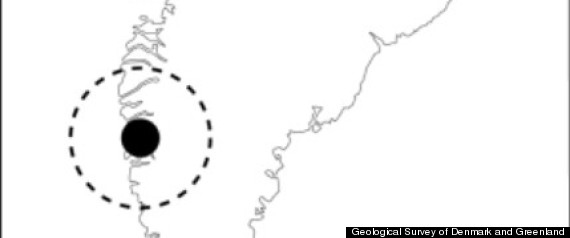
Oldest Crater

Courtesy of Artemis Sere we have more oldest things to share.  Come, join us in Greenland for a peek at the oldest meteorite crater extant:


This little item significantly predates that fashionable purse from the other day ...

It *is* interesting to me that the forces noted as having obliterated most of Earth's craters tend to be natural.  Erosion comes in for a lot of notice.  MAN'S behavior, oddly enough, isn't really listed as a factor - and is, I would have thought, the most powerful altering force of all.

Friday, June 29, 2012

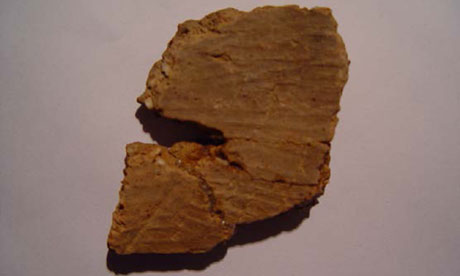
Oldest Pottery

Yes, ladies and gentlemen, boys and girls - it's a regular archaeology festival 'round these parts these days.  Today's special:  the oldest pottery in the world!

Wednesday, June 27, 2012

Making An Ancient Purse out of Dog's Teeth

Whoa.


"(I)t looks a lot like a modern handbag flap."

You know - except for the dog tooth decoration.  Which is, frankly, significantly more refined and beautiful than most of the daftly expensive bags on the designer market today.  (Reasons I buy nothing but vintage granny purses now!)

Sunday, June 24, 2012

Oldest Art

Articles, shows, and feature segments about the oldest fish traps in the world, the oldest humans, the oldest middens and oldest art fascinate us.  Enjoy this bit of Outback goodness!


Beautiful, aren't they?

Tuesday, June 12, 2012

Paleolithic Flicks

Human ingenuity is so vast - and so old - I wonder why so many of us waste it on foolish dismissals such as believing in "The Dark Ages" or ancient aliens bestowing upon us civilizations.

Cavemen were just as brightly curious and innovative as we were.  They had pretty amazing brains - and minds - too.