Showing posts with label imagination. Show all posts

Friday, June 1, 2018

Empathetic Magic and Writing: Lose Yourself in the Cheetah

This essay on writing by Cutter Wood (and how great a name is that?) speaks to something I definitely understand.

The moves in the book that felt most freeing were not taking on the perspective of the victim or the murderer, but these brief dips into other points of view—a minor character, a bird sitting on a branch. Those moments where, in the space of a single adjective, the lens just shifts slightly. As a writer, that’s where I feel happiest, I guess.
All of this is a way of trying to move past our fundamental loneliness. ... we have these amazing computational organs in our heads, and seemingly the only thing they can’t do is connect to another one?

When I was a kid, I used to play by myself all the time, and much of what I played at was mental - empathetically occupying the body of our dog, or the neighbor's cat, imagining what it felt like to be "big", to use the counter without climbing anything ... to be a boy, or to be old, or to lack a limb or the use of them.

I envisioned my body in states other than the state I lived in, other than the species I lived in, and really tried to imagine what a tail must feel like, or limbs all one length, carrying me all at once, without free hands, with my head out front instead of on top. It was especially interesting to imagine inhabiting a snake or a worm - something ALL tail, or something without bones. To project myself into fish was difficult, but elephants, fascinating.

Really, it's the most concentration I can think of ever honestly applying to *anything* in my life. I'm not good at physical endurance, I never was an intellectual. But play? Solitary play, imagining myself out of my life, into something else's? Irresistible. Wonderful.

The connection, for me, to writing - what Wood describes in his experiences, the ineffable transfer out of self or transformation of nonself internalized ... his feeling is different, but I understand it.

Diana Gabaldon says something to the effect that "write what you know" is a drag, that the very point of storytelling is to evoke - to occupy - a world other than one's own. This is elemental, for me, as a writer. I could not be less interested in replicating myself, or my environs - for me, the entire point of reading and writing both is the escape from the everyday, the release from myself.

Irresistible. Wonderful. And who needs a story without wonder?


All this is not to say I dislike living in my own skin. It's good skin, and I've cultivated quite a nice life in it. But it is JUST too interesting to think about what others' lives, worlds, experiences must be. I know my own life pretty well, so reading about it or writing about it doesn't have the same draw as reading about altered landscapes, different eras, unknown people.

The point Wood makes about fundamental loneliness, too: I considered myself a bit friendless as a child. I wasn't - it's just that childhood is not a perpetually social experience, and (looking back) being alone might have been the only way to stretch my brain and get away from ordinary old family life. I used to sit in my closet alone, I'd appointed it with books and my beanbag chair. I would take Speedy, my gerbil, and read and let him scritch and tickle around my knees and arms. Sometimes, it was the front porch or back patio. Or even the loft in the shed my dad built.

I would read, or just throw myself into some imagined world - desiring to be grown up, glamorous, living in the 19th century, or the first ... surrounded by people, in my mind, but people I created, maybe controlled. Costume excited me, and history. And animals, of course.

My older niece went through a prolonged period as a puppy. She had a "tail" (a pink leash, clipped to whatever pants or skirt she was wearing), she was always in character. And the character was complete; she would not break it, not even for her granddaddy, sometimes only reluctantly for mealtimes. She wasn't even telling a story, she WAS the story.

That seems a long time ago, but I can remember that too - watching, and knowing I had once been the same, though without her levels of sustained concentration. I might make it an hour, building my consciousness inside an imagined body, but she sustained this for months, maybe a year. And, it happens, this was during a difficult time in our family, in her life. That puppy life probably, for her, provided the control I got out of living in another century with characters I got to conjure.

Each borrowed gesture—whether it’s an intentional homage or just something a writer adored and internalized‚ is a sign someone or something broke through.

There is both danger and security, wearing the skin of another character, of an animal. And, like Richard Pryor's cheetahs ... just a WHOOSH of your own breath ... and the cheetahs disappear.

But they were there. They were real.

Friday, April 6, 2018

DRAG, the Series: Gender

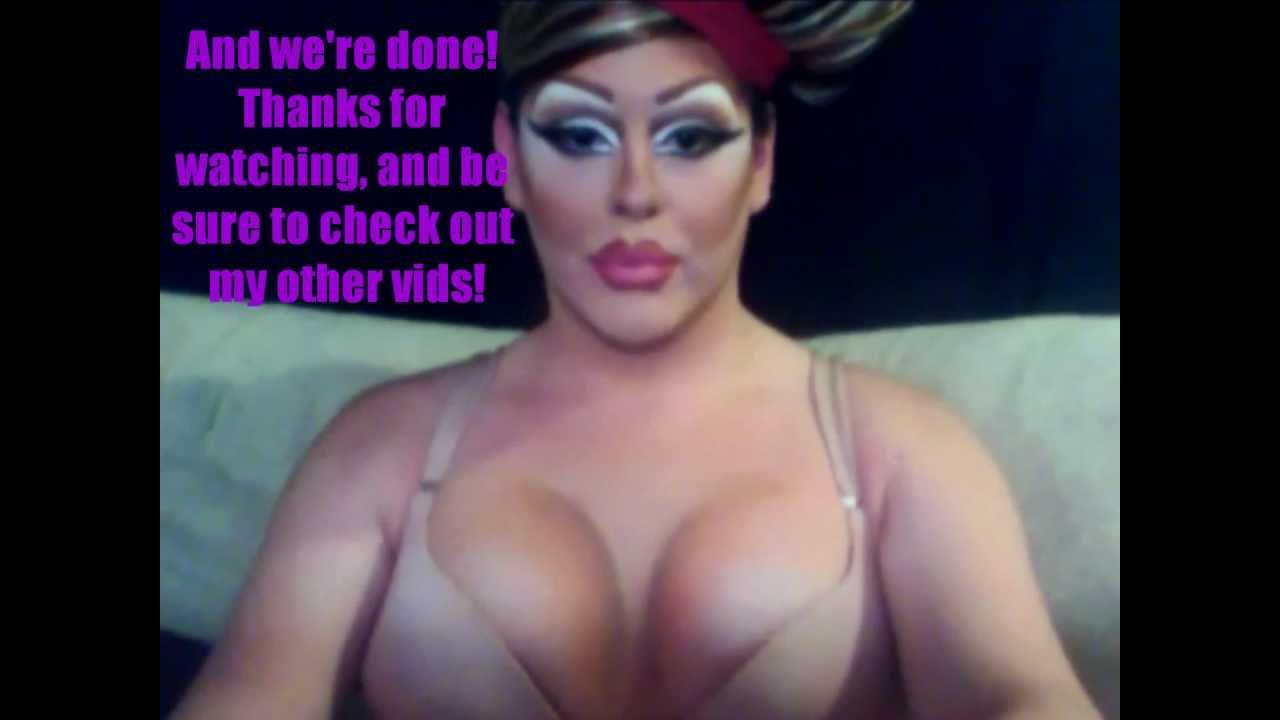
I have decided to leave this series of posts, intentionally, in a very draft form. This owes to the upheaval of the past month of my personal life, yes ... but it also feels fitting, as the entire point of this discussion of drag is about construction and challenging assumptions. To smooth it all into coherent, long prose might obscure the various parts, and thoughts, I have put into this, and they perhaps should stand out starkly. In honesty, much of what I say is just intros to the links embedded. And so, here is this series. Unfinished. Challenging - to me, in one sense, and to the audience in another. Seems right ...

We're all born naked, and the rest is drag.
--RuPaul Charles


Cis
Genderqueer
Nonbinary

PINK LABELING

CODED presentation and what that means: masculine marketing - cuck - shaming - feminized restriction

"Feminine" and "masculine" codes and symbology are taught and learned, not genetically determined.

HOW "natural" is binary sexuality ... third gender (only three?) ... why do we punish gender variance and respond to it so viscerally? Why do people care how someone else loves, or uses their body? Why are other bodies' behaviors important to our minds? Why do we refer to nonbinary pronouns, people, behavior as gender TRANSGRESSIVE?

Clearly, the underlying conceptualization of gender implied by these taxonomies is at variance with the idea that physical sex is fixed, marked by genitalia, and binary.


It's hard not to assume, growing up with a given set of assumptions, that these reflect the way the world "is" in some immutable way. But each of us, throughout the millennia of history and prehistory, grew up in a finite time and place - and the slightest observance of the world beyond our lives reveals that even in one given time there is a multiplicity of assumptions, even closer than we often like to imagine. Multiply this multiplicity across time and distance, and the variety of human culture is impossible not to acknowledge. Only the presumption of rock-solid correctness is bewildering, when you really look at humanity.

And so the challenge to heteronormative sexuality and gender should hardly be as surprising as it seems to be, for many people. But our emotional attachment to what we think we know means we cling to it with the strength of fear, or morality; all the things that reassure us deep inside.

My mom, who knows I love drag, and who even helped me to shop for the baby drag queen I used to sell to on eBay a few years back, still recoils at the whole thing. She's of a certain age and background, she's Southern Baptist, she's conservative. She never has had the vitriol for gay men so many like her harbor, but she does prefer not to think about it. Just recently, she was talking about watching Project Runway, and a man was in heels but his outfit was more athletic than stereotypically feminine. I told her, drag these days is less and less about synthesizing the "feminine" than it is about questioning what is stereotypically masculine. Heels aren't meant to evoke a paradigmatic "woman" - they are just to certain men's taste, or they are a question mark of a kind. Challenge.

Drag is no longer all about "female impersonation" if it ever was. Given the recency and locality of strictly heterosexual and binary sexuality and gender notions - given cultures who accept "third" genders and familial relations based on paradigms other than the modern Western nuclear family - heck, even given just the two-generation definition we've narrowed that down to, where even a household of three generations, or offspring living with parents past certain threshholds of adulthood, are looked askance, the het/cis/binary is a correspondingly narrowed view of roles. At a point where many are questioning the validity of 4-person nuclear households, questioning het/cis/binary roles is as natural as living outside them is.

Going along with all this fee-lossy-fizing is the point that "drag" as such is not even strictly a description of a specific form of entertainment. Not all drag is a staged performance. Like any persona in anyone's day-to-day life, drag is for many just their life - see the quote at the top of this post. Just as not all drag queens are cis or gay men, not all drag takes place on a stage, and not all drag is specifically a portrayal of women.


Controversy about RuPaul's statements on trans women.

My own baby queen ... ?


Fat, Femme, and Asian   Feminizing and exoticizing race ... glorification and elevation of the marginalized - even within subcultural/marginalized terms.


Clothing in terms of menswear, women's wear ...


History of female impersonation, passing,
We know that Joane of Arc didn't go in for dresses, but we also know that her practical, spiritual, individual mode of dress and behavior met not only her needs but answered to something much larger than one young woman. It still answers, for many, even centuries after the wars she fought have been, as far as this can be said, resolved. What she was and what she did continues to be meaningful even though she, her armies, and her Dauphin, are all dust. Her transgressions speak to us.

There have always been as many practical reasons to blur, to cross, or to sneak behind constructed boundaries as there are deep-seated objections to conformity.


DRAG, the Series: Costume

I have decided to leave this series of posts, intentionally, in a very draft form. This owes to the upheaval of the past month of my personal life, yes ... but it also feels fitting, as the entire point of this discussion of drag is about construction and challenging assumptions. To smooth it all into coherent, long prose might obscure the various parts, and thoughts, I have put into this, and they perhaps should stand out starkly. In honesty, much of what I say is just intros to the links embedded. And so, here is this series. Unfinished. Challenging - to me, in one sense, and to the audience in another. Seems right ...


We began sewing at least 50,000 years ago. Clothing and textile ever since have been used not only for practical purposes, but symbolic ... and, if you think you are not dressed symbolically, even if you're reading this in your jammies, think again. LOOK again.

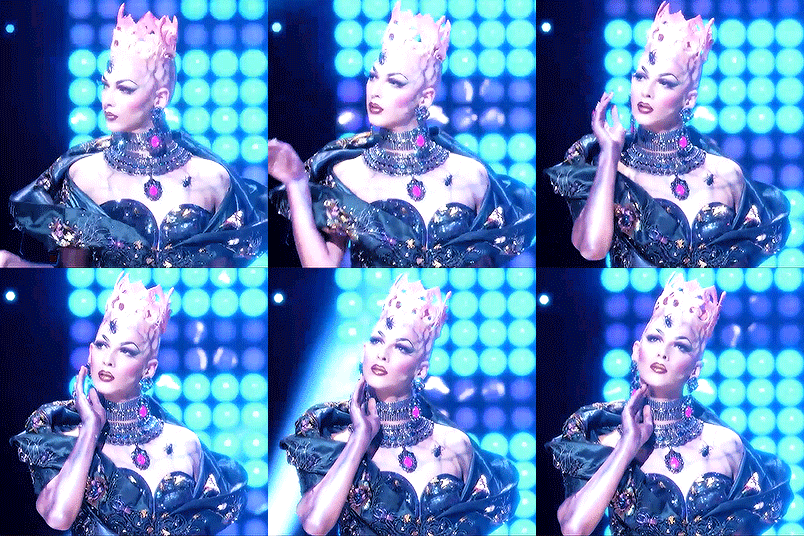
Most of us choose our symbols out of prefabricated options, sometimes with more consideration than others. But think about a drag queen; as often as not, she has created her own "look" - not merely in terms of painted features, but also in costume. A queen is a seamstress, a model, a performer - wearing a thousand themes through a thousand nights, and generally conceiving and creating every aspect of a look and a performance all on their own. A queen is inspired to a theme, but also has to look to practicals - is the piece I'm making utilitarian for me to sing, or lip synch, or dance, or all of the above? What are the optical principles in presentation - in a dark hall or bar, in front of this crowd or that, in front of dozens - or hundreds - or thousands?

Dressing outlandishly is an art. Indeed, *many* arts. From design to performance, from choosing materials to deploying them, drag is head-to-toe ... inflatables, headpieces, shoes, unexpected materials. There is engineering to consider - will this prosthetic makeup hold up to the movement of my face, will the paper gown survive sitting down, or a long meet-and-greet with fans?


Makeup AND costume


fashion history and what's old is new again ... The study of the history of costume is the study of history itself, and perhaps a more insightful one than strictly reading direct sources. Looking at modes and methods of dress can tell the story of social priorities - even scandals - and deepens our understanding of the times in which surviving textiles or portraits were made. Oh MY!


what is appropriate to wear where. Clothing as instruction: this is for girls, this is for boys ... the eye it takes not just to see these distortions, but then to parlay them into art, beauty, and commentary.

Our culture is about choosing an identity and sticking with it so people can market shit to you
--RuPaul Charles


You hear often that drag is an "armor." The thing is, this is true for everyone, every day. The importance of costume exists for EVERYBODY, even those who think they're not doing it, not paying attention. If you dress yourself at all - and if you don't (there is no escape, Major Major) - we present ourselves to the world, even when we're not dressing up for other people. Even when all we present is what we prepared just to manage the physical act of living.

If humanity as a whole is constantly evoking, demolishing, reimagining, and retrieving our fashions, even as we feel the need to just-as-constantly make fun of what is old. Sometimes, those among us creating the real rules by which we actually live are those of us destroying what, ideally, we might like to be the rules. Drag is destruction, and simultaneously it is creation. That's a hellaciously difficult magic trick, and it is one of the keys of beauty itself.

Self-decoration is older than homo sapiens itself; in the ochre of ancient hominid burials, we see the urge to beauty - to self-presentation - in the deepest history of what we are. It is tied to religion and death, and without it there is no culture, no society at all.
............ "The only thing I didn't like was the makeup" ... "You don't need makeup"


"Fake it till you make it" ...

Grand Guignol
We use exposure to our fears to get over our fears, but also for the *thrill* of the fear.


Not long ago, I was watching an episode of "Lucifer" in which an immortal character is costumed in a completely innocuous sweater with a peter-pan collar. She's in no way presented with fantasy color or extreme style, but her sweater is embroidered with dozens of bees. It wasn't a design choice 99% of viewers would even register, but for the very few who would, it was meaningful - and quietly gratifying.

All our clothing is projection. Drag is projection. Projection of wishes, projection of feelings, projection of fears - thrilling, and inuring. And beautiful


DRAG, the Series: Beauty

I have decided to leave this series of posts, intentionally, in a very draft form. This owes to the upheaval of the past month of my personal life, yes ... but it also feels fitting, as the entire point of this discussion of drag is about construction and challenging assumptions. To smooth it all into coherent, long prose might obscure the various parts, and thoughts, I have put into this, and they perhaps should stand out starkly. In honesty, much of what I say is just intros to the links embedded. And so, here is this series. Unfinished. Challenging - to me, in one sense, and to the audience in another. Seems right ...

The only thing I didn't like was the makeup.


On its opening weekend, I went to see A Wrinkle in Time with a group of people, most of them new to me, and one of the most interesting counterpoints to the diversity and inclusion celebrated by the film was the quote above. Stated by someone I suspect would consider their liberal cred to be beyond reproach, the idea was that The Mrs. Ws' fantastical appearances set a bad example for little girls by way of cosmetics.

This was said to me at a time I had my hair jacked up to Jesus, was wearing all metallics, and my eyeshadow was silver and not at all subtle. Also, I have blue hair for pete's sakes.

The lady opining did not join us after the movie, but I have been stuck with her restrictive liberal ideals in the same way I've been struck and confounded by prescriptivist liberality before. The way I really hate.

If feminism is about choice, what feminist is to say it is INVALID right on its face (and do pardon the pun, please) for a woman to wear makeup? Or a man? And if makeup is an evil tool of the conformity-enforcing Evil Beauty Industry, out to subjugate women into narrow beauty ideals ... where is it bedazzled eyebrows and green glitter eyeshadow fit in to this narrow, cis, white ideal?

As I have said before. Sometimes, makeup is not about remediation. It's special effects. And nobody - man, woman, or anyone else - gets to prescribe for me what is limiting, or to limit me by "setting me free" from it either.


silhouette - of period clothing, of presumed gender-conforming bodies, of nonconforming bodies

corsetry jewelry

cleavage, highlight/shadow ("The champagne glass") - controlling light itself, synthesizing it for illusion

erasing the face to repaint stereotypical femininity, or owning one's own features to challenge the binary (bald queens, eyebrows) ... Kevyn Aucoin's erasure art, queens who emphasize their own - amplification versus obliteration ... the BEAT face


Self-decoration predates anatomically modern humanity itself. We have been decorating ourselves since before "we" WERE "ourselves" - ochre and seashell jewelry, religion, trade, and art reach as far back as our current understanding takes us. Pre-human, prehistoric. Cro magnon and Neanderthal man created beauty as well as tools, and the tools of beauty and art date back over 160,000 years.


Advent of "I can draw what I want" marketing and autonomy over rigid fashion - STYLE over fashion ... still an industry, but emphasis affected by people's needs. How much can commercial interests still command people reshaping themselves? How much has the narrow beauty standard *really* changed? Really at the point where individuals are using the beauty industry, or still beholden to beauty standards?


As with most things, the alterations we perform to create beauty can pass into The Uncanny Valley, where synthesizing the suppleness of youth with plumpers and tightening becomes ghastly. Pop culture obsesses, at times, on hatred of this tendency - making fun of everyone from always-a-target Jocelyn Wildenstein to the Jenners/Kardashians for "overdoing it" ... and this both happens in drag, and is played-with in drag. Not a few queens proudly name their alterations, and it's difficult not to suspect that many who do it do so less for ideals of beauty than for the exaggeration of those ideals - for intentional effect. Special effects.

Drag USES the Uncanny Valley, gooses it - can transform it from challenge into a new definition of beauty.


Monday, May 23, 2016

... Telling Me Something?

Sometimes, it's hard not to think Janet Reid, with her familiarity with her own community of writers (not clients), is trying to tell us something personal ... Such is both the ego and the insecurity of a fretful writer Woodland Creature.

In this week's week-in-review post, she quoted me ...


DLM said
But there seems really to be no "middle class" in traditional publishing now. You can't be *dependable*: you have to be a breakout, and - never mind the pressure, it's just a matter of numbers, and the numbers dictate, we simply cannot all be The Next Big Thing.

JANET said
We call it mid-list but you're right. It's like the Army; you can't spend five years in the same rank or your career is pretty much over. Get promoted or get out. Like baseball: you can play on the farm teams for a while, but either move up, or hang up your glove.

Publishing is not the only place this up or out pattern applies.  But it only applies to COMMERCIAL publishing.  You can publish and sell your own work forever. That's one of the many great things about the electronic marketplace: it's easy to access and it actually works. I'm not saying it's easy to self-publish (well, it is, but let's assume I mean self-publishing well here) but that the barriers to buyers are much diminished from where they were 20 years ago.


I think she's seen enough of my comments at her own blog contemplating commercial (what I've been calling traditional, which she rightly calls commercial - augh, and now to fix my tags ...) publishing versus self-pub, and certainly she knows my writing, for my interpretation that she's Telling Me Something - or, at least, agreeing with my self-evaluation - not to be completely out of hand.

And even if it is, at the end of the day, she's neither my agent nor my ultimate guide; just a kind reader - and a professional - along the way I am taking.

So whether she meant "anything" or not ... the upshot is the same. I don't know that I want to hold out for the big leagues. I sure know I don't want to be in the military ...

And, really, right now, what I OUGHT to be worrying about is the WIP.

Thursday, October 9, 2014

Collection

I happen to follow some of the most amazing blogs and at least two Tumblrs, and of the latter you should go get your eyeballs nurtured, because Mojourner's Photos rock the extra bomb-diggety, y'all.


Speaking of sites that have wonderful vitamals and nutriments for the yumming of your eyes, do you follow the Caustic Cover Critic?  Because - seldom updated, but always worth a look.  Enjoy the Hallowe'en special:  hilarious, intriguingly conceived, and scary on multiple levels.  Boo!

Saturday, November 2, 2013

Sometimes ...

... there are stories that make you feel GOOD.  Here is one not only about repatriation, but a little bit of animal magic.

Wednesday, December 5, 2012

Big or Little, It Doesn't Matter ...

... it's what's inside that counts!


How am I going to even TRY to resist?  Even as a Trek nerd, LeVar's BEST role ever.