Unraedy, by the way, actually means ill-counseled. I'd say 'merica is witnessing a bit of that these days.
Saturday, March 18, 2017
Unraedy
This is REALLY funny. It may take a nerd like me to get all the jokes about Braetwalda etc. (or an English reader), but this is funny even if you're not a pre-Conquest history lover.
Unraedy, by the way, actually means ill-counseled. I'd say 'merica is witnessing a bit of that these days.
Unraedy, by the way, actually means ill-counseled. I'd say 'merica is witnessing a bit of that these days.

Thursday, March 16, 2017
Collection
Okay. Y'ALL. I love my country, but even apart from the sulphurous-tinted mass metastasizing in the White House, there are reasons much of the rest of the world finds us bewildering (not to say bat-splat cray). I ask you: kitten. fur. perfume.
Nobody's beating the sweet, bread-baking scent of my Gossamer, no way no how.
Casey Karp has an insightful post about security and yet more pitfalls of modern technology. Now doesn't Luddite little me feel all smug I never so much as connected my Bluetooth? But man. I can remember when I used to change the oil and even my pads and rotors. And yeah, I'm going to keep linking stuff like this. When did privacy become so recklessly unhip?
Maggie Maxwell has another uplifting one - on how to handle that bad review. Oh, ow. But she's right!
Okay, enough doom and gloom. Take a trip over to American Duchess's blog, where the saga continues, with the 1820s dress and its restoration. Post 1, linked previously. Post 2, here's how they dated it. The comp dresses and fashion plates are fascinating; but then, I'm a research nerd. Post 3 - the guts of the gown! - coming soon.
Grammar pedant and/or legal story time - why the Oxford Comma matters. A labor dispute digs into gerunds and forms, and drivers get better overtime terms.
Nobody's beating the sweet, bread-baking scent of my Gossamer, no way no how.
 |
| "The HELL you say?" |
Casey Karp has an insightful post about security and yet more pitfalls of modern technology. Now doesn't Luddite little me feel all smug I never so much as connected my Bluetooth? But man. I can remember when I used to change the oil and even my pads and rotors. And yeah, I'm going to keep linking stuff like this. When did privacy become so recklessly unhip?
Maggie Maxwell has another uplifting one - on how to handle that bad review. Oh, ow. But she's right!
Okay, enough doom and gloom. Take a trip over to American Duchess's blog, where the saga continues, with the 1820s dress and its restoration. Post 1, linked previously. Post 2, here's how they dated it. The comp dresses and fashion plates are fascinating; but then, I'm a research nerd. Post 3 - the guts of the gown! - coming soon.
Grammar pedant and/or legal story time - why the Oxford Comma matters. A labor dispute digs into gerunds and forms, and drivers get better overtime terms.
Wednesday, March 15, 2017
Indirection Misdirection
 |
| "Say WHUT now?" (Image: Wikipedia) |
One of the things about office life that has always confounded me is the absolute refusal and/or inability of many, many people to take a direct route.
This morning, I received an email which was sent to me, a few other admins, and a few people I wasn't familiar with. It was in regard to an expense for "John Doe" - how should this be processed?
To the first email, I responded with, essentially, "Good luck/not mine" and went on about my day. To the second email about it (a complaint that nobody ever notes their location when setting things up), I took six seconds of my day and looked up John Doe. Turns out, JD is an employee in IT at our location, corporate headquarters. Admins copied on the initial inquiry? Did not include the admin for IT. Maybe one of the other folks is in that department.
But the point is, this is a person IN OUR BUILDING. This is a person, clearly, with functioning email and possibly even a telephone of some sort. Maybe they even use our instant messaging function! (I took *four* seconds and checked. He does. And users' telephone numbers are imbedded in IM; all you have to do to call them is type their name in and hit the green phone icon.)
I've been a secretary for thirty-plus years now. It's in my nature to shorten routes as much as possible. It's ABSOLUTELY part of my job to be a guide for others to do that too - I make it my business, and it is my bread and butter, to know to-whom-to-go-for-what. Playing Julie McCoy Your Cruise Director is an important function I fill, and I enjoy it most of the time. I especially enjoy assisting my own team when they need to find where they need to go.
So perhaps I am uncharitable for being confused. Perhaps I miss some important part of another person's process when I field their questions. It is possible I'm uncharitable when I think to myself it's just another a LMGTFY moment.
I was about to link that acronym, but you can look it up if you do not know it. It may cause you to blush, or it may give you a smile. (My intent would be the latter, of course, dear readers.)
So my second response, to the second email, was to look up John Doe, screenshot his deets, and cut-and-paste them into an email reply, asking, "Have you tried to contact him?"
It is not for nothing, ladies and germs, I often say I am passive-aggressive for a living. The key to doing it right is to perform the passive-aggression for all the world as if you could not imagine all the world is not smarter than yourself - as if surely there must be some *reason* NOT to take a direct route - while pointing out the direct route.
It's the opposite of the old "My locker door is stuck." "Oh, did you jiggle it?" scenario - where everyone in school in succession asks - and usually tries - to jiggle the catch. Instead of trying at all, when confronted with something we don't know, we just ask someone we think does know.
Let it be said: with basically a *generation* of experience in my job, I don't hate it that people think I am so good that they come to me with All the Questions. It reinforces how good they think I am, when I get 'em there. It reinforces my own confidence, too.
More often than not, my own kids tend to come at me with things that are easy for me, but which are not inherently obvious. There may BE a direct route, but it was not marked. Like the guy who called me this week asking how to extract a receipt from our travel tool. (You can't; our travel agency emails receipts, and email is not where they're used to looking, so they don't. Easy question, maybe - but only if you know that.)
The thing about going to people you know instead of asking the person whose expense is at issue is - this is SOP for every office in every industry I've ever worked in. There is a worship of PROCESS in play, that overrides even the most basic intellect, no matter who walks in the door of an office building. Because process itself can be so confounding, people self-confound, and forget how to get from point A to point B almost prophylactically. Because there are so many things that work indirectly, people don't even look at anything directly anymore - they just ask the admin.
A friend of mine and I often laugh about the years we spent in a department together, before the big changes of 2008. We were in a regulated industry, and we were used to PROCESS (and even prossa-SEEZ, but that's another rant for another day). She and I still get a grin out of That One Guy we worked with.
That One Guy called me one day - he worked at the suburban location, I was downtown, literally in the executive suite. "Diane, what's the process for me to get a box?"
The idea of walking into the copy room and removing a few reams out of a paper box and taking that box was inconceivable.
We are so hemmed in we call the admin downtown to help us find the special requisition form or online widget just to get a box.
But there is more to it than that. PROCESS is one part of the issue, but hierarchy also plays in: people sometimes do not take a direct route because the relevant personage is significantly higher in an org chart than they are.
Direct routes aren't always practical or career-enhancing.
This is where being Just a Secretary is oddly helpful; we're off to one side on the org chart: but we can pretty much knock on any door we like. I will go direct to most any executive any time, and am both allowed and justified to do so.
Is there a problem with one of our drivers somewhere out in the field? Is the Transportation Manager not available? Diane Major goes to the Vice President of Operations, and nobody ever blinks. Is my boss (a Senior Vice President) in a meeting? I can open his door and pop my head in, when even directors and management will hesitate, even when they have urgent issues. I'm not into pestering the CEO, but my boss's boss? He likes me, and I can get in front of him easy as pie when need arises.
So I *understand*. I get why we have lost the thread and become a web. I don't even condemn this, not in itself. PROCESS develops because one too many nits went off and did something unexpected, and they did it with a purchasing card, or the company name on their vehicle, or they just did it wrong. PROCESS isn't a bad thing; and even hierarchy has its place ...
But I still don't get the John Doe question.
Tuesday, March 14, 2017
Fröhliche Geburtstag, Herr Professor Doktor Einstein
My grandfathers were not close by in my childhood. One died when I was seven, and the other became very ill for some years. So it was that I adopted Einstein as my granddaddy. He was always there; just above the couch. I'd lie on it, feet up along the backrest, my back twisted along the seat, looking up at him in our cool, shadowed family room.
The painting was done by a student of my father's. He was from Malaysia, and once went home to visit his family. When he came back to school, he brought gifts. I still have the shells he gave me, one thick with mother of pearl, pink-veined and shaped like a fan. The other is a delicate, spiny spiral.
We got close to a number of dad's students when we were kids. I remember some of them so vividly, though none of them have I seen for twenty-five years - and many far, far longer. We had wonderful picnics at our house, volleyball, and hot dogs on the brick grill dad built, too many sweets, and cases of soda from a specialty place called The Poppe Shoppe (I think it was spelled so).
The artist who painted the above piece was one of the early ones. I would have been three or four at his advent. Memory of him is hazy; and yet, I have always been grateful for his kindnesses. So distinct, they still mean something to a toddling moppet near half a century on. And his great talent. The portrait was painted in mere hours, part of an art class he took because he wanted to be well-rounded. It is glorious, and was the great gift my father left me when he died. We discussed it when he was ill; my brother would get the pocketwatch, I the portrait. Nothing - no *thing* - could have meant much more to me, from him. We all love the painting; my mom has wished from time to time that she could have it. But, though I try to be undemanding with her, this I will not give up. It is a very literal legacy.
Dad was a physicist, you see. Einstein was practically a fixture in our family culture, and literally part of the furnishings, in this painting. Dad's students were part of our lives well beyond their graduations; we followed careers, dad received beautiful invitations to important events for them; his university, his colleagues, his advisees and lab assistants were ingrained with us.
The painting is more than a sentimental present, it is the history of our nuclear foursome AND the history of our nuclear understanding in the scientific sense.
The painting is a bold thing, marvelous in its execution, beautiful to look at - formative not only of my philosophy, but very much of my aesthetic. I love its incredibly powerful reds, yellows, negative space. Its seventies mod-ness. Its connection, almost beyond dad, to the *influence* he had in this world, in this place we occupy even now without his presence.
The painting *is* his presence - and it is his absence. That is relativity for you.
A year or so back, I had a contractor out to the house, quoting me a job. As he stood in the front door saying goodbye when he'd inspected the pertinent area of the home, he stopped cold - transfixed. He fell in love with the Einstein portrait instantly, and we ended up talking a good while longer about it, about its presence. Closest I've come to falling in love since Mr. X. I still think about that (the guy didn't get the job in the end, possibly unfortunately).
The presence of the dead can be exquisitely random, and yet it can be predictable. I know every time I go to the dentist, I'll cry - not because I've been hurt, but because the guy I go to was one of my dad's advisees. And he always has memories - such respect, such almost AWE at my dad's intelligence. His goodness. My dad had an elegant expansiveness; he was more than a marvelous teacher, he was a teacher of marvels, and he cared immensely about the students.
I remember the year he went from being the kid on the physics faculty, to being the oldest. Just the right retirements, a couple new hires - boom, suddenly he was the old war horse. He wore it so well.
The thing about the painting. The thing about the student who painted it. The thing about the guy transfixed by the portrait. The thing about my dentist, and the very books I inherited and the dog he never knew and the dog now years-gone, whom dad did love though she was so hard on his lungs ... the thing about the flotsam and the furniture of my life ... is that dad is part of none of it now - not the way he was. But he is part of all of it - and always will be.
My dad is me. He is my brother. He is my mom. He is the reason, and the question, and the answer, and the causation. He is how I came to be. What I hope *to* be. He IS, even still, a good man.
He gave me Einstein. And so did that student.
And all three of them - though not alone, not by a long shot - taught me gratitude. All these things are me.
And old Albert ... he made a good substitute granddaddy, when I had none left to "give me a little bit of that applesauce" or to love, quietly, while grandma took care.
Happy 138th birthday, Herr Professor Dr. Einstein. And thank you for *our* little corner of relativity.
And how has it always escaped me ... that Einstein's birthday is Pi day?
 | ||
| Portrait of the Old Man by an Artist |
The painting was done by a student of my father's. He was from Malaysia, and once went home to visit his family. When he came back to school, he brought gifts. I still have the shells he gave me, one thick with mother of pearl, pink-veined and shaped like a fan. The other is a delicate, spiny spiral.
We got close to a number of dad's students when we were kids. I remember some of them so vividly, though none of them have I seen for twenty-five years - and many far, far longer. We had wonderful picnics at our house, volleyball, and hot dogs on the brick grill dad built, too many sweets, and cases of soda from a specialty place called The Poppe Shoppe (I think it was spelled so).
The artist who painted the above piece was one of the early ones. I would have been three or four at his advent. Memory of him is hazy; and yet, I have always been grateful for his kindnesses. So distinct, they still mean something to a toddling moppet near half a century on. And his great talent. The portrait was painted in mere hours, part of an art class he took because he wanted to be well-rounded. It is glorious, and was the great gift my father left me when he died. We discussed it when he was ill; my brother would get the pocketwatch, I the portrait. Nothing - no *thing* - could have meant much more to me, from him. We all love the painting; my mom has wished from time to time that she could have it. But, though I try to be undemanding with her, this I will not give up. It is a very literal legacy.
Dad was a physicist, you see. Einstein was practically a fixture in our family culture, and literally part of the furnishings, in this painting. Dad's students were part of our lives well beyond their graduations; we followed careers, dad received beautiful invitations to important events for them; his university, his colleagues, his advisees and lab assistants were ingrained with us.
The painting is more than a sentimental present, it is the history of our nuclear foursome AND the history of our nuclear understanding in the scientific sense.
The painting is a bold thing, marvelous in its execution, beautiful to look at - formative not only of my philosophy, but very much of my aesthetic. I love its incredibly powerful reds, yellows, negative space. Its seventies mod-ness. Its connection, almost beyond dad, to the *influence* he had in this world, in this place we occupy even now without his presence.
The painting *is* his presence - and it is his absence. That is relativity for you.
A year or so back, I had a contractor out to the house, quoting me a job. As he stood in the front door saying goodbye when he'd inspected the pertinent area of the home, he stopped cold - transfixed. He fell in love with the Einstein portrait instantly, and we ended up talking a good while longer about it, about its presence. Closest I've come to falling in love since Mr. X. I still think about that (the guy didn't get the job in the end, possibly unfortunately).
The presence of the dead can be exquisitely random, and yet it can be predictable. I know every time I go to the dentist, I'll cry - not because I've been hurt, but because the guy I go to was one of my dad's advisees. And he always has memories - such respect, such almost AWE at my dad's intelligence. His goodness. My dad had an elegant expansiveness; he was more than a marvelous teacher, he was a teacher of marvels, and he cared immensely about the students.
I remember the year he went from being the kid on the physics faculty, to being the oldest. Just the right retirements, a couple new hires - boom, suddenly he was the old war horse. He wore it so well.
The thing about the painting. The thing about the student who painted it. The thing about the guy transfixed by the portrait. The thing about my dentist, and the very books I inherited and the dog he never knew and the dog now years-gone, whom dad did love though she was so hard on his lungs ... the thing about the flotsam and the furniture of my life ... is that dad is part of none of it now - not the way he was. But he is part of all of it - and always will be.
My dad is me. He is my brother. He is my mom. He is the reason, and the question, and the answer, and the causation. He is how I came to be. What I hope *to* be. He IS, even still, a good man.
He gave me Einstein. And so did that student.
And all three of them - though not alone, not by a long shot - taught me gratitude. All these things are me.
And old Albert ... he made a good substitute granddaddy, when I had none left to "give me a little bit of that applesauce" or to love, quietly, while grandma took care.
Happy 138th birthday, Herr Professor Dr. Einstein. And thank you for *our* little corner of relativity.
And how has it always escaped me ... that Einstein's birthday is Pi day?
Saturday, March 11, 2017
Purim Post
A blessed holiday ... a bit of a different take on the sacred story!
(If you don't like a little irreverence/blasphemy with your Bible stories, maybe don't hit Play. Disclaimer, I did get this from a rabbi. You should see the link I got from my priest one time!)
(If you don't like a little irreverence/blasphemy with your Bible stories, maybe don't hit Play. Disclaimer, I did get this from a rabbi. You should see the link I got from my priest one time!)
Monday, March 6, 2017
Collection
Haha! Here's the thing about the medicine beat in journalism. By nature, it goes for the shiny and the positive. "NEW BREAKTHROUGH" is a headline. "FURTHER TESTING QUASHES HOPES" is not. I recently included an NPR headline in a Collection post, even saying then that I tend toward skepticism. Here we have NPR explaining how headlines like that can be misleading. Which: exactly.
Because shiny. And sigh.
Teach your children well, fella babies. Critical consumption is, well, critical.
Here is a piece on what it's like for perfectly legal people of Mexican heritage to live in the United States these days. If you don't want to read the whole piece - if you can't take the politics of it all - scroll down to "On whether her life has changed after the election of President Donald Trump" and take in the STORY, because it's a terrible and a great one. Here is how the disadvantaged are forced to work around the bigoted. I don't care how much you think this doesn't apply to you: please click.
It's a good thing sometimes to view the news from outlets outside of the United States. Hindustani Times has a look at a video from Ohio and a website lamenting the "Indian IT Mafia." But for those described, it's wrong to feel creeped out or threatened, of course. Because throwing the words mafia, notorious, and outrageous at a group is totally friendly!
So, has anybody else heard of the "farewell address" from the leader of the so-called Islamic State? Yeah, me neither, until I pulled up news outlets outside the U.S. Do a Google News search on his name, and I don't even see any American outlets appearing in the search results - none current, and note covering this story. Shouldn't a retreat like this from the "supreme leader" of the so-called Islamic State be kind of big news? I could not find this on NPR, CNN, Newsweek, or the New York Times online.
Because shiny. And sigh.
Teach your children well, fella babies. Critical consumption is, well, critical.
 |
| Image: Google image search, Labeled for Reuse The Blue Diamond Gallery |
Here is a piece on what it's like for perfectly legal people of Mexican heritage to live in the United States these days. If you don't want to read the whole piece - if you can't take the politics of it all - scroll down to "On whether her life has changed after the election of President Donald Trump" and take in the STORY, because it's a terrible and a great one. Here is how the disadvantaged are forced to work around the bigoted. I don't care how much you think this doesn't apply to you: please click.
It's a good thing sometimes to view the news from outlets outside of the United States. Hindustani Times has a look at a video from Ohio and a website lamenting the "Indian IT Mafia." But for those described, it's wrong to feel creeped out or threatened, of course. Because throwing the words mafia, notorious, and outrageous at a group is totally friendly!
So, has anybody else heard of the "farewell address" from the leader of the so-called Islamic State? Yeah, me neither, until I pulled up news outlets outside the U.S. Do a Google News search on his name, and I don't even see any American outlets appearing in the search results - none current, and note covering this story. Shouldn't a retreat like this from the "supreme leader" of the so-called Islamic State be kind of big news? I could not find this on NPR, CNN, Newsweek, or the New York Times online.
Also, I Write
For my reader-readers, and my author readers, and anyone with an opinion to spare (it is, by the way, amazing to me how often it is possible to ask for opinions and not get them in blog world!), a question for you ...
If you were just geek enough to catch a nerd reference in a novel essentially unrelated to the genre of the geek-check, would it give you a grin that you were in with it, or would it throw you out of a story?
The reference in question title-puns a work by L. Sprague deCamp, Lest Darkness Fall. It's a seminal work in what has become known as alternative history, and happens to take place in the world (ish) of my WIP. This is the only commonality, but the fulcrum on which I wrote the line (it is the last of my novel, currently) is almost the fulcrum of the WIP itself, for me.
Everyone who reads here knows I am not a believer in The Dark Ages. I refuse to accept that the lights went out all over the world, as it were - pretty much ever. The very idea that any one age of humanity is actually any smarter (or dumber) than any other is not merely ridiculous, it's offensive to me.
So it came as a surprise to me when I found myself making the WIP about the dawning (dusking) of the Dark Ages.
As an author, I justify this by pointing to many excuses: "I am not an historian!" ... "This is a metaphor and doesn't have to answer to my IRL philosophy." ... "Blah blah blah 'redefining the term' blah blah blah."
I've actually even GIVEN the advice, "Follow your story" to other authors. But never thought I'd beget a story of my own that so directly contradicts my way of thinking. "There is no such thing as Barbarians/The Dark Ages/Whig history/human progress as a redemptive narrative OR degeneration" - oh and I'm about to write about the Dark Ages and make it a progression downward. I don't even believe in dynasty (please note, one of the most popular of these, the Tudors, lasted THREE lousy generations, kids) - and here I am writing about the end of one like it's a ... hey, a descent.
The major dramatic question is not so much "how will this ruling family survive - or die out?" it is "What is the point?"
de Camp's work was all about saving the world from the Dark Ages. Mine is about letting go and letting be. It's less a question of devolution, within the world and the pages of the novel, than of succumbing with grace to forces which have different meaning and priority over the course of generations.
THIS is human development: that the driving force of one person, or of one time, cannot sustain its power.
Is appropriating the *fear* "Oh dear, lest darkness fall" and overtaking it with a bit of Lord, it is Night resignation inappropriate and jokey (never mind the question of obscurity)? Does it betray a reader, or the story itself?
The fact is, the question is more intellectual than applicable. I don't expect this sentence to survive even one revision (with hope a more authentic ending will voice itself instead), and this isn't asked as a critique session. More an opportunity for philosophizing - on the appeal of "crossover" references. On the revulsion of smartassed irony. On callouts to external worlds.
On whatever aspect might interest you, reading this ...
If you were just geek enough to catch a nerd reference in a novel essentially unrelated to the genre of the geek-check, would it give you a grin that you were in with it, or would it throw you out of a story?
The reference in question title-puns a work by L. Sprague deCamp, Lest Darkness Fall. It's a seminal work in what has become known as alternative history, and happens to take place in the world (ish) of my WIP. This is the only commonality, but the fulcrum on which I wrote the line (it is the last of my novel, currently) is almost the fulcrum of the WIP itself, for me.
Everyone who reads here knows I am not a believer in The Dark Ages. I refuse to accept that the lights went out all over the world, as it were - pretty much ever. The very idea that any one age of humanity is actually any smarter (or dumber) than any other is not merely ridiculous, it's offensive to me.
So it came as a surprise to me when I found myself making the WIP about the dawning (dusking) of the Dark Ages.
As an author, I justify this by pointing to many excuses: "I am not an historian!" ... "This is a metaphor and doesn't have to answer to my IRL philosophy." ... "Blah blah blah 'redefining the term' blah blah blah."
I've actually even GIVEN the advice, "Follow your story" to other authors. But never thought I'd beget a story of my own that so directly contradicts my way of thinking. "There is no such thing as Barbarians/The Dark Ages/Whig history/human progress as a redemptive narrative OR degeneration" - oh and I'm about to write about the Dark Ages and make it a progression downward. I don't even believe in dynasty (please note, one of the most popular of these, the Tudors, lasted THREE lousy generations, kids) - and here I am writing about the end of one like it's a ... hey, a descent.
Dust had tamped the fire of the Great King, long in his cracked tomb and efficiently forgotten. There would be, there could be rest, and obscurity. The boy’s horizon had no sunrise. The man would walk alone, no burden but his own to carry.
Let darkness fall.
The major dramatic question is not so much "how will this ruling family survive - or die out?" it is "What is the point?"
de Camp's work was all about saving the world from the Dark Ages. Mine is about letting go and letting be. It's less a question of devolution, within the world and the pages of the novel, than of succumbing with grace to forces which have different meaning and priority over the course of generations.
THIS is human development: that the driving force of one person, or of one time, cannot sustain its power.
Is appropriating the *fear* "Oh dear, lest darkness fall" and overtaking it with a bit of Lord, it is Night resignation inappropriate and jokey (never mind the question of obscurity)? Does it betray a reader, or the story itself?
The fact is, the question is more intellectual than applicable. I don't expect this sentence to survive even one revision (with hope a more authentic ending will voice itself instead), and this isn't asked as a critique session. More an opportunity for philosophizing - on the appeal of "crossover" references. On the revulsion of smartassed irony. On callouts to external worlds.
On whatever aspect might interest you, reading this ...
Sunday, March 5, 2017
Collection
Baby boomers are offloading all kinds of things.
One of the interesting things about the Baby Boom generation, in relation to the "boom" size of the demographic relative to others currently wandering around the globe, has always been its market impact. As these denizens retire and downsize, the latter dynamic is leading to a boom of sorts in museum donations. The interesting part is *what* they are donating. Including "The Butt." Talk about diversifying the archives ... !
American Duchess received the most remarkable treasure recently, a gown on which they're going to do more than one post. Peek #1 at this find includes the fascinating chemistry of reviving 200-year-old textile, and comes with great photos of a dress which is in truly stunning condition. This is a great look at conservation, construction, and style. The surprising scientific side of all this really engaged the geek in me. Can NOT wait for more.
Some buildings are pickled in aspic by the heritage industry, but the best adapt and change, their architecture reflecting the social changes since they were built.
This post from Tom Williams makes a good companion to the AD link above, in a way; the above quote puts it in a nutshell. Over time, conservation and transformation go hand in hand - in our clothing, in our architecture, in many of the material aspects of our lives. Take a trip to St. Helens, Bishopsgate for an 800-year-old example!
Thursday, March 2, 2017
Collection
Well, NPR is trying to make me fall in love with them today.
This story may only be exciting for ME, as a sufferer, but as we get into the warm-and-itchy season of eczema, I'm interested in research and treatments. I've heard of nemolizumab in a rash (har) of ads for a drug for psoriasis, and even wondered why psoriasis seems to get all the attention. Well, it seems it has been looked at for eczema too. For now, I'll stick with my old standby, but I'll keep an eye open as this progresses.
"How much would you expect to pay for ALL THIS ... mold?" As astonished as I am that developer-of-penicillin Alexander Fleming's mold was preserved at all, the price tag astonished me just a little more. The writing here is HILARIOUS, it's a fun piece - give it a click ... and discover the many luminaries who have also owned a piece of the mold.
Plastic Figures. Legos! Legos immortalizing just a few of the women of NASA!
This story may only be exciting for ME, as a sufferer, but as we get into the warm-and-itchy season of eczema, I'm interested in research and treatments. I've heard of nemolizumab in a rash (har) of ads for a drug for psoriasis, and even wondered why psoriasis seems to get all the attention. Well, it seems it has been looked at for eczema too. For now, I'll stick with my old standby, but I'll keep an eye open as this progresses.
A little splotch of history
"How much would you expect to pay for ALL THIS ... mold?" As astonished as I am that developer-of-penicillin Alexander Fleming's mold was preserved at all, the price tag astonished me just a little more. The writing here is HILARIOUS, it's a fun piece - give it a click ... and discover the many luminaries who have also owned a piece of the mold.
Other projects that were vying for Lego production included depictions of the Addams Family Mansion and the Large Hadron Collider.
Plastic Figures. Legos! Legos immortalizing just a few of the women of NASA!
Tuesday, February 28, 2017
Collection
Archaeogaming. It's a tantalizing word, an interesting idea. As I said to my favorite gamer and my favorite archaeologist, I should figure out how to apply this to writing. But then - "Oh. Wait. I became a writer exactly so I wouldn't have to play nicely with others."
Isn't that a glorious sentence? Subtle, poetic, evocative - and yet concrete, communicative. There is a whole essay's worth more here, from Elyse M. Goldsmith, and a shout-out to Bowie. Make with the click, y'all.
The History Blog has a pair of great posts this week. First, footprints not in the sand: an ancient child's tootsies, captured in three millennia old mortar. Also, how cool is the name Manfred Bietek? Second, interested in a project? You can transcribe WWI era love letters for posterity. Cool.
My daughter and I are as different as fire and rain and as alike as ice and water.
Isn't that a glorious sentence? Subtle, poetic, evocative - and yet concrete, communicative. There is a whole essay's worth more here, from Elyse M. Goldsmith, and a shout-out to Bowie. Make with the click, y'all.
The History Blog has a pair of great posts this week. First, footprints not in the sand: an ancient child's tootsies, captured in three millennia old mortar. Also, how cool is the name Manfred Bietek? Second, interested in a project? You can transcribe WWI era love letters for posterity. Cool.
Friday, February 24, 2017
Music and Fashion - Not Always the Passion
Not long ago, I took in a long-ago recorded documentary some may recall, The Decline of Western Civilization Part 2 - The Metal Years. Apart from Chris Holmes' notoriously bleak, drunken turn before the camera, a great deal of this outing was devoted to poking fun at glam metal even while having a little bit of fun in the scene. The fashion is RIGHT out front, and is presented precisely as many of us saw it even at the time - pretty much ridiculous.
Let it be known, by 1988, I was dating a guy in a band (the eventual, inimitable Beloved Ex, in fact), and I had a few run-ins with spandex myself. The only lipstick in my repertoire for probably the entire stretch from 1985-1993 was a sturdy magenta that went with everything: black. On rare occasion, I will admit - I wore white minidresses and white spike heels. But mostly just black. I had a couple spiral perms, of varying burned-out 80s-osity. I had this great HAT. I wore that hat to my office job sometimes. I owned and took out of my closet more than one bolero, over the pink suede bustier I was able to afford because it had a broken snap. Indeed, I had several hats. I was remembered for one of them by a colleague of my dad's (I worked at his University on my college breaks) for decades.
Yeah, so I committed 80s fashions. I was NOT much for big hair; I never have been much for doing a lot of styling with my hair - but I just recognized how ugly it was. And damaging (though, again: spiral perms). I once got sneered at by a girl who wanted very much to scam on my husband, "I wish I could wear my hair FLAT like yours!" I brightly replied to her all the hairspray in our town seemed to have sold out after she hit the drugstore. *Shrug*
Over the top fashion does not have a way of ageing well. See also: the would-be Victorian polyester bridal fashions of the early 1970s - complete with giant floppy (matching pastel) hats. See also: 1960s Nehru jackets (the faddishness of which actually I think is a shame; men's tailoring in the West has been stagnated for nearly TWO HUNDRED years now - across three centuries, and a millennial divide!).
So, this morning, when I had nothing of this sort on my mind whatsoever, and I turned on a Grace Jones mix to accompany my work, it took a couple of hours before I began regarding her fashion extremity and remembering that other extremity, and comparing them.
Jones is iconic. She is still, also, unabashed in her presentation. It's something beyond fashion - her headdresses and makeup and her very hair are more than clothing, or style choices. She is living performance art. Confrontational and beautiful, powerful, visually stunning, dazzling.
Why is it Grace Jones' headdresses and cutout appliques to her face, her stripped-down gorgeousness and her sumptuous, presentational costumes have not become ridiculous, like the extensive array of hair and makeup and pleather donnings of the kids and performers of Western Civ?
Even the other two Decline documentaries, both of them focused on punk rock in different ways, feature looks which still are dominant today, in certain subcultures, and even on runways. My old punk brother and I sometimes get a grin realizing kids are still rocking mohawks like they're new and shocking. To us, it's actually adorable. "Aww. You're rocking your granddaddy's rebellion. You're EDGY!"
Punk has influenced fashion since the 1970s, but its widest evolved callback is probably the many Goth looks still prominent in subcultural scenes and on runways.
Grace, of course, is entirely her own. Even when she's not "trying" to be visually arresting - all but nude, or wearing a suit - her art pared to nothing - she is visually arresting. There's no such thing as minimalism with her, because anything she dons is automatically endowed with Grace.
And Grace does not go out of style. Which is rather astonishing. She's either enclosed or encompassing - either way, she bears fashion well outside of fashion itself.
As I have maintained since high school, and she embodies: there is a difference between fashion and style. (And I'd rather have the latter.) Or, as my punk-turned-old-dude of a bro once gleefully laughed about my saying, "Nerdliness is next to youthfulness." Perhaps agelessness.
My theory: the glam fashion was adhered to its connection with youth. Five years on - never mind all these decades down the road since then - if it survived at all, it was not prettily. Some things have very short half lives. Because Grace goes outside concerns like that, she survives, her outrageousness doesn't pall, because she's not acting like a fifteen-year-old. Sixty-eight years of age and OWNING that sh*t, it's not like she's rocking Baby Jane's pinafore and curls. What she started with wasn't anchored to its age. And so she gets to keep her own age, now. And keep the style she brung with her.
Let it be known, by 1988, I was dating a guy in a band (the eventual, inimitable Beloved Ex, in fact), and I had a few run-ins with spandex myself. The only lipstick in my repertoire for probably the entire stretch from 1985-1993 was a sturdy magenta that went with everything: black. On rare occasion, I will admit - I wore white minidresses and white spike heels. But mostly just black. I had a couple spiral perms, of varying burned-out 80s-osity. I had this great HAT. I wore that hat to my office job sometimes. I owned and took out of my closet more than one bolero, over the pink suede bustier I was able to afford because it had a broken snap. Indeed, I had several hats. I was remembered for one of them by a colleague of my dad's (I worked at his University on my college breaks) for decades.
Yeah, so I committed 80s fashions. I was NOT much for big hair; I never have been much for doing a lot of styling with my hair - but I just recognized how ugly it was. And damaging (though, again: spiral perms). I once got sneered at by a girl who wanted very much to scam on my husband, "I wish I could wear my hair FLAT like yours!" I brightly replied to her all the hairspray in our town seemed to have sold out after she hit the drugstore. *Shrug*
Over the top fashion does not have a way of ageing well. See also: the would-be Victorian polyester bridal fashions of the early 1970s - complete with giant floppy (matching pastel) hats. See also: 1960s Nehru jackets (the faddishness of which actually I think is a shame; men's tailoring in the West has been stagnated for nearly TWO HUNDRED years now - across three centuries, and a millennial divide!).


So, this morning, when I had nothing of this sort on my mind whatsoever, and I turned on a Grace Jones mix to accompany my work, it took a couple of hours before I began regarding her fashion extremity and remembering that other extremity, and comparing them.
Jones is iconic. She is still, also, unabashed in her presentation. It's something beyond fashion - her headdresses and makeup and her very hair are more than clothing, or style choices. She is living performance art. Confrontational and beautiful, powerful, visually stunning, dazzling.

Why is it Grace Jones' headdresses and cutout appliques to her face, her stripped-down gorgeousness and her sumptuous, presentational costumes have not become ridiculous, like the extensive array of hair and makeup and pleather donnings of the kids and performers of Western Civ?
Even the other two Decline documentaries, both of them focused on punk rock in different ways, feature looks which still are dominant today, in certain subcultures, and even on runways. My old punk brother and I sometimes get a grin realizing kids are still rocking mohawks like they're new and shocking. To us, it's actually adorable. "Aww. You're rocking your granddaddy's rebellion. You're EDGY!"
Punk has influenced fashion since the 1970s, but its widest evolved callback is probably the many Goth looks still prominent in subcultural scenes and on runways.
Grace, of course, is entirely her own. Even when she's not "trying" to be visually arresting - all but nude, or wearing a suit - her art pared to nothing - she is visually arresting. There's no such thing as minimalism with her, because anything she dons is automatically endowed with Grace.
And Grace does not go out of style. Which is rather astonishing. She's either enclosed or encompassing - either way, she bears fashion well outside of fashion itself.
As I have maintained since high school, and she embodies: there is a difference between fashion and style. (And I'd rather have the latter.) Or, as my punk-turned-old-dude of a bro once gleefully laughed about my saying, "Nerdliness is next to youthfulness." Perhaps agelessness.
My theory: the glam fashion was adhered to its connection with youth. Five years on - never mind all these decades down the road since then - if it survived at all, it was not prettily. Some things have very short half lives. Because Grace goes outside concerns like that, she survives, her outrageousness doesn't pall, because she's not acting like a fifteen-year-old. Sixty-eight years of age and OWNING that sh*t, it's not like she's rocking Baby Jane's pinafore and curls. What she started with wasn't anchored to its age. And so she gets to keep her own age, now. And keep the style she brung with her.
The Trick Question is: "WHAT was terrifying?"
Janet Reid is running another flashfic contest this weekend.
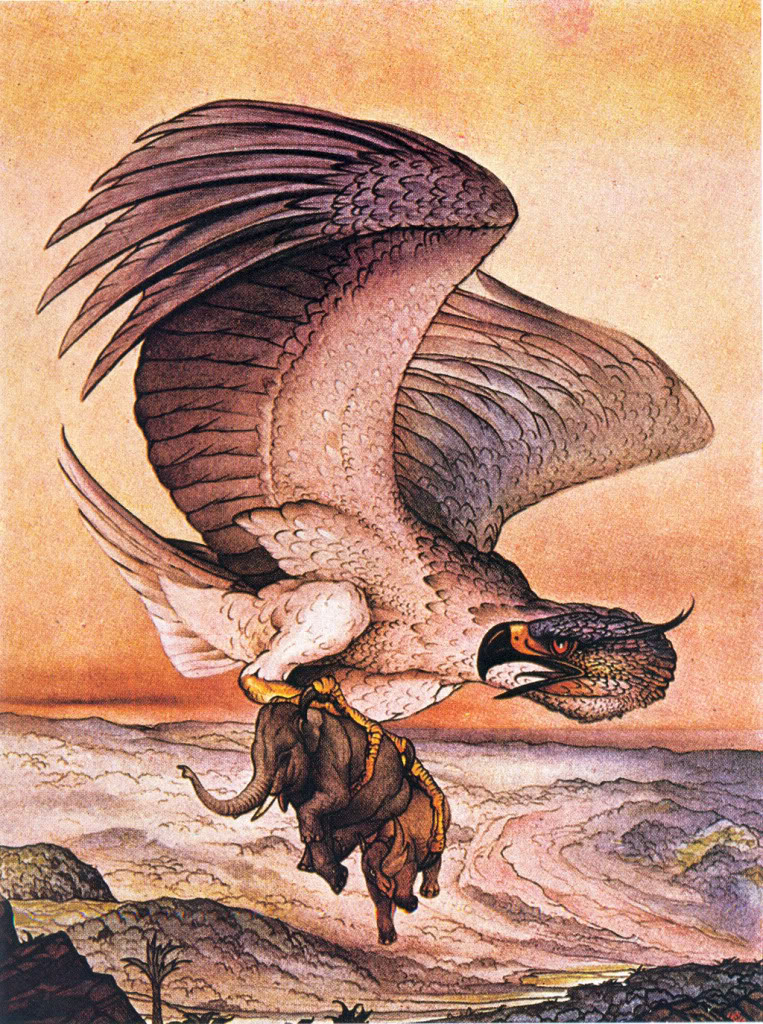
Smooth, ensconsed, and safe. Comfortable. Desolate. Warm.
Oppressive.
Deserted. Alone. Imprisoned.
Hungry.
Wanted … crunch, and edge, and contrast, and cold. Wanted … out.
No chink to pry. No way to gnaw out.
The urgency was physical.
Kick. Strain. Peck. Hours, it took; eternity.
Jettisoned.
Blue sky. It was terrifying.
Most beautiful thing in the world – the whole world: outside the egg.

Okay.
Now that the contest is over and Nate Wilson ran OFF with it (and sightly ro), I want to ask about this story, and whether it works.
Given Lilac's comment on it the other day, I wonder whether a clue is necessary: that what was breaking out of this egg was monstrous. I hoped the harshness of some of the words I chose pointed that way, but that would not be so much "beautiful"as horrifying.
With a 100 word limit, this clocks in at a mere 62, but I felt no desire to add to this piece. Does it need more heft? Does it creep anyone out, or does it just read like a wee little bird fighting to find the world?
I would LOVE to hear from y'all, and not just Reiders! Many thanks to anyone who might share your opinions.
Smooth, ensconsed, and safe. Comfortable. Desolate. Warm.
Oppressive.
Deserted. Alone. Imprisoned.
Hungry.
Wanted … crunch, and edge, and contrast, and cold. Wanted … out.
No chink to pry. No way to gnaw out.
The urgency was physical.
Kick. Strain. Peck. Hours, it took; eternity.
Jettisoned.
Blue sky. It was terrifying.
Most beautiful thing in the world – the whole world: outside the egg.
Okay.
Now that the contest is over and Nate Wilson ran OFF with it (and sightly ro), I want to ask about this story, and whether it works.
Given Lilac's comment on it the other day, I wonder whether a clue is necessary: that what was breaking out of this egg was monstrous. I hoped the harshness of some of the words I chose pointed that way, but that would not be so much "beautiful"as horrifying.
With a 100 word limit, this clocks in at a mere 62, but I felt no desire to add to this piece. Does it need more heft? Does it creep anyone out, or does it just read like a wee little bird fighting to find the world?
I would LOVE to hear from y'all, and not just Reiders! Many thanks to anyone who might share your opinions.
Thursday, February 23, 2017
Collection
In today's collection: splendid, exhilarating, strong, and superb writing.
Who else remembers picture-day combs? The Atlantic, on behaving, duck-walking, fixing yourself up, and the ritual glamour of unison inevitability ... or not. Splendid writing.
Six years on a boat. Amy Schaefer's glorious OPPORTUNITY ... She writes with such exhilaration!
John Davis Frain has been doing weekly flashfic mystery posts. I am either the best or the worst mystery consumer - I don't tend to do any guesswork while reading or watching. Reveals are most often reveals for me, because I get absorbed in stories without becoming analytical. Usually. When SHERLOCK, of all things, recently dropped a "clue" that even I was like "wait, doesn't anyone know THIS though?" - I have to say, it was disappointing to witness their poor estimation of their viewers (never mind the betrayal of their characters' supposed intellect). So JDF got me this week. It's a strong story, and I almost don't care what the key is.
I said almost! Will check back soon ...
Movie MAGIC. How to get that wildly expensive model you never thought you could have, or make up a fantasy car - or re-skin your ride. The piece doesn't say whether this makes crashing extremely expensive vehicles possible as well; my violent mind goes right to that place, of course.
When "child molester" is the NICE part of what someone has to say. Erick Erickson won't allow his kids to watch the President on TV ... but gives him a B-. He says of Milo Yiannopoulos' travails this week, "Trying to cash in on someone’s alt-right fame to drive attendance cheapens the conservative movement.". And he says the representative democracy may isn't sustainable. I will leave you to grade EE's own good works.
As an author of historical fiction, I'm always intrigued with questions of historicity - especially "was this person real?" - but this literary/historical question comes tied up with many other questions, too. One of them: why is paleness equated with beauty, even in an Indian tale? Why are physical beauty and lust passed for love in literature across the world? How do we feel about "history is not our concern" and "even role models need proper branding" ... ? And, of course, without legal disclaimers - where lies the line between history and story? (Included at the link is the story of Rani Padmini - queen, martyr, or fantasy ...) The final analysis of her appeal is an intriguing deconstruction of the way we wield myth in religious politics.
The one percent at the Academy of Motion Picture Arts and Sciences, and how mad some of 'em are. Because now #OscarsSoWhite is - some feel - becoming #OscarsSoAgeist. The New Yorker has an in-depth look at changes in the Academy now, and over generations. It's in-depth enough you won't get my one percent reference until about 1/3 the way down the scrollbar. (Also, The Third Purge makes a REALLY good name for a story.) This piece itself is engaging storytelling - and also good entertainment journalism/history. Superbly written! And ROFL on this quote:
Finally - "Fashion is costuming." Which has long been a theme on this blog, so congrats for catching up, WaPo.
Who else remembers picture-day combs? The Atlantic, on behaving, duck-walking, fixing yourself up, and the ritual glamour of unison inevitability ... or not. Splendid writing.
Now listen, this isn’t some sepia-colored essay about realizing I was different, and embracing a conflicted racial identity through the experience of receiving a single comb.
Six years on a boat. Amy Schaefer's glorious OPPORTUNITY ... She writes with such exhilaration!
John Davis Frain has been doing weekly flashfic mystery posts. I am either the best or the worst mystery consumer - I don't tend to do any guesswork while reading or watching. Reveals are most often reveals for me, because I get absorbed in stories without becoming analytical. Usually. When SHERLOCK, of all things, recently dropped a "clue" that even I was like "wait, doesn't anyone know THIS though?" - I have to say, it was disappointing to witness their poor estimation of their viewers (never mind the betrayal of their characters' supposed intellect). So JDF got me this week. It's a strong story, and I almost don't care what the key is.
I said almost! Will check back soon ...
Movie MAGIC. How to get that wildly expensive model you never thought you could have, or make up a fantasy car - or re-skin your ride. The piece doesn't say whether this makes crashing extremely expensive vehicles possible as well; my violent mind goes right to that place, of course.
When "child molester" is the NICE part of what someone has to say. Erick Erickson won't allow his kids to watch the President on TV ... but gives him a B-. He says of Milo Yiannopoulos' travails this week, "Trying to cash in on someone’s alt-right fame to drive attendance cheapens the conservative movement.". And he says the representative democracy may isn't sustainable. I will leave you to grade EE's own good works.
The problem then is not in accepting legends, but being so rigid in our acceptance, that we fail to allow it when someone re-imagines it a little differently from the accepted script.
As an author of historical fiction, I'm always intrigued with questions of historicity - especially "was this person real?" - but this literary/historical question comes tied up with many other questions, too. One of them: why is paleness equated with beauty, even in an Indian tale? Why are physical beauty and lust passed for love in literature across the world? How do we feel about "history is not our concern" and "even role models need proper branding" ... ? And, of course, without legal disclaimers - where lies the line between history and story? (Included at the link is the story of Rani Padmini - queen, martyr, or fantasy ...) The final analysis of her appeal is an intriguing deconstruction of the way we wield myth in religious politics.
The one percent at the Academy of Motion Picture Arts and Sciences, and how mad some of 'em are. Because now #OscarsSoWhite is - some feel - becoming #OscarsSoAgeist. The New Yorker has an in-depth look at changes in the Academy now, and over generations. It's in-depth enough you won't get my one percent reference until about 1/3 the way down the scrollbar. (Also, The Third Purge makes a REALLY good name for a story.) This piece itself is engaging storytelling - and also good entertainment journalism/history. Superbly written! And ROFL on this quote:
It’s like the process of trying to win an election. It’s no longer about the material or the merit.
Finally - "Fashion is costuming." Which has long been a theme on this blog, so congrats for catching up, WaPo.
Thursday, February 16, 2017
Eddies (Not in the Space-Time Continuum)
York Minster is home to a series of statues that have always arrested me outright. The effect on me is mostly with the earliest Edwards post-Conquest, we have Longshanks (I), Edward II, and III. Each of these portrait sculptures has always seemed to me among the most animated statuary I have ever seen. But there is something about the style of the art that demands questioning and study, and is for me an illumination of the reason we study art from bygone periods.
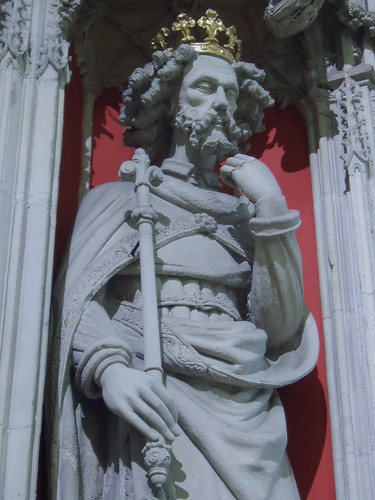
Longshanks in particular has an imperiousness that is powerful in the extreme. Pointing down at you, his forehead creased with the stress of some imperative or command, even his curling hair alive with motion and unspoken intent, his vertical stretch, his heavy but moving robes, everything about him (not least a weighty sword he carries as if it were a feather) demands not only attention but acquiescence.
The thing about the fact these were done centuries before my generation came to be (or indeed my country, for that matter) is that there are conventions in place in the creation of these images that I almost certainly do not understand.
A modern American, the very concept of autocratic kingship is a toughie.
Edward II, whose reputation has been reduced to his sexuality in modern times, appears less martial, but no less royal. His hair, like his father's and his son's, especially evokes a kind of intensity. I have to believe this is not intended to convey that these Plantagenets had hairstyles quite so specifically reminiscent of Roseanne Roseannadanna (though her intensity stands up next to the kings'!), but speaks to something other than feature-by-feature reproduction.
The portraiture, of course, comes from a single, briefer time frame than the Edwards' reigns; these images are not real time reflections, and would not have been taken as such. Rather, the features both individual and shared communicate something about kings in concept, and each of these kings' legacies in their particulars.
Edward II, not known as The Hammer of the Scots, nor for the long and prosperous rule of his son III, has a thoughtful mien about him. His left hand raised and wrist curving, his right holding NOT a sword. The lines of his height, his garments, are more broken, more complicated. He is belted, and he is draped in multiple directions. His head bows forward ever so slightly, and at a definite angle compared to his father. He appears to be contemplating something. Possibly, his thoughtful thousand-mile gaze could be seen as thought*less*, even stupid, the gesture of his hand equivocal, less strong than the others. What was I meant to see, looking at this figure? I may not see what was intended ...
Edward III, famed for a stupendously long reign, and often seen these days as having remediated some of the perceived sins of his father, looks almost as if he is answering someone. His brow is again furrowed, pressed downward, but his chin pointing upward. His beard is the longest and least curly; the lines of his garments, indicating his body beneath, are again long and straight, but like his father and unlike his grandfather Longshanks, he is belted. Girded. His mantle is thrown over his right shoulder, his arms free; again, he indicates motion. His hair may be the most startling of the three statues.
To III's right, the nearly beardless Richard II stands; the youth, the scion, the one who faced rebellions and a changing monarchy. His cheeks seem the faintest bit chubby. His forehead, his whole face indeed, is smooth and not caught in the extremity of expression of his forbears. His hair is almost horizontal. Richard's statue retains some pigment from its former painted decoration. Like his great-great grandfather, Richard bears a sword, its tip, strangely, lost in that hair. Like Longshanks and his grandfather, III, he is pointing at the viewer. Yet the impression is that we are looking at *youth*, looking at a king whose reign did not reach the maturity Edward III's long stint on the throne held and seasoned for England.
Richard II was the son of Edward the Black Prince, who did not live to ascend the throne. He was a boy-king, like Edward III had been before he overthrew the regency of his mother and her lover, Mortimer. Richard depended upon, and then fell out with, his uncle Lancaster and his cousin, the eventual Henry IV, whose son Henry V is reminding me for some reason of Martin Sheen in this link.
Henry has both hands full, and does not look to his viewers, eyes elevated, sword - we know - ever valiant. Ever more unto the breach, my friends.
Of all these figures, it is the Edwards who seem most alien to me, who arrest my attention. They are frankly ugly to my eyes. Startlingly so. Not as works of art, but as evocations of individuals, as portraits. The intensity is too much, the emphases uncanny.
To view the details of these statues closely, as is possible in photographs, was not the way they were made to be seen. Would have been inconceivable, when these were made. They reside, in physical reality, above the heads of anyone entering York Minster. And, for anyone standing in that consecrated place, it would even now be impossible to look at them with the care that we can in the reproductions and detail shots I have linked. It would in fact have been unseemly, in their day, to expend great attention on statues of kings - "what they looked like" - as a member of a religious congregation. And the multiplicity of these figures would have discouraged that sort of gazing.
The view when they were made did not allow the privilege of peering we have now.
As much particular attention as has been lavished on every one of the statues, the truth of the art was that they were meant to be part of a whole; elevated over the flesh-and-blood parishoners, but as much a part of the congregation gathered before G-d as lesser men. A mass of figures. These were statues glorifying the monarchy, certainly; even telling stories of each king's life and deeds. But they were ultimately part of the glorification of G-d - and the Church.
The potent energy of the Edwards may have been intended as part of a more en masse evocation of the intensity of worship, devotion, praise expected to be offered on this sacred ground.
Anyone who knows more of medieval art than I do - please disabuse me of any of these notions, or explain those aspects of what I am missing. I'd love to talk! These faces make me stop and stare every time.
All I can explain are those things I don't understand within the context of these works' creation - royalty itself; the finer points of Plantagenet politics or history; the specific legends of each of these individuals' reputations ... just how far these amazing portraits are even meant to be seen AS individuals. Allegorical implications. The filter of the history already passed between Longshanks and York Minster's decoration, so many generations later.

Longshanks in particular has an imperiousness that is powerful in the extreme. Pointing down at you, his forehead creased with the stress of some imperative or command, even his curling hair alive with motion and unspoken intent, his vertical stretch, his heavy but moving robes, everything about him (not least a weighty sword he carries as if it were a feather) demands not only attention but acquiescence.

 |
| Image: Wikimedia Commons |
The thing about the fact these were done centuries before my generation came to be (or indeed my country, for that matter) is that there are conventions in place in the creation of these images that I almost certainly do not understand.
A modern American, the very concept of autocratic kingship is a toughie.
Edward II, whose reputation has been reduced to his sexuality in modern times, appears less martial, but no less royal. His hair, like his father's and his son's, especially evokes a kind of intensity. I have to believe this is not intended to convey that these Plantagenets had hairstyles quite so specifically reminiscent of Roseanne Roseannadanna (though her intensity stands up next to the kings'!), but speaks to something other than feature-by-feature reproduction.
The portraiture, of course, comes from a single, briefer time frame than the Edwards' reigns; these images are not real time reflections, and would not have been taken as such. Rather, the features both individual and shared communicate something about kings in concept, and each of these kings' legacies in their particulars.
Edward II, not known as The Hammer of the Scots, nor for the long and prosperous rule of his son III, has a thoughtful mien about him. His left hand raised and wrist curving, his right holding NOT a sword. The lines of his height, his garments, are more broken, more complicated. He is belted, and he is draped in multiple directions. His head bows forward ever so slightly, and at a definite angle compared to his father. He appears to be contemplating something. Possibly, his thoughtful thousand-mile gaze could be seen as thought*less*, even stupid, the gesture of his hand equivocal, less strong than the others. What was I meant to see, looking at this figure? I may not see what was intended ...
Edward III, famed for a stupendously long reign, and often seen these days as having remediated some of the perceived sins of his father, looks almost as if he is answering someone. His brow is again furrowed, pressed downward, but his chin pointing upward. His beard is the longest and least curly; the lines of his garments, indicating his body beneath, are again long and straight, but like his father and unlike his grandfather Longshanks, he is belted. Girded. His mantle is thrown over his right shoulder, his arms free; again, he indicates motion. His hair may be the most startling of the three statues.
To III's right, the nearly beardless Richard II stands; the youth, the scion, the one who faced rebellions and a changing monarchy. His cheeks seem the faintest bit chubby. His forehead, his whole face indeed, is smooth and not caught in the extremity of expression of his forbears. His hair is almost horizontal. Richard's statue retains some pigment from its former painted decoration. Like his great-great grandfather, Richard bears a sword, its tip, strangely, lost in that hair. Like Longshanks and his grandfather, III, he is pointing at the viewer. Yet the impression is that we are looking at *youth*, looking at a king whose reign did not reach the maturity Edward III's long stint on the throne held and seasoned for England.


Richard II was the son of Edward the Black Prince, who did not live to ascend the throne. He was a boy-king, like Edward III had been before he overthrew the regency of his mother and her lover, Mortimer. Richard depended upon, and then fell out with, his uncle Lancaster and his cousin, the eventual Henry IV, whose son Henry V is reminding me for some reason of Martin Sheen in this link.
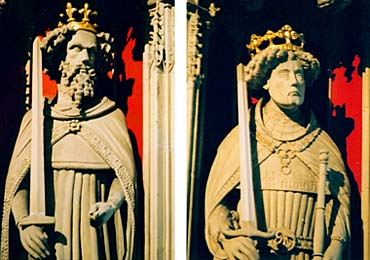
Henry has both hands full, and does not look to his viewers, eyes elevated, sword - we know - ever valiant. Ever more unto the breach, my friends.
Of all these figures, it is the Edwards who seem most alien to me, who arrest my attention. They are frankly ugly to my eyes. Startlingly so. Not as works of art, but as evocations of individuals, as portraits. The intensity is too much, the emphases uncanny.
To view the details of these statues closely, as is possible in photographs, was not the way they were made to be seen. Would have been inconceivable, when these were made. They reside, in physical reality, above the heads of anyone entering York Minster. And, for anyone standing in that consecrated place, it would even now be impossible to look at them with the care that we can in the reproductions and detail shots I have linked. It would in fact have been unseemly, in their day, to expend great attention on statues of kings - "what they looked like" - as a member of a religious congregation. And the multiplicity of these figures would have discouraged that sort of gazing.


The view when they were made did not allow the privilege of peering we have now.
As much particular attention as has been lavished on every one of the statues, the truth of the art was that they were meant to be part of a whole; elevated over the flesh-and-blood parishoners, but as much a part of the congregation gathered before G-d as lesser men. A mass of figures. These were statues glorifying the monarchy, certainly; even telling stories of each king's life and deeds. But they were ultimately part of the glorification of G-d - and the Church.
The potent energy of the Edwards may have been intended as part of a more en masse evocation of the intensity of worship, devotion, praise expected to be offered on this sacred ground.
Anyone who knows more of medieval art than I do - please disabuse me of any of these notions, or explain those aspects of what I am missing. I'd love to talk! These faces make me stop and stare every time.
All I can explain are those things I don't understand within the context of these works' creation - royalty itself; the finer points of Plantagenet politics or history; the specific legends of each of these individuals' reputations ... just how far these amazing portraits are even meant to be seen AS individuals. Allegorical implications. The filter of the history already passed between Longshanks and York Minster's decoration, so many generations later.
Tuesday, February 14, 2017
Saturday, February 11, 2017
Collection
Happy birthday today, to someone I love kind of a lot. Here are a few things he shares with this date, and here are a few more. Happy DAY FORTY-TWO!!!!
Happy birthday, too, to Eva Gabor, Sidney Sheldon, Tina Louise, Burt Reynolds, and Leslie Nielson. Happy Peppermint Pattie day, and happy Don't Cry Over Spilled Milk day!
Donna Everhart has an interview out at Authorlink; on the voice of Dixie Dupree, her process, her path, and what's next.
Take a trip to Ars Technica for a look at what could be some of the earliest punctuation known to man. The regional communication implications, or the grammatical foundations, make for wonderful speculation!
Following on my recent link to an essay about the cultural implications of hair, how about a study from Cambridge University, looking at the social history of lengths and styles, beards and curls? Staging! It's not just for plays and selling houses anymore ...
Happy birthday, too, to Eva Gabor, Sidney Sheldon, Tina Louise, Burt Reynolds, and Leslie Nielson. Happy Peppermint Pattie day, and happy Don't Cry Over Spilled Milk day!
Donna Everhart has an interview out at Authorlink; on the voice of Dixie Dupree, her process, her path, and what's next.
Take a trip to Ars Technica for a look at what could be some of the earliest punctuation known to man. The regional communication implications, or the grammatical foundations, make for wonderful speculation!
Dr Stefan Hanß has recently submitted a journal article on the confessional, gendered and emotional implications of forced shavings endured by people enslaved in the Habsburg and Ottoman lands.
Following on my recent link to an essay about the cultural implications of hair, how about a study from Cambridge University, looking at the social history of lengths and styles, beards and curls? Staging! It's not just for plays and selling houses anymore ...
Wednesday, February 8, 2017
Collection
At NPR online, Margaret Atwood discusses the next big form. I know from the moment the election was decided, MANY writers were vocal online and everywhere else about how they were already inspired to new dystopian work. To look at the form those works may take is a great exercise; and I think she may be right. The pace of traditional fiction cannot do justice to the creative juices flowing right now.
The evidence from Pech IV and Roc de Marsal clearly shows that the Neanderthals at these sites lived without fire not only for long periods but also during the coldest periods.
The Atlantic has a cool look at fire (hah). I've always been fascinated by the concept of the human hearth; hearth rights, the earliest human domesticity, the social contracts born of our control of and sharing of flame for warmth, protection, and cooking.
TA also has a wonderful link for writers (and readers!), just with its opener (well, or Faulkner's) on this article about asking the right questions. I have talked about the problems I have with creating tension on the page; as a writer of historicals set in known events and amongst characters who actually lived, it's too easy for me to think the (hi)story itself is enough. But it's necessary to know both WHY anyone else would find that enough, and to entice them to want to know. What gifts do we as authors bring to our characters ... ?
Which gets me thinking about my WIP's first line ...
Now, the CLOSING sentence (currently) is a literary in-joke. I love it, though it may not survive. It's worth reading the whole to get to it. Let's hope I'm getting the hang of this tension thing ...
(Confidential to my nerd readers: anyone else watch Caprica?)
Yeah, and it's a lot from The Atlantic today, but bear with me; they have some excellent writing!
Who else recalls Mike Mulligan and The Little House? Staples of my own childhood, I was thinking of the beautiful art for The Little House just a couple of days ago; the way it depicted time, especially; the way the house had a face, filled with emotion. This essay picks up those memories, and finds the relevance right now, with a powerful punch at the whole idea that innovation was invented recently. Y'all know how I love a good recency illusion and a The Dirty, Stupid Past refutation! (Want to get away from The Atlantic? Worth a click is the New Yorker story about Virginia Lee Burton.)
Okay, back to The Atlantic, for another of my obsessions, hygeine! On the industry, social and cultural implications, and pain of feminine hair removal. Evolutionary racism, and Darwin's culpability. Ow.
When a question is asked perfectly, it doesn’t need a tidy answer.
TA also has a wonderful link for writers (and readers!), just with its opener (well, or Faulkner's) on this article about asking the right questions. I have talked about the problems I have with creating tension on the page; as a writer of historicals set in known events and amongst characters who actually lived, it's too easy for me to think the (hi)story itself is enough. But it's necessary to know both WHY anyone else would find that enough, and to entice them to want to know. What gifts do we as authors bring to our characters ... ?
Which gets me thinking about my WIP's first line ...
The heat had begun to feed upon the red tile roofs of Ravenna, as if with a hostile will, when Amalasuntha was born more than eight days late.
Now, the CLOSING sentence (currently) is a literary in-joke. I love it, though it may not survive. It's worth reading the whole to get to it. Let's hope I'm getting the hang of this tension thing ...
(Confidential to my nerd readers: anyone else watch Caprica?)
Yeah, and it's a lot from The Atlantic today, but bear with me; they have some excellent writing!
Who else recalls Mike Mulligan and The Little House? Staples of my own childhood, I was thinking of the beautiful art for The Little House just a couple of days ago; the way it depicted time, especially; the way the house had a face, filled with emotion. This essay picks up those memories, and finds the relevance right now, with a powerful punch at the whole idea that innovation was invented recently. Y'all know how I love a good recency illusion and a The Dirty, Stupid Past refutation! (Want to get away from The Atlantic? Worth a click is the New Yorker story about Virginia Lee Burton.)
(S)uccessful in eliminating hair, and also in causing muscular atrophy, blindness, limb damage, and death.
Hoo baby!
Okay, back to The Atlantic, for another of my obsessions, hygeine! On the industry, social and cultural implications, and pain of feminine hair removal. Evolutionary racism, and Darwin's culpability. Ow.
Tuesday, February 7, 2017
Literate Celebrations
Happy birthday to Eddie Izzard, Laura Ingalls Wilder, Sinclair Lewis, Gay Talese, James Spader, Charles Dickens, and Eubie Blake.
I mean, how stupendous is Mr. Blake?
Also on this day ... (still loving Dena's dedication to this daily treat!) Here are the notable lists from Wikipedia. Ooh, Pete Postlethwaite!
I mean, how stupendous is Mr. Blake?
Also on this day ... (still loving Dena's dedication to this daily treat!) Here are the notable lists from Wikipedia. Ooh, Pete Postlethwaite!
Monday, February 6, 2017
"Well, Dang."
It's become clear to me with age that I'm one of those people who "won't go to a doctor." The thing is, last time I did go - with labyrinthitis, an illness I know ALL too well - they decided to do tests on me ... and told me I had: labyrinthitis. Go home, take meclizine.
Which was what I knew before I took the DIZZYING step of leaving my home, exposing strangers to the virus, my mom insisting on across town to drive me and make me go (and exposing her - and by extension my ailing stepfather), and experiencing a few hours of matchless torture for the privilege of being told what I knew already.
And that test cost me $285.
So, this past Wednesday, when I felt a sore throat coming on, I turned into one of those treat-it-yourself morons. I spent a day at work, possibly quite contagious, downing NSAIDs and thinking I was beating this thing.
Yeah. I know. Just be glad you aren't one of my cube farm mates, I guess. I suck.
I took my laptop home that night just in case, so I could work from home, and not infect anyone.
Thursday wasn't great. I did work, though. You can get good electronic housekeeping done with a puddy and a pup for company.
Friday, though - no way. The fever that had begun the day before was 101.6. I don't know when I've had a fever to speak of; it's been long enough I was actually in incomprehension, looking at the thermometer.
See, my mom raised us skeptical. She wasn't one to easily believe her kids were sick - we were NOT going to get away with malingering - and so, to this day, I often tend to disbelieve it when I am sick. Which is funny, because at heart I am an underachiever, often enamored of the idea of not being at work, home wrapped up in a blanket.
One of my bosses and I once had a conversation about the phenomenon of not being able to malinger; in his case, the superstructure for this was Catholic Guilt. In mine, Mom Guilt.
She's good, no doubt.
So for me to be out of work for two days is almost intolerable; I feel like I'm stealing.
Which is why this weekend - when it got so much worse - was not exactly relaxing. I think Friday may have been the worst of it, but Saturday wasn't the world's most breathtaking improvement. Yesterday - well, yesterday I made myself clean the dang house.
To be fair, being sick in a dirty house is the PITS. But it's a bit more of that mom thing. I wanted to be comfortable - but I also was insisting to my body, "I am better."
Well. Ish.
The cough still hurt a lot, though the fever was gone. I had energy enough to clean. "See!?" Clothes were laid out for today at work (oh yes I did go).
And then before bed I had to admit - that cough had blood in it. Old blood at one time, bright and fresh new blood at another.
Neither of these bears good implications, and I am not a complete ass. Though I did go to the office. Which ... actually may be completely assy. Fever or no, the likelihood where blood in the cough is concerned is "infection" (likely bacterial), and that means that, five days on, fever or no, I could be contagious.
Sigh.
I actually did feel remarkably good this morning. Which is odd, as I've had insomnia unlike anything I've experienced since my twenties for two nights running (and no nap yesterday, because housecleaning!).
I also called the doc.
One prescription later (seriously, I can take the cough; do just give me an antibiotic so I'm not Typhoid Mary over here), I can at least put to rest the Complete Ass of a Coworker concerns, and get on with things.
Thank goodness it didn't cost me $285.
Now to wait for the bill.
Which was what I knew before I took the DIZZYING step of leaving my home, exposing strangers to the virus, my mom insisting on across town to drive me and make me go (and exposing her - and by extension my ailing stepfather), and experiencing a few hours of matchless torture for the privilege of being told what I knew already.
And that test cost me $285.
So, this past Wednesday, when I felt a sore throat coming on, I turned into one of those treat-it-yourself morons. I spent a day at work, possibly quite contagious, downing NSAIDs and thinking I was beating this thing.
Yeah. I know. Just be glad you aren't one of my cube farm mates, I guess. I suck.
I took my laptop home that night just in case, so I could work from home, and not infect anyone.
Thursday wasn't great. I did work, though. You can get good electronic housekeeping done with a puddy and a pup for company.
Friday, though - no way. The fever that had begun the day before was 101.6. I don't know when I've had a fever to speak of; it's been long enough I was actually in incomprehension, looking at the thermometer.
See, my mom raised us skeptical. She wasn't one to easily believe her kids were sick - we were NOT going to get away with malingering - and so, to this day, I often tend to disbelieve it when I am sick. Which is funny, because at heart I am an underachiever, often enamored of the idea of not being at work, home wrapped up in a blanket.
One of my bosses and I once had a conversation about the phenomenon of not being able to malinger; in his case, the superstructure for this was Catholic Guilt. In mine, Mom Guilt.
She's good, no doubt.
So for me to be out of work for two days is almost intolerable; I feel like I'm stealing.
Which is why this weekend - when it got so much worse - was not exactly relaxing. I think Friday may have been the worst of it, but Saturday wasn't the world's most breathtaking improvement. Yesterday - well, yesterday I made myself clean the dang house.
To be fair, being sick in a dirty house is the PITS. But it's a bit more of that mom thing. I wanted to be comfortable - but I also was insisting to my body, "I am better."
Well. Ish.
The cough still hurt a lot, though the fever was gone. I had energy enough to clean. "See!?" Clothes were laid out for today at work (oh yes I did go).
And then before bed I had to admit - that cough had blood in it. Old blood at one time, bright and fresh new blood at another.
Neither of these bears good implications, and I am not a complete ass. Though I did go to the office. Which ... actually may be completely assy. Fever or no, the likelihood where blood in the cough is concerned is "infection" (likely bacterial), and that means that, five days on, fever or no, I could be contagious.
Sigh.
I actually did feel remarkably good this morning. Which is odd, as I've had insomnia unlike anything I've experienced since my twenties for two nights running (and no nap yesterday, because housecleaning!).
I also called the doc.
One prescription later (seriously, I can take the cough; do just give me an antibiotic so I'm not Typhoid Mary over here), I can at least put to rest the Complete Ass of a Coworker concerns, and get on with things.
Thank goodness it didn't cost me $285.
Now to wait for the bill.
Wednesday, February 1, 2017
This Day In ...
My dad had been diagnosed terminal about two years previous, but he wasn't one who spent his time dying. He fought the dragon - his attacks of airlessness, the cruelty of pulmonary fibrosis - he took to a wheelchair when he had to, he toted his concentrator. But he lived.
So the day he and mom were alone at the house, and asked me to just come be with them; that was new. He was in bed, and mom had just come home with cell phones; including one for me. Just in case.
Mom's was the FANCY phone. It was a flip. Mine was a little silver sneaker of a thing; rubber buttons, an antenna encased in more rubber. It seemed tiny, and had the brightest blue screen. I figured out how to play with it; producing pings and buzzes and what passed, fourteen years ago, for music on a cell phone. Tinklings and twangs. But it seemed neato.
Dad being a scientist, and just possessed of a curious and analytical mind, he 'gee whizzed' a bit about this new tech, and we spent the afternoon in their bedroom, figuring the little things out.
We spent the afternoon listening to footage and sadness.
It would come as a shock to me, years later, to find that there had been a Space Shuttle disaster just before my dad died. I remembered that day at their house. I had forgotten, utterly, what we'd had on the tube. While we played with the new phones - "just in case" anything happened with dad's condition - we had no idea there would be no condition at all anymore, in just a week.
So that event obliterated my recall of Columbia.
Resentfully, I can relate that I do recall (with painful clarity) the soundtrack of dad's actual final hours. It was Martin Bashir's documentary about Michael Jackson - about which I cared nothing, but which back then was about all there was going, for someone shuttling back and forth between hospital and home, grabbing scraps to eat and scraps of sleep in between thinking "this is the new normal" and ... "this is the last day."
I didn't have cable. Being alone in the house with no sound - even with my Sweet Siddy La there with me; her heartbeat and her sweet face - I could not take it. I would turn on the tube, and there he would be, protesting innocence and normalcy. Seemed to go on all day every day for the sacred time that is Waiting for Death.
The things you remember. Snow in square Xs on the sky lights below dad's room. Moving him to another room. Almost immediately losing his voice, his presence, to morphine. Knowing we'd lose him all the more, never to speak with him again.
Holding his hand. So soft; and that thick, heavy wedding ring, glowing against his grey-mauve skin.
My brother and I had left in the night, mom climbing in the bed to spoon him, as he died. She called us each at about four a.m., and we both arrived back at the hospital at the same moment - having both been listening to the same music on NPR. Something called Autumnal, by Brahms I think it was. It was perfect. Snow and elegiac strains. And holding hands with my brother, possibly the only time in our lives we've ever done that. Walking in through the bewildering route to quiet, and darkness, and mom and dad.
Holding hands. Dad's hands.
The way his muscles tightened on my hand after he had died.
When I was small, dad and I would sit in church, mom in the choir, and he would just lift up one big, warm paw in a gesture so old between us I cannot even place its origin. I would ball up my own paw into a fist, and place it into his. Ball-and-socket dad and kid.
Dad had warm hands all his life, till the diagnosis. Soft, dad was hairy too. Fuzzy Wuzzy was my dad - except, of course, on top of his big round Charlie Brown head. He was warm and reassuringly stocky; not what I can call stout, but solid, firmly on the ground. Not tall, but never a negligible physical presence.
He had this warm, gravelly-gruff voice.
There was a voice mail on that little silver sneaker. I had it for a long time, but after some period they auto-delete. I lost my dad's voice maybe six months after he died.
He was the best.
I miss my dad.
So the day he and mom were alone at the house, and asked me to just come be with them; that was new. He was in bed, and mom had just come home with cell phones; including one for me. Just in case.
Mom's was the FANCY phone. It was a flip. Mine was a little silver sneaker of a thing; rubber buttons, an antenna encased in more rubber. It seemed tiny, and had the brightest blue screen. I figured out how to play with it; producing pings and buzzes and what passed, fourteen years ago, for music on a cell phone. Tinklings and twangs. But it seemed neato.
Dad being a scientist, and just possessed of a curious and analytical mind, he 'gee whizzed' a bit about this new tech, and we spent the afternoon in their bedroom, figuring the little things out.
We spent the afternoon listening to footage and sadness.
It would come as a shock to me, years later, to find that there had been a Space Shuttle disaster just before my dad died. I remembered that day at their house. I had forgotten, utterly, what we'd had on the tube. While we played with the new phones - "just in case" anything happened with dad's condition - we had no idea there would be no condition at all anymore, in just a week.
So that event obliterated my recall of Columbia.
Resentfully, I can relate that I do recall (with painful clarity) the soundtrack of dad's actual final hours. It was Martin Bashir's documentary about Michael Jackson - about which I cared nothing, but which back then was about all there was going, for someone shuttling back and forth between hospital and home, grabbing scraps to eat and scraps of sleep in between thinking "this is the new normal" and ... "this is the last day."
I didn't have cable. Being alone in the house with no sound - even with my Sweet Siddy La there with me; her heartbeat and her sweet face - I could not take it. I would turn on the tube, and there he would be, protesting innocence and normalcy. Seemed to go on all day every day for the sacred time that is Waiting for Death.
The things you remember. Snow in square Xs on the sky lights below dad's room. Moving him to another room. Almost immediately losing his voice, his presence, to morphine. Knowing we'd lose him all the more, never to speak with him again.
Holding his hand. So soft; and that thick, heavy wedding ring, glowing against his grey-mauve skin.
My brother and I had left in the night, mom climbing in the bed to spoon him, as he died. She called us each at about four a.m., and we both arrived back at the hospital at the same moment - having both been listening to the same music on NPR. Something called Autumnal, by Brahms I think it was. It was perfect. Snow and elegiac strains. And holding hands with my brother, possibly the only time in our lives we've ever done that. Walking in through the bewildering route to quiet, and darkness, and mom and dad.
Holding hands. Dad's hands.
The way his muscles tightened on my hand after he had died.
When I was small, dad and I would sit in church, mom in the choir, and he would just lift up one big, warm paw in a gesture so old between us I cannot even place its origin. I would ball up my own paw into a fist, and place it into his. Ball-and-socket dad and kid.
Dad had warm hands all his life, till the diagnosis. Soft, dad was hairy too. Fuzzy Wuzzy was my dad - except, of course, on top of his big round Charlie Brown head. He was warm and reassuringly stocky; not what I can call stout, but solid, firmly on the ground. Not tall, but never a negligible physical presence.
He had this warm, gravelly-gruff voice.
There was a voice mail on that little silver sneaker. I had it for a long time, but after some period they auto-delete. I lost my dad's voice maybe six months after he died.
He was the best.
I miss my dad.
 |
| 1986, just before the prom ... holding hands ... |
Subscribe to:
Posts (Atom)