I would hardly be the first, and it's hardly the first time I've thought this myself - but the loss, through the 20th century, of traditional mourning practices in the United States is also a loss of an important signal between us as humans. It's been tempting, since my stepfather's death, to find some way to communicate, without having to have awkward conversations with strangers or acquaintances, that I have just endured a loss. With even the black armband all but vanished, mourning itself is an awkward proposition anymore.
There has been an increasing sense, for me, that it's time to move on. Nobody has pressed this upon me, but with weeks passing at a clip (I almost cannot believe it's been nearly three now), there is an inescapable feeling that continuing to Have The Feels about my stepfather's death is already drama-queening. That, to be frank, there is only the briefest of periods we can get away with not being okay and getting on with the day-to-day.
It would be ... if not nice, then certainly convenient, to have an unspoken signal of mourning. If one is to get on with the day-to-day, not having to *speak* about the loss of a loved one would certainly facilitate that. But the human heart is what it is, and it still hurts when people you're not sure even "know about it" register no sympathy. There is confusion - do I tell this person I see every day? Why should I have to do that? It feels like dramatics to lay that on people - particularly when you're not sure whether they know already. Some people won't speak because it's been more than a few days, and the news-cycle of life has sailed. Some people won't speak because they are sensitive to the pain of loss. Some people won't speak because they are awkward with the subject. Some people won't speak because they do not know. As the bereaved, it would be easier to know - is this person in ignorance, or are they being kind? It HELPS to understand.
So much of communication is nonverbal.
And so, if I had a signal, I could at least understand the words that do come toward me. And I could also communicate this important thing about myself, without having to stop time in the workroom to say, "Yeah, my stepfather just died." And leave someone feeling VERY awkward.
My guess is, this is one more gift Americans have accidentally or heedlessly imposed upon the world. In the rush to imprint our informality, nonconformity, and expectations upon human interaction, we have obliterated some forms of signal someone figured wasn't necessary, and over time the social enforcement that is conformity (har) ended up killing off this branch of etiquette. Uncomfortable, restrictive, depressing, perhaps even importunate upon the carefree (har) lives of other individuals.
Goodbye, mourning. Seriously, has anyone seen real mourning since Jackie Kennedy? I can't so much as remember consistently black garb at funerals; my mom, as it happens, wore poppy-red over a red and black dress, to the funeral inspiring me to discuss this whole thing. She is a great believer in the reaffirmation of life in vivid (the word means lively, after all) color.
I wore black. He was a bit more traditional. And he deserves to be mourned.
Indeed, since he died, I have kept my wardrobe more on the sober side ever since. If I can't go around in mourning jewelry (that people will understand as such, as opposed to thinking I just picked coz I'm goth-ly tinged), at least I can calibrate my mien to less flamboyance. And wear *less* jewelry. I actually applied a shot of brown hairspray to cover the blue hair, in fact, before the funeral; and at least once or twice since. I'm not even wearing highlighting cosmetics these days; bright eyes just seem inappropriate. (And the simpler the eye makeup, the less smear when I slip and find myself crying. In the middle of a meeting. Because: dork. In mourning.)
Three weeks. And already, I find myself embarrassed to even SAY "I am in mourning" (except to that one actual human telemarketer who called, and I could not take it). In the culture I've grown up in, mourning itself is unseemly, because it imposes upon those around us the distasteful necessity of sensitivity, or just the reminder of mortality. Mourning for three WEEKS, well. That is just melodramatic.
And yet, I am impelled to say - at least here - he deserves more than weeks. And what he has taught me, perhaps especially in his own final week, which was horrific ... will stay with me for the rest of my life. I still don't understand everything I saw and experienced, and it's both something to process and also to extrapolate from: for all I went through the eternity and power and heartbreak of his deathbed, my mom has been enduring as a caregiver for years now. His decline, in fact, goes back eight years - I still remember the Mother's Day lunch we shared, when we had to hold his arm back out to the parking lot.
Mom is still learning, too. Just how long this road has been. How, bit by bit, her own liberty to move in the world was curtailed - sometimes by my stepfather's will (he developed terrified and aching separation anxiety), and always by his frailty. How she did it all herself, and kept him home.
Six months ago, I was firmly of the belief that I would NEVER die in a hospital. My own dad's death left me sure it was barbaric and awful. My own dad's death came fast, though.
Now, I am not so sure. Being home might be nice, if I could be assured of sudden death (and that The Poobahs would not starve). It has an allure - who would wish to be in a hospital at the end?
But a slow death at home ... knowing that I could be alone, is that something to sign up for in all eagerness? Not that I'm interested in artificial prolongation, but the variables in horror - if I were alone, and broke a hip (my stepfather's final crisis was a break, and this is often a precipitating factor for those already in decline), what would I endure, ensconsed at home yes, but immobilized, in pain ... ?
Even with caregivers, death at home isn't some peaceful slipping away in one's own bed. Indeed, a standard bed is a horrible, dangerous place. Only after a hospital bed was delivered did my stepfather subside from cruel restlessness and the torture of his broken bones. And by "subside" I do not mean he found comfort. Only some respite, and that incomplete itself.
I learned from him; and sat with him, and tried to give him silence. Sound made him uncomfortable, so I stopped even indulging myself telling him how much I loved him. Or that he could go on. We told him that a lot. He didn't need to hear it, he wasn't holding out for permission to die.
And this too, I learned from him ... death doesn't always answer to the pretty stories we apply to it. It's not always a saga of fulfillment, someone waiting until an important figure comes to their side and releases them. It's not even always a question of release. The man my stepfather was? He had life left, and he was going to use it all up. All of it. Where for six years, he literally begged for death, once it announced it was come, he wrung out of his body the last *iota* of life left to him. Death wasn't impatient for him; those of us around him were.
It is a harrowing thing, a week long deathbed. Human chatter becomes intolerable, and I understand his responses when it was pushed on him, or shot over him as if he were barely there. He was there.
Even outside the room where he lay, the prognostications of "when" ... the stories about crows haunting us, or passed family members coming to take him away ... were not merely exhausting, they became irrelevant quickly as he kept on living on ... and we undoubtedly crossed into distasteful territory, more than once. People coming and going, speaking loudly of meals once shared, or playing music he would have hated ... crossing with those who came to sing, to pray, to just be beside him.
I think (and this may just be a story I tell myself) I became more silent as the days passed, simply because that was the only gift I had left to give to him. I stopped typing one day, because I felt the sound of my keystrokes, even, were too much to bear. I didn't hold his hand constantly, I stopped telling him he was the best stepfather ever, or that I loved him, or how much he amazed me.
I just never stopped kissing his head. Breathing the smells of him - not all of them beautiful. And yet, I both miss the scent of him and find myself having a sort of PTSD series of flashbacks to the smell that seemed most emblematic of him in his last year or so. The smell of his death began long before he ever broke a bone.
I miss him, and I love him, and I mourn him, and just thinking it makes me weep silently.
One of the funniest people I ever knew.
Someone who, never having been a father before, took on our whole family when he was not a strapping youth, and who found ways to laugh alongside us. Great G-d, it was not always easy - for him, or for us. The first years were difficult.
But the past eight? The past six? The years since my brother's family moved, and it's been me, mom, and him? The time it took for me to go from reluctance, to content, to tenderness?
I am blessed to have had these years.
Their passing deserves observation.
My stepfather deserves mourning.
Thursday, April 12, 2018

Friday, April 6, 2018
DRAG, the Series: Human
I have decided to leave this series of posts, intentionally, in a very draft form. This owes to the upheaval of the past month of my personal life, yes ... but it also feels fitting, as the entire point of this discussion of drag is about construction and challenging assumptions. To smooth it all into coherent, long prose might obscure the various parts, and thoughts, I have put into this, and they perhaps should stand out starkly. In honesty, much of what I say is just intros to the links embedded. And so, here is this series. Unfinished. Challenging - to me, in one sense, and to the audience in another. Seems right ...
Stories - both the wit onstage, and the realities of the performers: we all know these glorious manifestations were born of pain. Even the most loved and supported queens, who have enjoyed acceptance from their friends and/or families (genetic or adopted, by whatever means) performing right now are up against the WORLD of those who do not. And acceptance by those nearest and dearest is hardly guaranteed. Probably not a queen standing has not endured humiliation, doubts cast upon them, and discrimination - never even to mention the scrutiny of strangers who consider they have a right to particular knowledge of the most intimate aspects of their lives and even bodies. And yet, these people devote themselves to the art and entertainment they provide. This is not a minor risk ... even as many queens say their drag is their armor, the main reason it can be such is that they are forced to *need* armor at all ...
Drag Race capitalizes on turning self-expression into a competition - and then overturns all narratives about "winning" as Miss Congeniality and runners-up become superstars on tides of fan support ... or queens walk off voluntarily, messianic (no, seriously) figures simultaneously rejecting the crown and glorifying it, simultaneously gaming and messy, and - well - Miss Congeniality incarnate. The show has exemplified reality television's outcomes, where "winning" ends up meaningless - and might almost ruin the game, for some.
We all contain multitudes. Some of us may be less aware of that most of the time, and some may play it up more consciously, but few of us are glam queens 100% of the time any more than we're litter-cleaning schlubs 100% of the time.
Third genders
What is "authentic" anyway?
One of the major focal points of drag is the synthetic ideals we've applied to the idea of "femininity" - and thereby, obliquely, pointing to the synthetic nature of the masculine, and of binary sexuality and humanity. Drag queens rarely dress like (everyday, cis) women. I am in lug-heeled boots, jeans, and a chunky sweater as I write this - and, on average, a drag queen is not to be caught dead in the attire that outfits most "women" throughout our lives. A queen is OTT, pointed (ahem), fabulous. If a drag queen is a showgirl, the point is the showing-girliness. If the spotlight is on, it's not going to shine without some glitter.
This series of posts has discussed the depths of social, cultural, *human* behavior in a lot of depth, and I've linked the dickens out of things which point to the fact that "human" does not strictly mean man-woman/nuclear family/hetero/binary/cis etc.
If "we" are hundreds of thousands of years old, and even before anatomically modern humanity we engaged in recognizeably human society and culture, how is it even possible to presume what any one of us thinks we know is any form of bedrock truth? If we were built to be, and survive only because we are, flexible and adaptable, why are there people who think their is safety lies in rigidity, in immutable definition and narrow parameters?
Why are people afraid of drag queens?
As natural as it is to be adaptable, it is also natural and human to harbor fear - and the original interpersonal fear, the greatest fear outside of fire and flood and hungry, toothy predators: is The Other. The person we do not know.
The person we do not understand.
As human as it is to self-decorate and put on uncomfortable shoes or shocking color: it is just as human to fear drawing attention, to fear those who brave it, and to fear behavior we cannot understand because we cannot bring ourselves to it at all.
Human innovation, our ingenuity itself, is born of fear and need. The need to eat and self-protect created community and the cultures we built to sustain the human herds within which we found it safest to function.
The essence of the art form is compassion.
Stories - both the wit onstage, and the realities of the performers: we all know these glorious manifestations were born of pain. Even the most loved and supported queens, who have enjoyed acceptance from their friends and/or families (genetic or adopted, by whatever means) performing right now are up against the WORLD of those who do not. And acceptance by those nearest and dearest is hardly guaranteed. Probably not a queen standing has not endured humiliation, doubts cast upon them, and discrimination - never even to mention the scrutiny of strangers who consider they have a right to particular knowledge of the most intimate aspects of their lives and even bodies. And yet, these people devote themselves to the art and entertainment they provide. This is not a minor risk ... even as many queens say their drag is their armor, the main reason it can be such is that they are forced to *need* armor at all ...
Drag Race capitalizes on turning self-expression into a competition - and then overturns all narratives about "winning" as Miss Congeniality and runners-up become superstars on tides of fan support ... or queens walk off voluntarily, messianic (no, seriously) figures simultaneously rejecting the crown and glorifying it, simultaneously gaming and messy, and - well - Miss Congeniality incarnate. The show has exemplified reality television's outcomes, where "winning" ends up meaningless - and might almost ruin the game, for some.
We all contain multitudes. Some of us may be less aware of that most of the time, and some may play it up more consciously, but few of us are glam queens 100% of the time any more than we're litter-cleaning schlubs 100% of the time.
Third genders
What is "authentic" anyway?
One of the major focal points of drag is the synthetic ideals we've applied to the idea of "femininity" - and thereby, obliquely, pointing to the synthetic nature of the masculine, and of binary sexuality and humanity. Drag queens rarely dress like (everyday, cis) women. I am in lug-heeled boots, jeans, and a chunky sweater as I write this - and, on average, a drag queen is not to be caught dead in the attire that outfits most "women" throughout our lives. A queen is OTT, pointed (ahem), fabulous. If a drag queen is a showgirl, the point is the showing-girliness. If the spotlight is on, it's not going to shine without some glitter.
Pigments are often seen as the root of complex symbolic behavior. Think of the way we use color on clothes, flags, and tattoos—all signals of social identity.
This series of posts has discussed the depths of social, cultural, *human* behavior in a lot of depth, and I've linked the dickens out of things which point to the fact that "human" does not strictly mean man-woman/nuclear family/hetero/binary/cis etc.
If "we" are hundreds of thousands of years old, and even before anatomically modern humanity we engaged in recognizeably human society and culture, how is it even possible to presume what any one of us thinks we know is any form of bedrock truth? If we were built to be, and survive only because we are, flexible and adaptable, why are there people who think their is safety lies in rigidity, in immutable definition and narrow parameters?
Why are people afraid of drag queens?
As natural as it is to be adaptable, it is also natural and human to harbor fear - and the original interpersonal fear, the greatest fear outside of fire and flood and hungry, toothy predators: is The Other. The person we do not know.
The person we do not understand.
As human as it is to self-decorate and put on uncomfortable shoes or shocking color: it is just as human to fear drawing attention, to fear those who brave it, and to fear behavior we cannot understand because we cannot bring ourselves to it at all.
Human innovation, our ingenuity itself, is born of fear and need. The need to eat and self-protect created community and the cultures we built to sustain the human herds within which we found it safest to function.
DRAG, the Series: Gender
I have decided to leave this series of posts, intentionally, in a very draft form. This owes to the upheaval of the past month of my personal life, yes ... but it also feels fitting, as the entire point of this discussion of drag is about construction and challenging assumptions. To smooth it all into coherent, long prose might obscure the various parts, and thoughts, I have put into this, and they perhaps should stand out starkly. In honesty, much of what I say is just intros to the links embedded. And so, here is this series. Unfinished. Challenging - to me, in one sense, and to the audience in another. Seems right ...
Cis
Genderqueer
Nonbinary
PINK LABELING
CODED presentation and what that means: masculine marketing - cuck - shaming - feminized restriction
"Feminine" and "masculine" codes and symbology are taught and learned, not genetically determined.
HOW "natural" is binary sexuality ... third gender (only three?) ... why do we punish gender variance and respond to it so viscerally? Why do people care how someone else loves, or uses their body? Why are other bodies' behaviors important to our minds? Why do we refer to nonbinary pronouns, people, behavior as gender TRANSGRESSIVE?
It's hard not to assume, growing up with a given set of assumptions, that these reflect the way the world "is" in some immutable way. But each of us, throughout the millennia of history and prehistory, grew up in a finite time and place - and the slightest observance of the world beyond our lives reveals that even in one given time there is a multiplicity of assumptions, even closer than we often like to imagine. Multiply this multiplicity across time and distance, and the variety of human culture is impossible not to acknowledge. Only the presumption of rock-solid correctness is bewildering, when you really look at humanity.
And so the challenge to heteronormative sexuality and gender should hardly be as surprising as it seems to be, for many people. But our emotional attachment to what we think we know means we cling to it with the strength of fear, or morality; all the things that reassure us deep inside.
My mom, who knows I love drag, and who even helped me to shop for the baby drag queen I used to sell to on eBay a few years back, still recoils at the whole thing. She's of a certain age and background, she's Southern Baptist, she's conservative. She never has had the vitriol for gay men so many like her harbor, but she does prefer not to think about it. Just recently, she was talking about watching Project Runway, and a man was in heels but his outfit was more athletic than stereotypically feminine. I told her, drag these days is less and less about synthesizing the "feminine" than it is about questioning what is stereotypically masculine. Heels aren't meant to evoke a paradigmatic "woman" - they are just to certain men's taste, or they are a question mark of a kind. Challenge.
Drag is no longer all about "female impersonation" if it ever was. Given the recency and locality of strictly heterosexual and binary sexuality and gender notions - given cultures who accept "third" genders and familial relations based on paradigms other than the modern Western nuclear family - heck, even given just the two-generation definition we've narrowed that down to, where even a household of three generations, or offspring living with parents past certain threshholds of adulthood, are looked askance, the het/cis/binary is a correspondingly narrowed view of roles. At a point where many are questioning the validity of 4-person nuclear households, questioning het/cis/binary roles is as natural as living outside them is.
Going along with all this fee-lossy-fizing is the point that "drag" as such is not even strictly a description of a specific form of entertainment. Not all drag is a staged performance. Like any persona in anyone's day-to-day life, drag is for many just their life - see the quote at the top of this post. Just as not all drag queens are cis or gay men, not all drag takes place on a stage, and not all drag is specifically a portrayal of women.
Controversy about RuPaul's statements on trans women.
My own baby queen ... ?
Fat, Femme, and Asian Feminizing and exoticizing race ... glorification and elevation of the marginalized - even within subcultural/marginalized terms.
Clothing in terms of menswear, women's wear ...
History of female impersonation, passing,
We know that Joane of Arc didn't go in for dresses, but we also know that her practical, spiritual, individual mode of dress and behavior met not only her needs but answered to something much larger than one young woman. It still answers, for many, even centuries after the wars she fought have been, as far as this can be said, resolved. What she was and what she did continues to be meaningful even though she, her armies, and her Dauphin, are all dust. Her transgressions speak to us.
There have always been as many practical reasons to blur, to cross, or to sneak behind constructed boundaries as there are deep-seated objections to conformity.
We're all born naked, and the rest is drag.
--RuPaul Charles
Cis
Genderqueer
Nonbinary
PINK LABELING
CODED presentation and what that means: masculine marketing - cuck - shaming - feminized restriction
"Feminine" and "masculine" codes and symbology are taught and learned, not genetically determined.
HOW "natural" is binary sexuality ... third gender (only three?) ... why do we punish gender variance and respond to it so viscerally? Why do people care how someone else loves, or uses their body? Why are other bodies' behaviors important to our minds? Why do we refer to nonbinary pronouns, people, behavior as gender TRANSGRESSIVE?
Clearly, the underlying conceptualization of gender implied by these taxonomies is at variance with the idea that physical sex is fixed, marked by genitalia, and binary.
It's hard not to assume, growing up with a given set of assumptions, that these reflect the way the world "is" in some immutable way. But each of us, throughout the millennia of history and prehistory, grew up in a finite time and place - and the slightest observance of the world beyond our lives reveals that even in one given time there is a multiplicity of assumptions, even closer than we often like to imagine. Multiply this multiplicity across time and distance, and the variety of human culture is impossible not to acknowledge. Only the presumption of rock-solid correctness is bewildering, when you really look at humanity.
And so the challenge to heteronormative sexuality and gender should hardly be as surprising as it seems to be, for many people. But our emotional attachment to what we think we know means we cling to it with the strength of fear, or morality; all the things that reassure us deep inside.
My mom, who knows I love drag, and who even helped me to shop for the baby drag queen I used to sell to on eBay a few years back, still recoils at the whole thing. She's of a certain age and background, she's Southern Baptist, she's conservative. She never has had the vitriol for gay men so many like her harbor, but she does prefer not to think about it. Just recently, she was talking about watching Project Runway, and a man was in heels but his outfit was more athletic than stereotypically feminine. I told her, drag these days is less and less about synthesizing the "feminine" than it is about questioning what is stereotypically masculine. Heels aren't meant to evoke a paradigmatic "woman" - they are just to certain men's taste, or they are a question mark of a kind. Challenge.
Drag is no longer all about "female impersonation" if it ever was. Given the recency and locality of strictly heterosexual and binary sexuality and gender notions - given cultures who accept "third" genders and familial relations based on paradigms other than the modern Western nuclear family - heck, even given just the two-generation definition we've narrowed that down to, where even a household of three generations, or offspring living with parents past certain threshholds of adulthood, are looked askance, the het/cis/binary is a correspondingly narrowed view of roles. At a point where many are questioning the validity of 4-person nuclear households, questioning het/cis/binary roles is as natural as living outside them is.
Going along with all this fee-lossy-fizing is the point that "drag" as such is not even strictly a description of a specific form of entertainment. Not all drag is a staged performance. Like any persona in anyone's day-to-day life, drag is for many just their life - see the quote at the top of this post. Just as not all drag queens are cis or gay men, not all drag takes place on a stage, and not all drag is specifically a portrayal of women.
Controversy about RuPaul's statements on trans women.
My own baby queen ... ?
Fat, Femme, and Asian Feminizing and exoticizing race ... glorification and elevation of the marginalized - even within subcultural/marginalized terms.
Clothing in terms of menswear, women's wear ...
History of female impersonation, passing,
We know that Joane of Arc didn't go in for dresses, but we also know that her practical, spiritual, individual mode of dress and behavior met not only her needs but answered to something much larger than one young woman. It still answers, for many, even centuries after the wars she fought have been, as far as this can be said, resolved. What she was and what she did continues to be meaningful even though she, her armies, and her Dauphin, are all dust. Her transgressions speak to us.
There have always been as many practical reasons to blur, to cross, or to sneak behind constructed boundaries as there are deep-seated objections to conformity.
DRAG, the Series: Costume
I have decided to leave this series of posts, intentionally, in a very draft form. This owes to the upheaval of the past month of my personal life, yes ... but it also feels fitting, as the entire point of this discussion of drag is about construction and challenging assumptions. To smooth it all into coherent, long prose might obscure the various parts, and thoughts, I have put into this, and they perhaps should stand out starkly. In honesty, much of what I say is just intros to the links embedded. And so, here is this series. Unfinished. Challenging - to me, in one sense, and to the audience in another. Seems right ...
We began sewing at least 50,000 years ago. Clothing and textile ever since have been used not only for practical purposes, but symbolic ... and, if you think you are not dressed symbolically, even if you're reading this in your jammies, think again. LOOK again.
Most of us choose our symbols out of prefabricated options, sometimes with more consideration than others. But think about a drag queen; as often as not, she has created her own "look" - not merely in terms of painted features, but also in costume. A queen is a seamstress, a model, a performer - wearing a thousand themes through a thousand nights, and generally conceiving and creating every aspect of a look and a performance all on their own. A queen is inspired to a theme, but also has to look to practicals - is the piece I'm making utilitarian for me to sing, or lip synch, or dance, or all of the above? What are the optical principles in presentation - in a dark hall or bar, in front of this crowd or that, in front of dozens - or hundreds - or thousands?
Dressing outlandishly is an art. Indeed, *many* arts. From design to performance, from choosing materials to deploying them, drag is head-to-toe ... inflatables, headpieces, shoes, unexpected materials. There is engineering to consider - will this prosthetic makeup hold up to the movement of my face, will the paper gown survive sitting down, or a long meet-and-greet with fans?
Makeup AND costume
fashion history and what's old is new again ... The study of the history of costume is the study of history itself, and perhaps a more insightful one than strictly reading direct sources. Looking at modes and methods of dress can tell the story of social priorities - even scandals - and deepens our understanding of the times in which surviving textiles or portraits were made. Oh MY!
what is appropriate to wear where. Clothing as instruction: this is for girls, this is for boys ... the eye it takes not just to see these distortions, but then to parlay them into art, beauty, and commentary.
You hear often that drag is an "armor." The thing is, this is true for everyone, every day. The importance of costume exists for EVERYBODY, even those who think they're not doing it, not paying attention. If you dress yourself at all - and if you don't (there is no escape, Major Major) - we present ourselves to the world, even when we're not dressing up for other people. Even when all we present is what we prepared just to manage the physical act of living.
If humanity as a whole is constantly evoking, demolishing, reimagining, and retrieving our fashions, even as we feel the need to just-as-constantly make fun of what is old. Sometimes, those among us creating the real rules by which we actually live are those of us destroying what, ideally, we might like to be the rules. Drag is destruction, and simultaneously it is creation. That's a hellaciously difficult magic trick, and it is one of the keys of beauty itself.
Self-decoration is older than homo sapiens itself; in the ochre of ancient hominid burials, we see the urge to beauty - to self-presentation - in the deepest history of what we are. It is tied to religion and death, and without it there is no culture, no society at all.
............ "The only thing I didn't like was the makeup" ... "You don't need makeup"
"Fake it till you make it" ...
Grand Guignol
We use exposure to our fears to get over our fears, but also for the *thrill* of the fear.
Not long ago, I was watching an episode of "Lucifer" in which an immortal character is costumed in a completely innocuous sweater with a peter-pan collar. She's in no way presented with fantasy color or extreme style, but her sweater is embroidered with dozens of bees. It wasn't a design choice 99% of viewers would even register, but for the very few who would, it was meaningful - and quietly gratifying.
All our clothing is projection. Drag is projection. Projection of wishes, projection of feelings, projection of fears - thrilling, and inuring. And beautiful
We began sewing at least 50,000 years ago. Clothing and textile ever since have been used not only for practical purposes, but symbolic ... and, if you think you are not dressed symbolically, even if you're reading this in your jammies, think again. LOOK again.
Most of us choose our symbols out of prefabricated options, sometimes with more consideration than others. But think about a drag queen; as often as not, she has created her own "look" - not merely in terms of painted features, but also in costume. A queen is a seamstress, a model, a performer - wearing a thousand themes through a thousand nights, and generally conceiving and creating every aspect of a look and a performance all on their own. A queen is inspired to a theme, but also has to look to practicals - is the piece I'm making utilitarian for me to sing, or lip synch, or dance, or all of the above? What are the optical principles in presentation - in a dark hall or bar, in front of this crowd or that, in front of dozens - or hundreds - or thousands?
Dressing outlandishly is an art. Indeed, *many* arts. From design to performance, from choosing materials to deploying them, drag is head-to-toe ... inflatables, headpieces, shoes, unexpected materials. There is engineering to consider - will this prosthetic makeup hold up to the movement of my face, will the paper gown survive sitting down, or a long meet-and-greet with fans?
Makeup AND costume
fashion history and what's old is new again ... The study of the history of costume is the study of history itself, and perhaps a more insightful one than strictly reading direct sources. Looking at modes and methods of dress can tell the story of social priorities - even scandals - and deepens our understanding of the times in which surviving textiles or portraits were made. Oh MY!
what is appropriate to wear where. Clothing as instruction: this is for girls, this is for boys ... the eye it takes not just to see these distortions, but then to parlay them into art, beauty, and commentary.
Our culture is about choosing an identity and sticking with it so people can market shit to you
--RuPaul Charles
You hear often that drag is an "armor." The thing is, this is true for everyone, every day. The importance of costume exists for EVERYBODY, even those who think they're not doing it, not paying attention. If you dress yourself at all - and if you don't (there is no escape, Major Major) - we present ourselves to the world, even when we're not dressing up for other people. Even when all we present is what we prepared just to manage the physical act of living.
If humanity as a whole is constantly evoking, demolishing, reimagining, and retrieving our fashions, even as we feel the need to just-as-constantly make fun of what is old. Sometimes, those among us creating the real rules by which we actually live are those of us destroying what, ideally, we might like to be the rules. Drag is destruction, and simultaneously it is creation. That's a hellaciously difficult magic trick, and it is one of the keys of beauty itself.
Self-decoration is older than homo sapiens itself; in the ochre of ancient hominid burials, we see the urge to beauty - to self-presentation - in the deepest history of what we are. It is tied to religion and death, and without it there is no culture, no society at all.
............ "The only thing I didn't like was the makeup" ... "You don't need makeup"
"Fake it till you make it" ...
Grand Guignol
We use exposure to our fears to get over our fears, but also for the *thrill* of the fear.
Not long ago, I was watching an episode of "Lucifer" in which an immortal character is costumed in a completely innocuous sweater with a peter-pan collar. She's in no way presented with fantasy color or extreme style, but her sweater is embroidered with dozens of bees. It wasn't a design choice 99% of viewers would even register, but for the very few who would, it was meaningful - and quietly gratifying.
All our clothing is projection. Drag is projection. Projection of wishes, projection of feelings, projection of fears - thrilling, and inuring. And beautiful
DRAG, the Series: Challenge
I have decided to leave this series of posts, intentionally, in a very draft form. This owes to the upheaval of the past month of my personal life, yes ... but it also feels fitting, as the entire point of this discussion of drag is about construction and challenging assumptions. To smooth it all into coherent, long prose might obscure the various parts, and thoughts, I have put into this, and they perhaps should stand out starkly. In honesty, much of what I say is just intros to the links embedded. And so, here is this series. Unfinished. Challenging - to me, in one sense, and to the audience in another. Seems right ...
The thing about most offputting entertainments and art forms throughout history is this: they *mean* to be offputting. To a certain audience. Ugliness, cacophany, discomfort in art are a direct challenge, always, to prevailing assumptions. And right now, for a western-centric culture out to homogenize the world, a culture which has dressed men the same for upward of 200 years, there can be little wonder that one of the most popular challenges is the industrial-scale insurgency of drag
Nancy Pelosi ... YOUTUBE CLIP OF HER FROM RDR
There is no one way to be gay ... or drag, or masculine, or feminine, or a particular age, or republican, or spiritual. More specifically: there is no wrong way to be any of these things, or any others.
I do Goth wrong. In my life, the very essence of nonconformity has been ... showing up at a tattoo convention and having a triple piercing removed. "You went to a tattoo festival and got yourself UN-maimed," my brother said, and it was a revelation to me. Or wearing sky blue and glitter lipgloss to a Type O Negative show, or putting together a 40s-vintage ensemble, but wearing forest green lipstick amongst otherwise "authentic" hair and clothing and period-perfect makeup.
We. All. Contain. Multitudes.
People have been weird since we've been people: truly, independently, fiercely weird. We have also been "people" for more than three hundred thousand years - not merely hairy little tool-users who put the dead away systematically or even ritually - but engaging in trade, and even processing pigment from stone.
Using pigment to permanently mark ourselves.
Pigment is at the heart not only of art, but of self-decoration. And even self-decoration performs double-duty - many people are aware that eyeliner dates back thousands of years, but fewer realize its practical application, in reducing visual glare in a very sunny region. The principal of dark patches on the face to improve bright-light vision survives today, quite prominently.
Our attachment to our tools and our expressions is the basis for the very concept of sin.
Fishy aesthetic versus Acid Betty, Dirt Woman, Divine (both glamorous and un-"pretty", using symbols of the former and co-opting the latter to invent something new)...
Perhaps especially during the 1970s and 1980s, punk and drag had a lot in common, and RuPaul's early days show a grungy, harder-edged New Wave image.
This post "UNDER CONSTRUCTION" and I'll publish it anyway ... this post is a challenge. Ooh, how meta.
The thing about most offputting entertainments and art forms throughout history is this: they *mean* to be offputting. To a certain audience. Ugliness, cacophany, discomfort in art are a direct challenge, always, to prevailing assumptions. And right now, for a western-centric culture out to homogenize the world, a culture which has dressed men the same for upward of 200 years, there can be little wonder that one of the most popular challenges is the industrial-scale insurgency of drag
I’m not doing drag to give you makeup tips. This has always been a political statement.
RuPaul Charles
Nancy Pelosi ... YOUTUBE CLIP OF HER FROM RDR
There is no one way to be gay ... or drag, or masculine, or feminine, or a particular age, or republican, or spiritual. More specifically: there is no wrong way to be any of these things, or any others.
I do Goth wrong. In my life, the very essence of nonconformity has been ... showing up at a tattoo convention and having a triple piercing removed. "You went to a tattoo festival and got yourself UN-maimed," my brother said, and it was a revelation to me. Or wearing sky blue and glitter lipgloss to a Type O Negative show, or putting together a 40s-vintage ensemble, but wearing forest green lipstick amongst otherwise "authentic" hair and clothing and period-perfect makeup.
We. All. Contain. Multitudes.
People have been weird since we've been people: truly, independently, fiercely weird. We have also been "people" for more than three hundred thousand years - not merely hairy little tool-users who put the dead away systematically or even ritually - but engaging in trade, and even processing pigment from stone.
Using pigment to permanently mark ourselves.
Pigment is at the heart not only of art, but of self-decoration. And even self-decoration performs double-duty - many people are aware that eyeliner dates back thousands of years, but fewer realize its practical application, in reducing visual glare in a very sunny region. The principal of dark patches on the face to improve bright-light vision survives today, quite prominently.
Our attachment to our tools and our expressions is the basis for the very concept of sin.
Fishy aesthetic versus Acid Betty, Dirt Woman, Divine (both glamorous and un-"pretty", using symbols of the former and co-opting the latter to invent something new)...


Perhaps especially during the 1970s and 1980s, punk and drag had a lot in common, and RuPaul's early days show a grungy, harder-edged New Wave image.

This post "UNDER CONSTRUCTION" and I'll publish it anyway ... this post is a challenge. Ooh, how meta.
DRAG, the Series: Beauty
I have decided to leave this series of posts, intentionally, in a very draft form. This owes to the upheaval of the past month of my personal life, yes ... but it also feels fitting, as the entire point of this discussion of drag is about construction and challenging assumptions. To smooth it all into coherent, long prose might obscure the various parts, and thoughts, I have put into this, and they perhaps should stand out starkly. In honesty, much of what I say is just intros to the links embedded. And so, here is this series. Unfinished. Challenging - to me, in one sense, and to the audience in another. Seems right ...
On its opening weekend, I went to see A Wrinkle in Time with a group of people, most of them new to me, and one of the most interesting counterpoints to the diversity and inclusion celebrated by the film was the quote above. Stated by someone I suspect would consider their liberal cred to be beyond reproach, the idea was that The Mrs. Ws' fantastical appearances set a bad example for little girls by way of cosmetics.
This was said to me at a time I had my hair jacked up to Jesus, was wearing all metallics, and my eyeshadow was silver and not at all subtle. Also, I have blue hair for pete's sakes.
The lady opining did not join us after the movie, but I have been stuck with her restrictive liberal ideals in the same way I've been struck and confounded by prescriptivist liberality before. The way I really hate.
If feminism is about choice, what feminist is to say it is INVALID right on its face (and do pardon the pun, please) for a woman to wear makeup? Or a man? And if makeup is an evil tool of the conformity-enforcing Evil Beauty Industry, out to subjugate women into narrow beauty ideals ... where is it bedazzled eyebrows and green glitter eyeshadow fit in to this narrow, cis, white ideal?
As I have said before. Sometimes, makeup is not about remediation. It's special effects. And nobody - man, woman, or anyone else - gets to prescribe for me what is limiting, or to limit me by "setting me free" from it either.
silhouette - of period clothing, of presumed gender-conforming bodies, of nonconforming bodies
corsetry jewelry
cleavage, highlight/shadow ("The champagne glass") - controlling light itself, synthesizing it for illusion
erasing the face to repaint stereotypical femininity, or owning one's own features to challenge the binary (bald queens, eyebrows) ... Kevyn Aucoin's erasure art, queens who emphasize their own - amplification versus obliteration ... the BEAT face
Self-decoration predates anatomically modern humanity itself. We have been decorating ourselves since before "we" WERE "ourselves" - ochre and seashell jewelry, religion, trade, and art reach as far back as our current understanding takes us. Pre-human, prehistoric. Cro magnon and Neanderthal man created beauty as well as tools, and the tools of beauty and art date back over 160,000 years.
Advent of "I can draw what I want" marketing and autonomy over rigid fashion - STYLE over fashion ... still an industry, but emphasis affected by people's needs. How much can commercial interests still command people reshaping themselves? How much has the narrow beauty standard *really* changed? Really at the point where individuals are using the beauty industry, or still beholden to beauty standards?
As with most things, the alterations we perform to create beauty can pass into The Uncanny Valley, where synthesizing the suppleness of youth with plumpers and tightening becomes ghastly. Pop culture obsesses, at times, on hatred of this tendency - making fun of everyone from always-a-target Jocelyn Wildenstein to the Jenners/Kardashians for "overdoing it" ... and this both happens in drag, and is played-with in drag. Not a few queens proudly name their alterations, and it's difficult not to suspect that many who do it do so less for ideals of beauty than for the exaggeration of those ideals - for intentional effect. Special effects.
Drag USES the Uncanny Valley, gooses it - can transform it from challenge into a new definition of beauty.
The only thing I didn't like was the makeup.
On its opening weekend, I went to see A Wrinkle in Time with a group of people, most of them new to me, and one of the most interesting counterpoints to the diversity and inclusion celebrated by the film was the quote above. Stated by someone I suspect would consider their liberal cred to be beyond reproach, the idea was that The Mrs. Ws' fantastical appearances set a bad example for little girls by way of cosmetics.
This was said to me at a time I had my hair jacked up to Jesus, was wearing all metallics, and my eyeshadow was silver and not at all subtle. Also, I have blue hair for pete's sakes.
The lady opining did not join us after the movie, but I have been stuck with her restrictive liberal ideals in the same way I've been struck and confounded by prescriptivist liberality before. The way I really hate.
If feminism is about choice, what feminist is to say it is INVALID right on its face (and do pardon the pun, please) for a woman to wear makeup? Or a man? And if makeup is an evil tool of the conformity-enforcing Evil Beauty Industry, out to subjugate women into narrow beauty ideals ... where is it bedazzled eyebrows and green glitter eyeshadow fit in to this narrow, cis, white ideal?
As I have said before. Sometimes, makeup is not about remediation. It's special effects. And nobody - man, woman, or anyone else - gets to prescribe for me what is limiting, or to limit me by "setting me free" from it either.
silhouette - of period clothing, of presumed gender-conforming bodies, of nonconforming bodies
corsetry jewelry
cleavage, highlight/shadow ("The champagne glass") - controlling light itself, synthesizing it for illusion
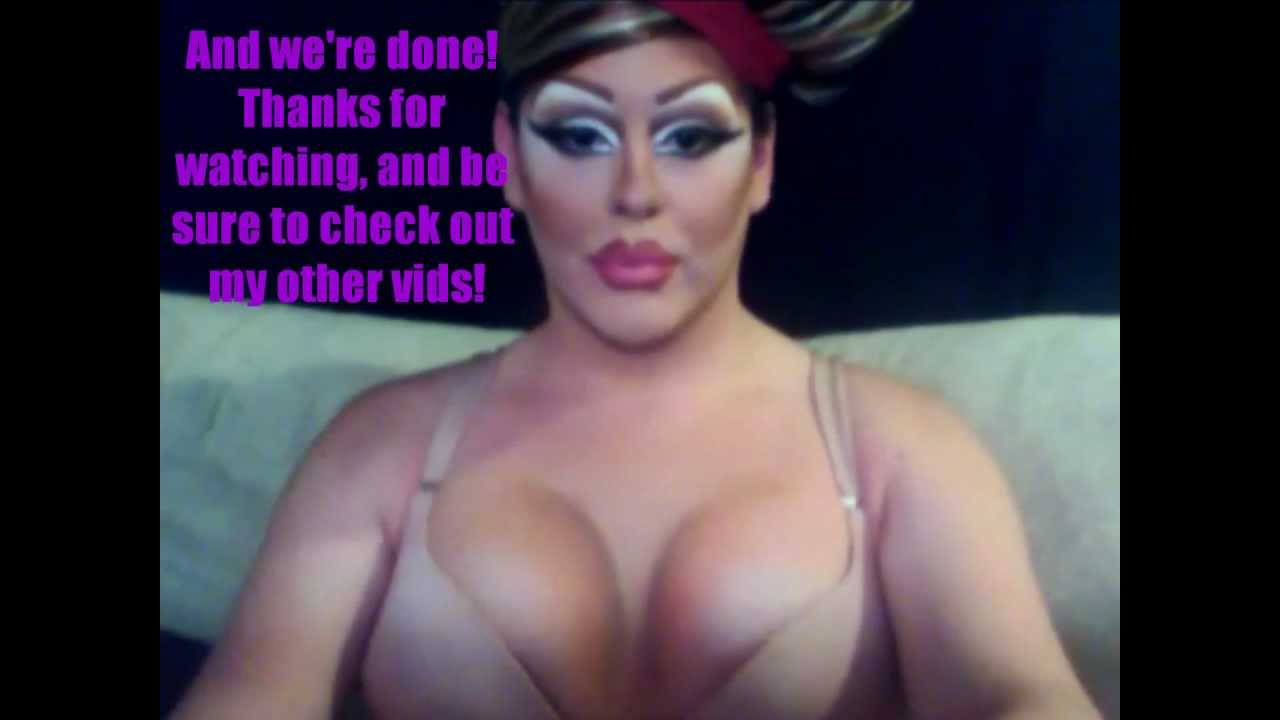

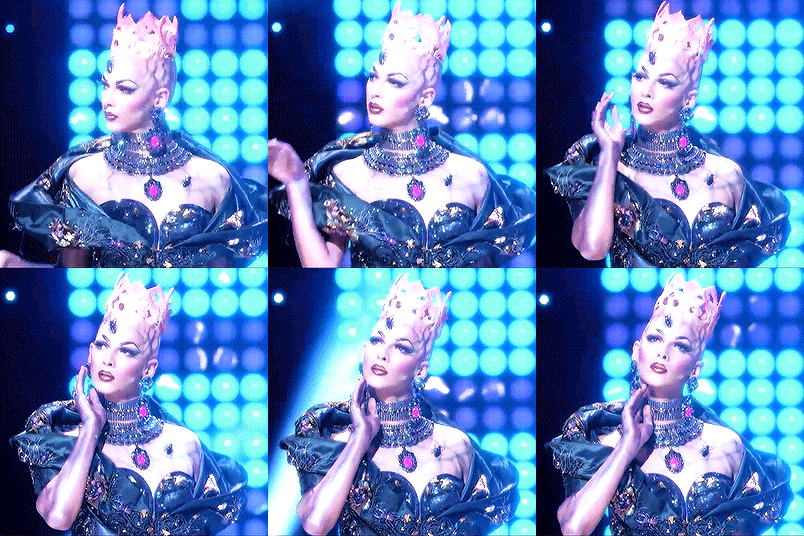
erasing the face to repaint stereotypical femininity, or owning one's own features to challenge the binary (bald queens, eyebrows) ... Kevyn Aucoin's erasure art, queens who emphasize their own - amplification versus obliteration ... the BEAT face
Self-decoration predates anatomically modern humanity itself. We have been decorating ourselves since before "we" WERE "ourselves" - ochre and seashell jewelry, religion, trade, and art reach as far back as our current understanding takes us. Pre-human, prehistoric. Cro magnon and Neanderthal man created beauty as well as tools, and the tools of beauty and art date back over 160,000 years.
Advent of "I can draw what I want" marketing and autonomy over rigid fashion - STYLE over fashion ... still an industry, but emphasis affected by people's needs. How much can commercial interests still command people reshaping themselves? How much has the narrow beauty standard *really* changed? Really at the point where individuals are using the beauty industry, or still beholden to beauty standards?
As with most things, the alterations we perform to create beauty can pass into The Uncanny Valley, where synthesizing the suppleness of youth with plumpers and tightening becomes ghastly. Pop culture obsesses, at times, on hatred of this tendency - making fun of everyone from always-a-target Jocelyn Wildenstein to the Jenners/Kardashians for "overdoing it" ... and this both happens in drag, and is played-with in drag. Not a few queens proudly name their alterations, and it's difficult not to suspect that many who do it do so less for ideals of beauty than for the exaggeration of those ideals - for intentional effect. Special effects.
Drag USES the Uncanny Valley, gooses it - can transform it from challenge into a new definition of beauty.
Scale
God said let there be lights in the firmament of the Heaven, and let them be for signs and for seasons and for days and years.
My lifespan seems a small enough thing to me.
To a fruitfly, it might seem a wasteland of time, beyond bearing.
To a molecule ... to an atom, to a gluon ... all existing at such different scales: would my life seem vanishingly short, or extraordinary in its immensity?
A living cell might exist within a comprehensible "human" scale, though it comes and goes more quickly than we do.
The molecule - these can be broken so easily, or may hold tight for eons and eons. Some unstable and brief, some all but immortal from where humanity stands.
Down into the tenacious atom ... the nucleus ... these buzzing, speeding systems outstripping any velocity we can understand - are we great, slow, neverending collossi, or fleeting organisms, so ephemeral as to be irrelevant? So tempting to conceive a universe in the orbit of an atom. So human.
And, if space folds into itself, who is to say that scale does not ... that Horton was right, along with every one of us when we discover the mind within the brain we already had: that, though we know the universe is the greatness around us, we also occupy the greatness which encloses lives and systems and universes impossibly small? That there are systems within us; planes we do not understand which make us up. Not merely the individual cells coming and going, each one's life one necessary part of what we think is "our" own life - but symbiants - even the impulses and autonomic actions that preserve life, but we do not create.
We are minuscule and immense; it is all in how we look - outward, and inward.
And we owe debt both to the greatness beyond us, as well as the greatness we enclose, which contains all we think is "small" ... That we are both gargantuan and infinitessimal, and that our part is to BE part of both these scales: in the universe, which is the organism of which all our lives are the tiniest part: and as the universe, within which myriad forces exist, dependent upon us, or making up the magic and meat that *is* us.
My lifespan seems a small enough thing to me.
But if I do not honor its scale, it might as well be nothing at all.
Saturday, March 24, 2018
Wednesday, March 21, 2018
Meta-for
The old metaphor of life, like a candle, flaring up before it goes out ... really isn't strictly poetic. When you reduce them to lowest terms - that fire, and life, are energy processing systems - they are the same thing, fundamentally. A wick left on its own will burn until all its paraffin is gone or it sinks into its own matter, self-snuffing. Life seems similar; we eat, we burn - and, though human beings of course also do so much more than this processing, the end of fuel means the end of life.
What is rarely displayed is just how efficiently the human system burns, sometimes.
I put the blog on pause to wait out a system at its end ... and here, on day six, we still are waiting. Life is almost cruelly tenacious. And, like a candle, life can gutter by flaring up, by burning furiously and then flickering. And even then it may not be exhausted.
Life is *alarmingly* tenacious.
The sacred time we place, around birth or marriage or death, the most important things to us ... I have never spent so long, in my life, in this time removed from the world, from everyday life. I have been enclosed in sacred time so long now it may be time to emerge, at least for a day. Only, presumably, to go back inside. It is a dizzying prospect, even though the hermetic seal around us right now is itself rarefied and disconcerting/disorienting.
We are exhausted. The living, and the dying. But I have learned this: though I know I have had periods in sacred time before, thinking I wished it would go on and on ... now I understand in a more immediate way, the truly sacred part of time separated from the everyday, from the world: is that it must be finite. The truly sacred part is re-entering LIFE.
Tomorrow, I may have to do that. Let us see what tonight will bring.
Sunday, March 18, 2018
We interrupt ...
The post series I was talking about is nicely developed, and will come. But first, a pause for my family.
When I was a kid, I understood that there *was* death. It seemed, like so much of my understanding, binary. There is life. There is death. We live in a dualistic culture - man and woman, light and dark, good and evil ... life, and death. Black and white. One is not the other.
As we get older, though, we learn: there is so much between Thing One and Thing Two.
It is an ever-growing horror, when we begin to learn *just* how much of a body can be dead, and yet its owner still lives on.
And so, I pause. For family.
I pray that, before you hear from me again, pause will have, for one person that I love, become just "stop." He deserves peace. And release. "Stop" cannot come too soon.
Friday, March 16, 2018
Collection
If you haven't already heard about the gorgeousness of Steve, you really ought to have a click. Steve happens to be a new auroral phenomenon ... or maybe he's something else entirely - but he's beautiful, his story is ridiculously charming, and you really have. to meet. Steve.
Oh my gosh, y'all. Judging a book by its spine ... is now kind of copyrighted. Events! Local bookstore small-business gloriousness! Discuss.
Here's a new one on me. I have friends who live in Israel, and have known many folks who grew up there, or lived there in the 80s, and one of my best friends goes pretty much every year with her family. I have even been myself, though that too was back in the 80s, and I was only fourteen. Through all this acquaintance with Israel, particularly Jerusalem, I've never heard of the Razzouk family: Coptic Christian tattoo artists who have been at work for seven centuries (first in Egypt, but since 1750 in Jerusalem). It makes sense that literally marking a pilgrimage to the Holy Land would be an enshrined act of faith, but having grown up in an American Christian community in which tattooing is all but The Devil's Work, this just had never occurred to me. From fertility to the blood and pain of a tattoo, they make a badge of faith and a reminder of it too. Interestingly, the family have also used the art in therapeutic tattoos, which we have seen on Otzi and seems to have been practiced for millennia across the world in many cultures. A fascinating article from tattoo anthropologist Lars Krutak.
Side note - at the longer link above and then here, I learned that George V and Edward VII both had tattoos. Huh.
Tuesday, March 13, 2018
Let's have a kiki
 |
| Image: Wikimedia Commons (labeled for re-use) Miss Fame |
It's on my mind to do a series of posts - specifically riffing on drag, though I will try to keep RuPaul's Drag Race references to a minimum - and focusing on the many layers of its making, as well as its cultural position and place(s). While I wonder a little whether this might alienate what audience I have, the point is more to look at the incredible breadth of Doing A Thing - and, in fact, one could write a similar series about just plain being an actor, or firefighter, musician, or visual artist. The discipline tends to be a part of the life of its practitioner, and I want to look at just how much we do in service of results which an awful lot of people might see as a single point in the wide tapestry of life.
Drag happens to touch on the recurrent thematics of this blog - social thought, yes, but also costuming, makeup, a focus on (at least certain particulars of) history, and the multifarious work of entertainment. It can be beautiful and challenging - at its best, and like so much art, it is both at once - and laughter and tears are all but mandatory.
 |
| Image: Wikimedia Commons (labeled for re-use) This is Acid Betty |
And too, like so much of what I write about, I am both an insider and very much NOT so. Subculturally, I've always been accepted even as I think of myself as an outsider, or even a poseur. So drag is one more thing I can appear to write about intelligently, but cannot with integrity claim to be any part of personally. Watching it, even caring deeply about it, being acquainted with those who *do* ... these are not qualifying criteria. So I have knowledge, but not cred.
So stay tuned. The organization is underway, and the thoughts, they are a-thinkin'. Your feedback in any form is always welcome, and I really hope to produce a thing or two of interest, even if the whole series may not be to all my readers' tastes.
Links:
Beauty
Challenge
Costume
Gender
Human
Collection
Every now and then, Blogger stats provide an interesting rabbit hole, or at least a blast from the past. Today, I happened upon this referral link. This makes me smile bittersweet smiles - firstly, because I have not seen The Lady Herself in far, far too long. But also because she talks of our writing group, and a particular story prompt which has never left my brain. The story is above 3500 words, but I've never found a finish - though its ghost has teased me more than once over the years.
This is why my main/long-form writing is historicals. It's never so hard to find an ending! (Just titles.)
Yes, Donna, I am thinking of the conversation we had, where you have no problems with titles and I take years to find them!
It's not a short read, but it's *splendid* writing. As all the best writing is, it's open, intelligent, and honest in viewing shortcomings from the inside ... as well as the margins. Because those who were once in are out, in many ways, and no single outlook can be said to typify perhaps any label anymore.
OH NO, NOT MORE TBR. Both the paean and the lament of any reader, the song of More Yummy Delicious BOOKS. I must-must-must have After the Death of Ellen Keldberg, not least because it sounds like an awfully good book, but also because the cover is a grabber, and at the link above you will find some thoughts on its design. By way of The Caustic Cover Critic. "Enjoy the crocuses." Excellent advice.
Am I the only person who enjoys the heck out of a good scholarly argument? I choose "argument" over "debate" because one of the joys of This Theory versus That Theory is witnessing how partisan participants can be (and indulging the luxury of not having any interest in either side, thus being open to many arguments). Here we have a great example of the genre, in anthropology. Archaeological/anthropological arguments often provide the best enjoyment, because these disciplines after all tell the story of humanity, and we certainly do like talking about ourselves. This sort of thing, for me at least, provides great exercise in critical thinking, which happens to be one of my favorite things. And this particular argument, centering on a volcanic winter, touches on phenomena which actually come into play in my own WIP, wherein the plagues and climatic changes post-535 AD loom large in the plot. I don't actually, necessarily, fully buy into the Catastrophe theory. But it sure makes a good story.
This is why my main/long-form writing is historicals. It's never so hard to find an ending! (Just titles.)
Yes, Donna, I am thinking of the conversation we had, where you have no problems with titles and I take years to find them!
(T)he legitimation of cruelty, prejudice, falsehood, and corruption is the kind of thing, one would think, that religious people were born to oppose, not bless.
It's not a short read, but it's *splendid* writing. As all the best writing is, it's open, intelligent, and honest in viewing shortcomings from the inside ... as well as the margins. Because those who were once in are out, in many ways, and no single outlook can be said to typify perhaps any label anymore.
OH NO, NOT MORE TBR. Both the paean and the lament of any reader, the song of More Yummy Delicious BOOKS. I must-must-must have After the Death of Ellen Keldberg, not least because it sounds like an awfully good book, but also because the cover is a grabber, and at the link above you will find some thoughts on its design. By way of The Caustic Cover Critic. "Enjoy the crocuses." Excellent advice.
Am I the only person who enjoys the heck out of a good scholarly argument? I choose "argument" over "debate" because one of the joys of This Theory versus That Theory is witnessing how partisan participants can be (and indulging the luxury of not having any interest in either side, thus being open to many arguments). Here we have a great example of the genre, in anthropology. Archaeological/anthropological arguments often provide the best enjoyment, because these disciplines after all tell the story of humanity, and we certainly do like talking about ourselves. This sort of thing, for me at least, provides great exercise in critical thinking, which happens to be one of my favorite things. And this particular argument, centering on a volcanic winter, touches on phenomena which actually come into play in my own WIP, wherein the plagues and climatic changes post-535 AD loom large in the plot. I don't actually, necessarily, fully buy into the Catastrophe theory. But it sure makes a good story.
Tuesday, March 6, 2018
Collection
The book is precious – the scale of its contents makes it quaint, but those contents also store an invaluable body of information. Instructions on Needle-Work and Knitting contains not only a curriculum, but also a hint at the sewn objects relevant to the lives of its students, and, in all likelihood, the products of their own hands...Wow, is this a great post. Sewing is such a fundamental part of human history and culture. It's a shame that now so many of our clothing is really just extruded product like our food or cleaners or anything else - mostly chemical, and seldom considered. Fascinatingly, a recent marketing phenomenon, subscription clothing, makes an appearance in this text, providing an interesting consideration of class economics and the training side of education of the time. Excellent writing and scholarship (this post is sourced), and a glimpse of material and social history that can be hard to find in other studies. Also worth a click for the photos; the flowered embroidery design reminds me of my younger niece's art, it is wonderful - so much so, I hope I may be forgiven for reproducing it (caption intact)
 |
| A page of embroidery design’s from Ann Flower’s sketchbook. Ann Flower, Sketchbook, ca.1753-1760?, Doc. 1244, Downs Collections, Winterthur Museum, Library, and Garden. |
The Atlantic gets into a topic that's rattled around the back of my own mind of late, human sacrifice. While I was considering the spiritual prejudices of taboo (and more specifically child sacrifice) , the focus here is hierarchical - the social structure and implications of ritualized human sacrifice. An attempt to analyze is providing some interesting concepts about the development of the practice, and the point at which it collapses as well.
With staggering frequency ... it was religion rather than reason that turned people away from ritualized brutality.
Corporation, person, citizen. History is fascinating stuff, kids. Legal history can be maddening, when you realize you are governed by century-and-a-half old lies. (The click beyond? Oddly enough, I ran across Roscoe Conkling twice in today's reading. Have a look at him here, this time in a story about the assassination of President Garfield.)
Ahh, Smithsonian Magazine - you always make for good while-away-a-lunch-hour reading. Today, I enjoyed a piece about Holi, one of those festivals of joy and empowerment I'd love to experience. This leapt out: "blue is a reminder that evil exists but can be contained, through courage and right actions." As a recently-blue-haired old lady, that appeals to me. (Extra credit question: does Crayola still make the Indian Yellow crayon ... ?)

Thursday, March 1, 2018
Sketchy
She's the weirdest tattooed-and-blued woman. The blue hair is there, check. Maybe I only imagine that the tattoos are showing, subtly, through a thin gauze blouse with a wide neckline. But there is something so weird about the way she is weird; she does it wrong, and she does it wrong on purpose.
Most people color their hair unexpectedly, or get tattoos, or get piercings or ever-increasing-gauge plugs, to rebel, to have cred for a subculture or attitude. To be indelibly and obviously - overtly - aggressively - Different. "I am apart, and this is how I am apart." She's done it because she is drawn to the colors she paints herself. And she's brought nonconformity in line with a taste level that's just off to one side of her corporate day job AND her penchant for the unusual.
She can conform neither to normality nor revolution.
It's hard, still, not to stare at her. In an airport full of corporate road warriors, kids, geriatrics, families, and military from all over the world, she's the oddest thing going. Not least because she is utterly still.
She's staring at me, of course. Transfixed in that way I knew once, almost a decade and a half ago - so much younger I think of that face as a girl's now, though she was mid-thirties even then. Her face is a rictus, contorted, both in relief and in pain.
There is a chain of beads around her neck, gleaming facets silver as mirrors breaking the smooth, wide swath of her skin between her strange, short hair and the gauzy blouse. Her throat, the sinuous line of her profile as she turns away a moment - the negative space around every part of her makes her seem small, even as her eyes seem bigger than I remember.
Nothing is, and everything is, as I remembered. All that luxuriant hair is gone, and the swirling strands that are left aren't even the right color. Her clothes seem hippie-ish; even knowing there was a bit of the flower child in her, she's never been that image in my head, that wasn't the her that I spent our time with. She seems taller, and darker, and softer, and stranger.
Everything strange, until I am next to her. And a fragment of scent steals toward me, and I know this is her. Something she wrote once... "Roses and pepper and honey and fear."
The airport asserts itself when she speaks, even as tiny as the verbiage is. "Hi."
I lean down to her, and ... Oh. To be against her. When my eyes are not on her, that's when she is most familiar, suddenly. *That* breathing. *That* curve of her back. My hands find their places on her hips without either of us negotiating. There is no kiss, and, for the moment, no more words. Something more elemental than greeting. There is some frisson, there is a release, there is some unbidden, sub-verbal thing. Reunion. I feel myself squeezing, and utterly still.
We stand there a minute, breathing. Randomly, I find myself laughing, because I can feel her smelling me, and I remember all the times she said, last time, "You smell like *you*." She also kept saying, "You are stupidly hot" just to be a dork.
That hair is silken at my jaw. She is sweet and spiced. Warm. Living space heater, she always was that, and all the grey and watery time we'ves spent, stolen visits since I went away, were warmed by her.
We don't look at each other. It's baggage claim.
Wednesday, February 28, 2018
Random Title
Mis-reading a sentence at lunch today, I came across a phrase that made my brain think, "The Chance of War" and I thought, ooh, neat, using chance in both its senses would make a cool title for an interesting story.
But I'm not going to, which is a shame, because I have such trouble coming up with titles for the things I *do* write.
So it's free for anyone who likes it. Have fun!
But I'm not going to, which is a shame, because I have such trouble coming up with titles for the things I *do* write.
So it's free for anyone who likes it. Have fun!
Tuesday, February 27, 2018
"You can do ANYTHING you set your mind to."
25 years ago now, having left my marriage and come home to Virginia, I found myself in a job with one of the best managers I've ever known, a woman I'll call C. C managed a keen balance between getting the ratty jobs done but finding each employee's talents, and playing to them. So it was that, as a secretary, I ended up assisting the guy who was writing a book. And the IT guy. Writing our newsletter. And, by the end, taking care of orphan clients (we were an insurance and financial services agency).
It was just at the moment I was about to be sent to Minnesota in February for securities training that I left that gig. But I never did forget that manager, and C stands out to this day as one of the smartest people I've ever worked with. And I've worked with some great, wise people.
All this time later, I have found a position where I get to do my own balancing - still a secretary, but one with decades more experience on the resume, and in a company/with a team where I have been able, almost singlehanded, to define my job. I get to play to my own strengths now.
Not long ago, I was thinking again about how I ended up being a secretary. Yeah, it was the early and mid-80s that formed me, and yeah I was VERY much an underachiever during my early career (though, looking at that job I mentioned above - maybe not so lacking in gumption as I have told myself for so long now) ... but nothing was stopping me from pursuing some more specific or lucrative or creative ambition.
But, the thing is: my parents always told me, "You can do anything you set your mind to."
Here is the problem: they never gave me specifics. Mom might occasionally talk about things *she* would wish to do, or which she found prestigious.
But neither my mom nor my dad ever did as C did: took up the thread of what I loved, or was good at (which were not entirely the same thing), and revealed to me the particular things my talents or my abilities could lead to. Nope, not even my dad. And he was a professor - a student advisor. His very life and career were dedicated to pushing people toward success.
Or ... maybe just to knowledge. To understanding those concepts he himself taught, or to harnessing those from other disciplines, which his students were studying. Synthesizing these to the tools to reach their specific goals.
My dad was encouraging to a fault - but the fault was, he just opened the doors wide. He provided no guide but "anything" - and that was too much. Overwhelming, or under.
I have always known that what I do is "less" in the eyes of other people; nobody's subtle about it. I basically fell into it to make a living. Doing what I do was not a dream, wasn't something I *sought*. I have made it mine, and I'm not complaining nor regretting. But it, in the barest and least freighted, but clearest sense of the phrase, "is what it is."
I could do anything I set my mind to. Sure. But in high school, I already knew I was directionless.
And MOST OF US ARE as teenagers. And that is okay.
But then majoring in Theater (or, insufferably, Theatre/Dance, at my insufferable alma mater) never was going to get me famous and wealthy and yield a successful movie star at the end of college.
(To which I now say: Thank MAUD.)
But it wasn't getting me anywhere else, either. Working on the crew was pizza money and fun, not a career trajectory. Our department wasn't good enough to provide one of those, frankly.
And I could type.
So I fell into my first jobs, my early talents - whatever they might have been - sublimated to make a living, and over the years I've done well, or just done *enough*, and scrabbled and fought my way to giving a damn ... and here we are.
I am proud of my work, and I love what I do. But don't ever think that this was my fantasy. Or even my calling. It was barely my *aptitude*, even, for a while there.
This morning, musing to a friend at work that my hair was looking particularly teased-and-tapered in an 80s sort of way, I pulled up Beauty and the Beat on my phone, and revisited that time before directionlessness became ... well, to borrow one of the Go-Go's song titles, Automatic.
The Go-Go's, I think, may seem a bit bugglegum and maybe even gimmicky these days. But that first album, steeped in 1981 and its New Wave-ness, was not a feather-light pop concoction. There is a menace in the chords. This album is bouncy, but it's bouncing on bruises, and it's propulsive. (Automatic is very dark and affecting. It *still* hits me in a very deep place, perhaps the more for life's experience rather than less.)
And this album is inextricably linked to the one person, before C, who ever pointed me at anything specific.
It was my brother.
I can't remember how it came up, and how it ever seemed "real" at all - and, the fact is, the moment of this memory may not have lasted more than a few days. But my brother, for some reason, excitedly encouraged me to get a band together, like the Go-Go's. To cover them, for Stunt Talent Night. He pointed to Kathy Valentine, and said I could do what she did.
It didn't change my life - or, at least, it didn't set me on a path. But my brother was the only family member who ever looked at anything in me, and pointed to anything at all. He didn't say "You can do anything you set your mind to."
He said, "You could do THAT."
I was too shy. I didn't know any musicians. Time ticked on, the moment passed, I never did it. Years later, I still entertained the odd fantasy of being a drummer - or, later still, a lead singer. But instead I watched Beloved Ex do it, and was still too shy. And never thought to connect to the many musicians we did know then, to try to become one of them. Well, never thought of it seriously. Never had the confidence to try.
And I had a job. And hadn't, perhaps, divested myself of the vague idea I might become wealthy and famous by sitting around waiting, hopefully being 80s-foxy enough for the world just to arrange its attention and money around me. Or maybe being a writer. Or just getting by, day to day.
There were a lot of years of getting by, long periods of time lived day to day.
And, not in the least ironically at all, it was my brother, again, who pointed me at something, years later. Aged 35, he asked me to go to a writers' conference ... and we all know how that has gone. Still the world has not arranged itself around my ridiculous success. But at least I consider myself something more than a 'nartist now.
I don't wish things had gone some other way. My life is an awfully good one to live, and the means to my living never has been the most important thing to me (the people I work with are, though). The idea of an alternative life in which What I Do *was* more important is no source of regret for me; perhaps in that life, my soul would not have been the one I have here and now, and my soul means everything to me.
No, I don't wish things had gone differently at all.
Just: looking at my parents. Thinking of the way C managed the people she worked with. I'm actually just surprised it *didn't* go differently. And curiously grateful I failed to have certain dreams ... ? What I did have was people like C, and others, and enough privilege to say I've made my way successfully, even if not prestigiously.
And I'm doubly grateful for that big brother, too. Turns out - he's actually even more special than I understood. Back in those years when I idolized him so, and didn't even know why.
Friday, February 23, 2018
She is BEAT
This was something I wrote a good while ago, but is resonating with something I've seen a few times recently ...
The something I have seen recently is a makeup ad, one I am not going to link because I'm not a shill, featuring a beautiful young woman made up in different ways, for several occasions. There is a narrative track, presumed to be her voice, talking about how she makes her makeup support her identities. It's a wonderful departure from closeups of pneumatic lips, giggling models, the oft-evoked aspirationalism of cosmetic marketing - not by forgoing aspirations, but by framing them in an individual's identity. She has curled hair, straight hair, dramatic eyes, or a lighter touch with her brushes - and her final message is, cosmetics are my TOOLS.
She is not subject to them, they are subject to her. She uses makeup to paint the picture she sees, of herself, to evoke moods, to draw her idea of beauty.
This is a model, of course. She's not in need of remediation. But the message of an ad always hopes viewers will identify with the star of the ad - and, in this one, we're asked to identify with a person, and to see that her tools are good ones. The line to "aspire to be This Beautiful" - to fixed body image or features or hair, to ideals themselves - is no longer direct. It's there; you can't market cosmetics without the promise of Beauty. But the arrow at the end of the line now points to a more flexible form of beauty, AND to the fact that we're in charge of anything a mascara or a lip gloss or a ceramic flat-iron may have to offer. We're the ones who DO the beauty, in the end.
This ad struck me the first time I saw it, and it's struck me the same way again. So, clearly, it works. Someone in some ad agency or marketing realized that we can make *money* exploiting themes that seem less exploitive.
And, you know what? I am good with that. I don't recall what company the ads are for, and it most likely won't bring me to their products in itself, but I *do* applaud, even if quietly, in this simple little backwater on Teh Intarwebs, the acknowledgement that, y'know, not all beauty products speak to the inherent ugliness of our creatureliness of humanity, which we must cover up or correct for.
The human desire for self-decoration isn't always a product of the Horrible Beauty Industry duping us poor, stupid women into thinking we're not pretty enough. It goes back as far as humanity itself, and I happen to be one of those humans (it ain't just women) who like "dressing up" and I also like to vary what that means in unexpected ways. This is FUN for me.
The underlying presumption of the whole "you don't need makeup" makes my choices about the viewer - generally about a male viewer, who thinks he can do me a favor by relieving me of my efforts to please. Playing with makeup and costume pleases ME.
The something I have seen recently is a makeup ad, one I am not going to link because I'm not a shill, featuring a beautiful young woman made up in different ways, for several occasions. There is a narrative track, presumed to be her voice, talking about how she makes her makeup support her identities. It's a wonderful departure from closeups of pneumatic lips, giggling models, the oft-evoked aspirationalism of cosmetic marketing - not by forgoing aspirations, but by framing them in an individual's identity. She has curled hair, straight hair, dramatic eyes, or a lighter touch with her brushes - and her final message is, cosmetics are my TOOLS.
She is not subject to them, they are subject to her. She uses makeup to paint the picture she sees, of herself, to evoke moods, to draw her idea of beauty.
This is a model, of course. She's not in need of remediation. But the message of an ad always hopes viewers will identify with the star of the ad - and, in this one, we're asked to identify with a person, and to see that her tools are good ones. The line to "aspire to be This Beautiful" - to fixed body image or features or hair, to ideals themselves - is no longer direct. It's there; you can't market cosmetics without the promise of Beauty. But the arrow at the end of the line now points to a more flexible form of beauty, AND to the fact that we're in charge of anything a mascara or a lip gloss or a ceramic flat-iron may have to offer. We're the ones who DO the beauty, in the end.
This ad struck me the first time I saw it, and it's struck me the same way again. So, clearly, it works. Someone in some ad agency or marketing realized that we can make *money* exploiting themes that seem less exploitive.
And, you know what? I am good with that. I don't recall what company the ads are for, and it most likely won't bring me to their products in itself, but I *do* applaud, even if quietly, in this simple little backwater on Teh Intarwebs, the acknowledgement that, y'know, not all beauty products speak to the inherent ugliness of our creatureliness of humanity, which we must cover up or correct for.
Wednesday, February 21, 2018
Bitten
It's a day like many others, but not "any other." Productive, with excuses. I am ploughing through the work on my desk, but skipping this afternoon's "run" in our fitness room. Slitting envelopes, copying legal down to letter for scanning, uploads. Multi-tasking, but all one task - just different steps in the order, converging, week on week invading each other's time. Click-click.
Boom.
It swims up from nowhere, unbidden. Not necessarily unwanted. But unwonted. Unexpected. Half gorgeous, and half cruel.
Memory of two words, out of your mouth.
I miss you so much it makes me gasp. Missing you an old habit. Missing you a way of life. It doesn't define me, it doesn't maim me.
oh, but. oh but
smaller and smaller, too smallevenfortheshiftkey. Shrinking.
Constricted.
Two words, and I am all but weeping. Slitting envelopes. Copying paper. Near the end of the day, but not near enough. Constricted.
I miss you.
That's three. Your two were more profound.
Tuesday, February 20, 2018
Collection
Dunking doughnuts outside the 54th floor, Louis and Mrs. Armstrong at the Sphinx, a woman neck-deep in grapes, Malyshka the Russian Space Dog of Sputnik II ... oh and so indescribably MUCH more. Photos from The Atlantic's amazing archive.
In fuzzy-history-we-think-we-know: did you realize that the Equal Rights Amendment passed forty-six years ago, almost to the month? But it has never been ratified. Yes, ladies - and women too - there is still a deficit of two states' ayes to enforce what even CONGRESS was able to say yes to, way on back in 1972. More than a quarter of states in the theoretically United States still don't care to accept the amendment, two generations on. I am not proud to note my home state remains a holdout.
Tom Williams has a good post, reviewing New Grub Street by George Gissing. As interesting as the work looks, one of Tom's points is meta - that the work contains the flaws it rails against. He also points out that the complaints of the fictional author in New Grub Street are still with us today. To take this one more layer of meta, this morning before I saw his post, I happened to get up and turn on The Loves of Edgar Allen Poe as my background to waking up and getting ready. I was fascinated by its repeated commentary on a writer's raw deal in publishing, out of the Poe character's mouth, and got curious about the world of publishing circa, say 1941 or 1942 (the movie came out in 1942). Little is to be found about Brian Foy, who wrote the screenplay, in a cursory search, but he seems to have started life as a child entertainer before becoming a writer - easy to imagine he was exploited in more than one way in his given professions. I leave the link to Tom's post with only the observation that there is either hope or despair in knowing that it's never been easy in publishing.
Tom has another post of interest - short, beautiful, and poignant - about the Palace of Peace, the elite, and rumors of war. Sigh.
Monday, February 19, 2018
Hiya
For the dwindling few who read this blog - and I'm not actually sure about any readers at all, save one (hi, Cute Shoes!) - it is perhaps apparent I haven't had much to say here, or even just link here, in the past couple of months. There actually are some Draft posts I thought were in the works, but which are ageing and getting no attention. And there is one post on my mind, but which I have not sat down to write. The key words to remind me what I want to say haven't faded from mind (a good sign), but that's not progress.
Yep, family has had my attention. When someone spends close to eight years dying on you, it can come to absorb the focus off and on. Crises even arise; and yet, bizarrely, nothing seems to happen. If this seems a contradictory statement, please understand that you are blessed; for those who understand, my prayers will be with you.
Work, too, got hairy there for some months. At this point, that's neither excuse for not writing (which is fine, as I have been - at least, some) nor not cropping up here, so I'm not sure it signifies. It's just one of the usual excuses we see from writers online.
The house is fine, as far as that goes. And Penelope and Gossamer are SPLENDID, which goes very far indeed.
Weather has been a bummer. Far from six more weeks of winter, it seems to me what Punxsutawney Phil gifted us this year was just six more weeks of RAIN, or at the very least, grim weather indeed. This is not to say it's been cold. Far from it, we've had alternating temps from the 70s to the 40s for weeks, which is almost worse than extended cold, because (a) people have sinuses, thank you, and (b) it's not a pleasanter day when the rain goes from "dank" to "muggy" in twelve hours, sinks back, and then swells again, over and over. One hardly knows what to wear out the door. But, more than anything, the unrelenting DRAB of it all is wearing.
I candidly admit, recent years of drought - given the privilege of an unstinting clean water supply - seemed to me, if nothing else, *prettier* than this by comparison. Okay, maybe unrelentingly heated, particularly a few years back when 100+ got to be too frequent in summertime. Sure, I wished we had rain then. But this isn't normal either, it's not the natural seasonal barter present in the Piedmont/just-shy-of-Tidewater region.
There comes a time in every season, when they behave normally (my memory is long), when you look at your rows or hangers or what-have-you of sweaters and stylish, warm coats and things, and think, "Ahh, yes, it will be good when springtime comes" and you remember the way it feels not to have to lug out a load of outerwear just to walk outside. Or when you are hot and sweaty, look at the endless sleeveless tops and things, and think how cozy a turtleneck will be, some starry evening soon while you contemplate holidays.
What we have right now, though, is more despairing and less sparing. It's been a pitiless year for many - the storms a SUMMER ago in Puerto Rico still have not been dealt with, and here we are on the brink of another storm season. Knowing how much worse than merely "grim" the weather has been for so many, it's out of proportion for me to complain.
Still, the depression of weather becomes the low-pressure system in life itself. A winter's slog, family time stolen by illness, smaller celebrations dragged wanly through rainstorms, the hundred things not even bothered with under leaden skies. The constraint upon enthusiasm or enterprise.
Blogs fall by the wayside.
But I haven't forgotten this place is here, even if there IS nobody really reading these days. One assumes people have better things to do, too - goodness, I certainly hope so. I'm only even here myself, prattling a bit while some electronic business tediously feeds itself slowly to fruition while I wait for it.
Stay tuned for me to actually *have* anything to say. It'll be more poetic, and even contain actual substance.
Hoping all my readers, (Reider and otherwise) are well and coming through winter with loved ones, inspiration, and outlooks all intact.
Wednesday, February 7, 2018
Tuesday, February 6, 2018
Almost my birthday, and all I want is death
This post is a barely-edited version of an email I sent this morning. It's funny how trains of thought actually seem to create their own tracks and destinations.
Forwarded message to a best friend TEO...
"When bitching about a sweater gets REALLY dup and profiend.
Sometimes, being a writer is weird."
-----Original Message-----
Original email to Mr. X
Sent: Tue, Feb 6, 2018 8:06 am
Subject: Yep nope
The quest for the right wardrobe never seems to end. I bought a sweater maybe three months ago - it was definitely "recent" - but am deciding today, it has got to go. Which is especially irritating, as it's a GAP and I usually have good luck with GAP. (One red/black damask print v-neck has lasted me like six years now, it's woooooonnnderful.) But this simple blue rib knit: I'm not into that whole Marie Kondo thing, but this sweater is NOT GIVING ME JOY.
Which, ugh. This sweater made me use THAT phrase. This sweater sucks.
The thing is - it's really comfortable, it's the length I like, and the color is great on me. It is also pill--tastick (yes, with a K - like your name, it needs the consonantal emphasis), the "inseam" tag sticks out (and no, I don't cut out care tags because lord knows I'll louse up the laundry at some point), and the front hangs really weird at the bottom. Gah.
So, though I've worn this probably not even half a dozen times: I need to get rid of this thing.
Life is too short to wear unflattering (and prematurely RATTY) sweaters.
It's just a shame I happen to be wearing the thing NOW. On my fake-Friday, and family day. And with good jewelry, too! Blah.
Tonight is steak night at mom and Stepdad's. The filets from Christmas, which we didn't eat because everyone came down with the flu.
This'll be the way to spend some family celebration time with Step, but leave Wednesday free for me and mom. He's been in bed a couple days, and says he might not eat with us (he'll almost certainly eat with us, but how he'll be feeling today overall is up in the air). Sigh. Poor S. He just can't seem to die.
Bro and I were talking about him this weekend. He said it was something of a shame we came to love him after he lost his mind - I think there's a feeling akin to guilt, for Bro - but I feel like it's a blessing. We LOVE him. Neither of us felt like that was a possibility twelve years ago, and okay, it took dementia to loosen S up and give him this sense of humor we treasure. But he's loosened up. He is funny. We love him. That is enough of a blessing, and dementia is enough a part of life, I feel like it's worth just being grateful for the love and the blessing.
This is the power of a sense of humor, really. Laughter is so elementally *human*, I think, that the bonds it creates can't be trivialized. I mean: look at the way I talk about your face, broken up with laughter. It's in no way a small thing, the way that is beautiful to me.
It's in no way a small gift: S's immense grace in his sense of humor.
They always say there's no comedy without pain. I'd have to agree; that's fair. S's wit has come at such a price. Life itself, arguably. But his funny-ness has made all our lives just that much more wonderful. And just saying that squeezes my heart, and all but breaks it.
And as much as I am grateful for the incandescence of S's impishness and his smile, G-d I wish it could be taken from us all. I wish he could die. Because as long as we have his brilliance with us, HE has to endure such hideous, unbreakable pain. It is so unjust - and I know life is not fair. But nobody should ever suffer this. I would not even wish this on a Trump.
And even with all that, to feel *guilty* about loving his humor would be to waste it, and to negate the blessing it is. I just have to pray it is some amount of blessing for S. It looks like it is. It looks like, even if only a moment at a time, it takes him out of the pain. Even as selfish as it is: he takes *us* out of it. He invites us out of the reality he can't escape himself.
I've never seen grace quite like that. S is something so special.
Tuesday, January 23, 2018
When I'm not reading, I'm not writing
There was a period of about two years, when I began seriously writing The Ax and the Vase, that I was not reading for leisure. Research absorbed me in a very special way, I read the work itself, I talked about it a great deal. And I've always read a great deal online. But sitting down with an unrelated novel in my hands, taking an evening or a whole DAY ... I didn't do that. My enthusiasm was all for my own work in progress. Maybe I feared reading other people's writing, even on different subjects, would influence - maybe even compromise - my own voice or story.
Some of this, I think, is new-writer superstition, or more charitably, maybe it was just a different process. There is this, either way: I can TELL you the day I read again for the first time just for myself. What the weather was, what time, where I was, what the novel was. (The Dogs of Babel, by Carolyn Parkhurst.)
My (counter)point is probably a matter of course for most writers: if we are not reading, we are not writing. Say it with me now: "Duuuhh!"
I have not been reading. "There was family visiting" ... "I've been occupied for months with two big meetings" ... "My stepfather's been failing" ... "Holidays" ... it's all the usual load of dingoes' kidneys. The more insidious truth is that I have not been ALLOWING myself to read. I think, ultimately - never knowing why, probably - that was why I didn't read for those two years, back when. I felt like reading was a luxury, or an adultery against my own work.
What we all know is, of course, to BE a writer, you have to be a reader - and suspending that is painful to the process.
So is viewing *writing* as a luxury, as an adultery to the life you're living.
Today, I stopped work and read at my desk. For a few months now, I've been avoiding this; working through, doing other things. Generally acting like That Guy, like what I do is so important it must never be paused - at work and in real life too. In my family, I'm behaving like my stopping to read on my own time may be disrespectful to the difficulty my mom is up against as a fulltime caregiver. At the office, I've had occasion for some guilt nobody has put on me, and I'm overcompensating for acts committed that I know perfectly well nobody holds as sins.
And so, today ... sitting down with just a few pages of LeGuin's Orsinian Tales ...
Ahhhhh. Not merely a luxury, not merely the indulgence of cheating on my job or even my own writing. It was - of course it was - inspiration.
And I found a scene in my throat, urgent as pain, which at first I thought might be a letter to Mr. X, and then I found ... was a scene a certain character really needed. Two of them, in fact. And I learned a little something new about one of the most important events in my WIP. And I learned how to feel from inside a man's skin, for this particular moment. And I saw what it meant, ultimately and really *meant* for the woman he's feeling for, for years and years and long after he is gone from her.
The scene, oddly enough, is all about something incomplete, something un-built; a whole, sought.
It doesn't work out, in the novel. No building, no completion.
But it worked its way out of my brain. No small thanks (eternally, consistently, recurringly) to Ursula LeGuin.
And sometimes, putting a brick against a brick, you end up with a building.
Sometimes.
Some of this, I think, is new-writer superstition, or more charitably, maybe it was just a different process. There is this, either way: I can TELL you the day I read again for the first time just for myself. What the weather was, what time, where I was, what the novel was. (The Dogs of Babel, by Carolyn Parkhurst.)
My (counter)point is probably a matter of course for most writers: if we are not reading, we are not writing. Say it with me now: "Duuuhh!"
I have not been reading. "There was family visiting" ... "I've been occupied for months with two big meetings" ... "My stepfather's been failing" ... "Holidays" ... it's all the usual load of dingoes' kidneys. The more insidious truth is that I have not been ALLOWING myself to read. I think, ultimately - never knowing why, probably - that was why I didn't read for those two years, back when. I felt like reading was a luxury, or an adultery against my own work.
What we all know is, of course, to BE a writer, you have to be a reader - and suspending that is painful to the process.
So is viewing *writing* as a luxury, as an adultery to the life you're living.
Today, I stopped work and read at my desk. For a few months now, I've been avoiding this; working through, doing other things. Generally acting like That Guy, like what I do is so important it must never be paused - at work and in real life too. In my family, I'm behaving like my stopping to read on my own time may be disrespectful to the difficulty my mom is up against as a fulltime caregiver. At the office, I've had occasion for some guilt nobody has put on me, and I'm overcompensating for acts committed that I know perfectly well nobody holds as sins.
And so, today ... sitting down with just a few pages of LeGuin's Orsinian Tales ...
Ahhhhh. Not merely a luxury, not merely the indulgence of cheating on my job or even my own writing. It was - of course it was - inspiration.
And I found a scene in my throat, urgent as pain, which at first I thought might be a letter to Mr. X, and then I found ... was a scene a certain character really needed. Two of them, in fact. And I learned a little something new about one of the most important events in my WIP. And I learned how to feel from inside a man's skin, for this particular moment. And I saw what it meant, ultimately and really *meant* for the woman he's feeling for, for years and years and long after he is gone from her.
The scene, oddly enough, is all about something incomplete, something un-built; a whole, sought.
It doesn't work out, in the novel. No building, no completion.
But it worked its way out of my brain. No small thanks (eternally, consistently, recurringly) to Ursula LeGuin.
“Incomplete. It’s like building something. Unfinished.
And sometimes, putting a brick against a brick, you end up with a building.
Sometimes.
Thursday, January 18, 2018
Open Letter to a Young Woman I Don't Know.
You deserve so much better.
You deserve comfort, and not to have to do the heavy lifting and take on emotional and bureaucratic headaches because of someone else's actions.
You deserve never to have been violated at all.
But you were.
The responsibility being pushed at you right now is this: to provide consequences for HIM. To make manifest how illegal and how immoral and how brutal his actions were.
It's a pain. It's unfair to you. You deserve better; peace, and never having to deal with him in the first place, and being able to concentrate on your goals, your life, your education. Yourself.
Because he concentrated on you too much, you're being asked to interrupt EVERYTHING and take on a terrible job, expose yourself before strangers tasked to judge him, examine and re-examine and document and reiterate a series of experiences it would be so much better to forget. Not easy. But better. You want to move on. You deserve to.
The problem is: does he?
Does this person, who not only intimidated, but in the end physically violated you, deserve to get past what he's done to YOU with all the comfort, with all the ease you seek and should have had all along? Does he deserve the seamless existence he disturbed for you?
Who am I to interrogate you?
I'm you.
Most women are. We've all dealt with encroachment upon our daily grind, our reveries, our desires, and our bodies. In this "moment of #MeToo" everyone keeps talking about, my question all along has been #WhoNOT? What woman has NOT had to deal with the harassment dealt out, from leers to assaults, every day, all day, around the world, at every level of society and in every culture?
When I was maybe eleven, it was the guy at the lake who tried to get me and my cousin away from our families. Who speculated as to our sexual experience. Assessed our bodies, in terms of how decorative and/or desirable he found them. Never touched us with his hands, but clearly touched some part of my brain that, forty years on, still bears the bruise.
The million men who've told me to smile. Because, again: they are trained to think we're decor, and they like pleasant decor.
The ones who do so much worse.
The ass-grabbers.
He was not allowed. And here is the problem ... if you don't press the charges against him, which his actions legally invite: he'll think he is. And he will do this again.
Several years ago, a contractor in my department stayed late at work. This was someone who made me uncomfortable in the most general sense; he wasn't very socially ept, he demonstrated more interest in me than I would have liked. He never touched me.
But the night he stayed late (knowing I always stayed late), he popped up at my cube when he heard the sounds of my preparation to leave, and held up a napkin to me. On the napkin was a cherry stem, tied in a knot. And he said, "No hands."
He didn't use his hands then, either. The implication of what he'd LIKE to have used was entirely too clear. And so shocking that I found myself unable to respond except with a quick dismissive joke and a hasty exit.
I talked to a manager the next day - not a formal complaint, but a discussion with someone I thought I could trust with the question of how I should proceed. She blew me off, and I ended up saying nothing. Time went by, and he never said anything else to me - and I was able to move my cube well away from him. I had power of my own.
I also learned that there had been a witness to what transpired that night; a woman in the next row of the cube farm. She heard everything, and told me I was entirely correct to be creeped out. He was wrong.
I told at least one other person at work about the incident, and let it go.
I deserved that. Right? Moving on?
Then I saw Jane (pseudonym, obviously). I saw her doing her job one day, cashiering us out at lunch, and I saw the way his presence made her SQUIRM.
It was obvious, instantly, that I was on the only person he'd ever "been inappropriate" with. I may have talked with that other friend at work about what I'd seen.
But I didn't talk with HR. I didn't go to my boss.
Time passed. I was pretty comfortable. Jane had herself moved to another location. I told myself it was all okay.
Then The Stem emailed my boss, hoping for a recommendation as he applied for a permanent position. I audited my boss's emails, and within two minutes of seeing The Stem's note, I was in my boss's office, calling him while he traveled, and explaining that we must not hire The Stem.
In less than an hour, I was speaking with an executive in HR. She got exactly the story of what The Stem had done, including the part about why I'd been silent, and my previous discussion with the manager. I also talked about what I had seen with Jane: that I had no permission from Jane to discuss anything he might done to her, and that I didn't know what that might be, but that I was clearly not alone in my experience with him.
To hire him would be a risk. That was enough. He was put on the a list immediately, and did not get the permanent position.
I felt a LITTLE better about failing to act for Jane. She knew nothing about my incident, and may never have known about my discussion with HR. She had used her own power. I didn't know her beyond friendly greetings at lunch or breakfast, but she had a family. They all deserved peace, too.
There's been a lot of talk in recent months about extraordinarily wealthy and/or powerful men using their position and pull to harass women. This tells the comforting story that, since most of us aren't really in contact with famous men or highly-placed moguls ... these things happen to someone else.
But it happened to you and me both. It happens to everyone. It happened to Jane, and I didn't do anything for her the moment I saw that. She used her own power, and got out of The Stem's way. And in the end, I got him out of the way of my employer.
But he doesn't know that.
And he is probably still acting exactly the same way.
I had power enough to push the bubble in the wallpaper, but the bubble still exists. There is a whisper network - something not unlike the Shitty Media Men List - and he may still be stuck with contract work. But nobody ever held him responsible for what he'd done to me, and for Jane.
He never had consequences. It's entirely possible he never will. Just another awkward guy. Not a rapist (that we know of). Not a mogul or celebrity.
But still making women squirm.
He got off.
Does the man who touched you - do the women he will undoubtedly assault, and emotionally damage - for years to come ... deserve that?
Does he deserve to get off?
And do they deserve to endure anything he does to them? If he stays the same. If he escalates, with age - and knowing he can get away with stalking, with assault?
Don't even you deserve ... not to have to carry that question with you? Not to inherit complicity in his guilt, when you are innocent?
You have the power of the law itself behind you. You have a lot of people behind you, too. You can do more than take a different route out of the cube farm at night, or wait a year and whisper when you think it finally matters. You can provide real consequences to a real criminal.
You have the power, maybe, to save a bunch of Janes - and their kids - and their families. To give them the peace that they deserve.
Please don't trade your power ... for regret ...
Monday, January 15, 2018
Collection
Just two links today, unless you count the recursive looks back upon my own musings.
For them/by them - a remarkable collection of perspectives not just on the period of sexual harassment history that began in Autumn of 2017 (and more), but on the dominant narratives and who is STILL left out of those narratives. The graphics are exceptional, and the writing ... well. Exemplary.
Also: "I’m disappointed that the story has remained focused so squarely on the villainous doings of the metropolitan elites." Yep. It's not just the "powerful" (rich) men, and it's not just white women in subjective but nonetheless injurious situations.
There is a constructive breadth, at that first link, of ages and understandings of (cis and binary) gender dynamics, and some of what is said I question. But it is best to understand than to refuse to know that others think things we do not.
For them/by them - a remarkable collection of perspectives not just on the period of sexual harassment history that began in Autumn of 2017 (and more), but on the dominant narratives and who is STILL left out of those narratives. The graphics are exceptional, and the writing ... well. Exemplary.
The very fact that such a model exists offers tacit permission for him to treat his wants as valid. ... I wish that he, as the adult in the room, had looked past his emotions to consider what would have been best for me ...
Also: "I’m disappointed that the story has remained focused so squarely on the villainous doings of the metropolitan elites." Yep. It's not just the "powerful" (rich) men, and it's not just white women in subjective but nonetheless injurious situations.
There is a constructive breadth, at that first link, of ages and understandings of (cis and binary) gender dynamics, and some of what is said I question. But it is best to understand than to refuse to know that others think things we do not.
“I remember when you told me I made this one girl feel uncomfortable because she had to say no twice, and I never forgot that.”
Some of what is said, in the last quarter or so of this anthology of perspectives - those things said by men, and about their looks - are ... well. Striking.
Where is the second link, you ask? Right here - and here is why:
Where is the second link, you ask? Right here - and here is why:
While women aren’t confusing egregious incidents with less obviously offensive ones, the small ones matter, too. And not talking about them is the easiest way to ensure they go on and on, ad infinitum.
Wednesday, January 3, 2018
Collection
Well, apparently the year I was born was important enough to commemorate. Some of the tidbits The Atlantic has archived here are pretty interesting; stay tuned for more, no doubt I'll come back to this well more than once this year.
Plant lore! I love so many aspects of this story - not merely the nerd who looked at a lock and understood its symbolism, but the images of a centuries-old trunk and its archives, and simply the word "hutch" - thanks again, History Blog, for a multi-layered read and look at an unusual collection of artifacts and facts. Moonwort. Heh.
Random note - in opening this new post window, I was listening to a 70s music mix, and "Moonlight Feels Right" by Starbuck happened to be playing. Yep: marimba solos happened in 1976. The times of my life (redux).
Map nerdlery! CityLab has thirteen maps to help make some sense (or at least get a view of) the year 2017. Some of it is interesting, some even amusing - some of it is dark (literally, and spiritually). From marches to regions to events within them, take a *look* at the year that was.
Sunday, December 31, 2017
Happy Enough Old Year
The evening is underway, as are feline and canine post-supper naptimes. Goss has his front half upended inside the warm curve of his back half, curled in the new chair, and Pen is flaked out on her flank in the floor. I chose "Arrival" tonight; slow-moving and blessedly low on explosions, at least halfway along it is - it's gloomy and murky but not too thinky so far. Seems to be just the ticket for me.
The year has been dwindling down with oddness and pains in my head, a great deal of work around the house, but mostly quiet. It is one of my pensive years, to be rung out alone and contemplating.
Last year was a jangle. Good times with friends, but the car got towed, there was loud music and cigarette smoke. This year, just this; staying in, staying warm. Remembering, and looking forward as as I do: seldom and poorly. The memories are ones which once were so painful, but now only make me who I am. And I am content with that, mostly. Always some work to do.
Life is like homeownership; if you don't have something you think you need to work on, the place'll go to pot.
In two weeks from now, many long months of meeting planning, and two trips to attend them, will be over. I realized this a couple of days ago, to my own surprise. Most of 2017 has been occupied with these events; and now I will be able to just do my day-to-day job. It'll be strange for a little while.
I am as content as the fur-bearing critters, this hour. Never satisfied. But content.
CONTENT NEW YEAR TO YOU, and to yours.
*Raises a glass, be it whatever you happen to like* Cheers!
Subscribe to:
Posts (Atom)